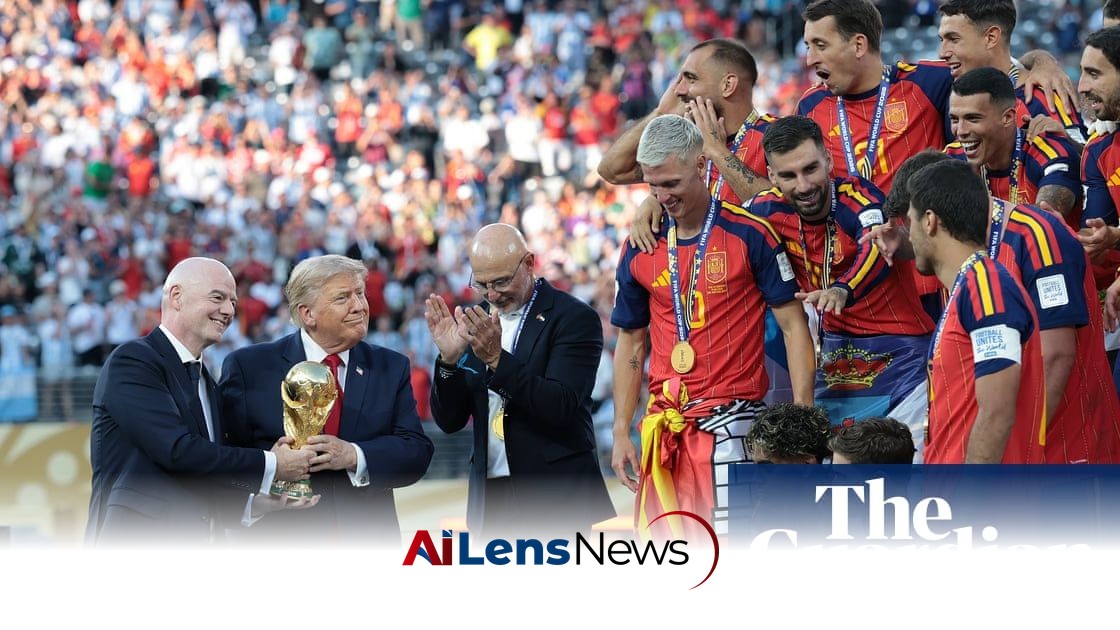


The prospect of the US hosting the World Cup again in 2038 is being discussed as FIFA aims to recover lost revenue and capitalize on the country's enthusiasm for major sporting events.
London, United Kingdom Jul 22, 2026 ALN: As is often the case, it has been left to Donald Trump to say the quiet bit out loud. “We have to do this again and we have to do it while I’m around, you hear that Gianni?” the US president told Fox News in an interview broadcast in the buildup to the World Cup final. His comments have reignited discussions around the United States' potential bid to host the 2038 FIFA World Cup, a topic that has been circulating among sports administrators and FIFA officials alike.
An American bid for the 2038 World Cup has been the talk of the hotel lobbies populated by administrators from around the world over the past month, who have watched this country’s seemingly limitless appetite for major events and willingness to pay whatever it takes to attend them. The United States has historically demonstrated a strong capacity for hosting large-scale sporting events, from the Super Bowl to the Olympics, and the upcoming 2026 World Cup, which will be jointly hosted by the U.S., Canada, and Mexico, is set to further solidify its reputation as a premier host nation.
FIFA has been quietly, but actively encouraging a US bid for some time and in a meeting at the Waldorf Astoria on Park Avenue in New York on Saturday it became clearer why. The FIFA president, Gianni Infantino, told representatives of the governing body’s 211 member associations that its revenue projections for the current four-year cycle have increased from $11 billion (£8.2 billion) to $15 billion, with the vast majority of the growth coming from an explosion in ticketing and hospitality revenue. This increase reflects not only the robust market for sports in the U.S. but also the global interest in soccer, which has surged in recent years.
A FIFA source disclosed that such has been the demand in the U.S. in particular that ticketing and hospitality sales have gone past $5 billion, with that part of the market now worth more than the World Cup’s TV rights for the first time. This marks a significant shift in how FIFA views its revenue streams, indicating that the organization is keenly aware of the lucrative potential of the American market for future tournaments.
“FIFA will want to get back here as quickly as possible,” said a senior figure at one of its hospitality partners. The U.S. market has shown a unique willingness to invest in high-profile sporting events, and the hospitality sector has been a significant contributor to this trend. The ability to generate substantial revenue from ticket sales, hospitality packages, and related services makes the U.S. an attractive option for FIFA.
While ticket sales have exceeded expectations, helped by the dynamic pricing and secondary market resale models that are embedded in U.S. culture, FIFA left a huge amount of money on the table in one crucial respect, another reason it is desperate to return. In an extraordinary deal, Fox Sports was awarded language TV rights in the U.S. by FIFA without a bidding process, a precautionary move by the world governing body to prevent a lawsuit when Qatar 2022 was moved to the winter after the TV contracts had already been signed, creating a direct clash with the U.S. domestic sports season, particularly the NFL and NBA.
With no competitive tension, Fox was given a relative bargain, paying $485 million for the 2026 rights, the same as in Qatar, despite the World Cup having an extra 40 matches and taking place on home soil. For context, the NFL’s domestic TV deal is worth $11 billion a year, with the NBA bringing in around $7 billion. The disparity in these figures highlights FIFA's need to recalibrate its approach to U.S. broadcasting rights, especially as the organization seeks to capitalize on the growing popularity of soccer in America.
Fox has capitalized this summer as a result, on the back of bumper viewing, with industry experts predicting it will make more than $1 billion from TV adverts, whose volume and value have increased due to the addition of hydration breaks during matches. This has raised questions about FIFA's future strategies regarding media rights, as the organization aims to recoup what many regard as lost income from the U.S. market in future TV rights cycles.
Having watched with frustration as Fox has cashed in, ESPN and NBC are expected to bid for the 2030 tournament, while initial conversations have also taken place with Netflix about them joining in the auction. Netflix has already signaled its growing interest in football by buying American rights for the Women’s World Cup in 2027 and 2031, the latter being held in the U.S., and another men’s tournament seven years later would spark another boom in interest and viewership.
No country has hosted the World Cup twice in 12 years, but FIFA’s statutes and recent staging decisions give it the flexibility for this to happen. By taking the 2030 World Cup to three continents and six countries – Spain, Portugal, Morocco, Argentina, Paraguay, and Uruguay – before Saudi Arabia hosts in 2034, a North American bid for 2038 is permitted under FIFA’s confederation rotation policy, along with one from Oceania.
Soccer Australia had wanted to bid for 2034, but after being given less than a month to formally register its interest by FIFA, withdrew its candidacy, leaving Saudi Arabia to be selected unopposed, Infantino’s preferred method. This situation highlights the complexities and political maneuvering often involved in FIFA's decision-making processes regarding World Cup host selections.
To complicate matters slightly, the North American confederation, Concacaf, is understood to have reservations about another U.S. bid as it wants to give opportunities to other members. Costa Rica, Jamaica, and Mexico have been added to the 2031 Women’s World Cup bid, and another joint endeavor could emerge, although unsurprisingly Trump would prefer the U.S. to be sole hosts. “Based on the numbers we will be requesting it again immediately,” he told Fox. This statement underscores the competitive nature of World Cup bidding and the desire for the U.S. to maintain its status as a leading host nation.
FIFA’s timeline for opening the 2038 process is not yet known, but history suggests it could move quickly to secure the outcome it wants. The sudden opening of the 2034 bidding process in October 2024 took most confederations by surprise, with Infantino announcing that Saudi Arabia would be the hosts just 25 days later, a decision ratified by all FIFA members at a bizarre virtual extraordinary general meeting two months later. This rapid decision-making process has raised concerns about transparency and fairness in FIFA's bidding procedures.
Infantino will be re-elected for a fourth full term at next year’s FIFA Congress in Morocco, almost certainly unopposed, and then all eyes will turn to the 2038 contest. As the landscape of international soccer continues to evolve, the implications of the U.S. bid for the 2038 World Cup will be closely monitored by stakeholders across the globe.
Barring what would be an unprecedented change to the U.S. constitution to permit an additional term, Trump is due to leave office in January 2029, which may quickly become the deadline for FIFA. The intersection of politics and sports continues to play a significant role in the World Cup bidding process, and the potential for a U.S. bid for 2038 may depend on the political landscape as much as on the sporting merits of the proposal. The ongoing discussions surrounding the 2038 World Cup bid will likely shape the future of soccer in the United States and its role in the global sports arena.
To learn more about the latest developments in Golf, stay updated with our exclusive reports and analyses on AiLensNews.

