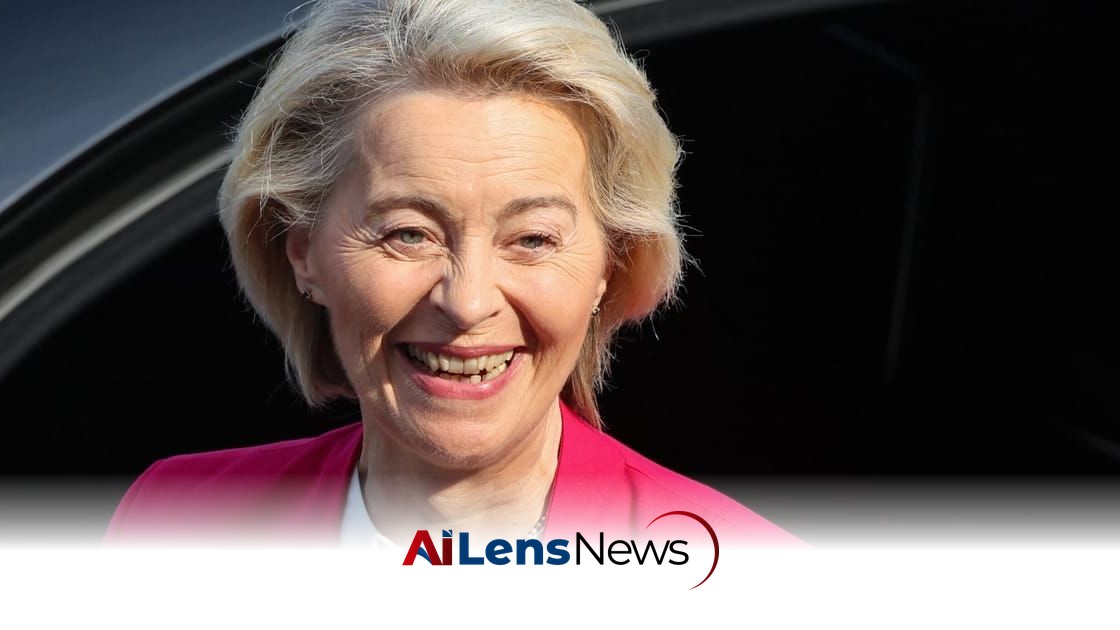


European Commission President Ursula von der Leyen will not attend the FIFA Men’s World Cup final, despite the match featuring Spain and Argentina.
London, United Kingdom Jul 17, 2026 ALN: European Commission President Ursula von der Leyen has made headlines by declining an invitation to attend the FIFA Men’s World Cup final, a high-stakes match set to take place on Sunday. This final will see the national teams of Spain and Argentina face off in what promises to be an exciting culmination of the tournament, with significant implications for both nations in terms of national pride and international reputation.
The FIFA World Cup, which occurs every four years, is not only the pinnacle of international football but also a global spectacle that transcends sports. The event draws attention from millions of fans around the world and serves as a platform for cultural exchange and national pride. The final match is often attended by dignitaries and political leaders, making it a unique intersection of sports and diplomacy.
The final will be held in New Jersey, a location chosen for its accessibility and capacity to host large international events, and is expected to draw a star-studded audience. Among those confirmed to attend are U.S. President Donald Trump, Spanish Prime Minister Pedro Sánchez, and Spain’s King Felipe VI. The presence of such high-profile figures underscores the importance of the event not only as a sporting occasion but also as a diplomatic gathering that could facilitate informal discussions among world leaders. The gathering of these leaders at a sporting event highlights the potential for soft diplomacy, where informal settings can lead to meaningful conversations about pressing global issues.
Despite the opportunity for informal engagement with President Trump and other leaders, von der Leyen's decision to abstain from the event has been attributed to scheduling conflicts. Paula Pinho, the chief spokesperson for the European Commission, confirmed that von der Leyen received an invitation but would not attend due to "agenda reasons." This choice reflects the complex balancing act that leaders must perform between political responsibilities and cultural engagements. As the head of the European Commission, von der Leyen's schedule is often packed with meetings and engagements that address critical issues facing the European Union, including economic stability, climate change, and geopolitical tensions.
Notably, Javier Milei, the president of Argentina, is also expected to be absent from the final. His decision is reportedly based on personal superstitions related to watching significant matches from the comfort of home rather than attending in person. This highlights the often personal nature of sports fandom, where rituals and beliefs can influence behavior and decision-making. Such individual choices can reflect broader cultural attitudes towards sports in different countries, where superstition and tradition may play a significant role in how fans engage with their national teams.
In the lead-up to the final, von der Leyen had expressed her enthusiasm for the tournament, particularly as it involved a strong European representation. Prior to the semifinal match between France and Spain, she shared a photo on social media holding a football, indicating her support for the teams competing. Her statement, "Whoever wins tonight, a strong European team will be in the final!" was a nod to the competitive spirit of European football, with Spain ultimately securing their place in the final with a 2-0 victory over France. This engagement with the tournament reflects von der Leyen's awareness of the cultural significance of football in Europe and its ability to unite fans across national borders.
Von der Leyen's recent activities have also included a visit to Kyiv, where she demonstrated EU support for Ukraine amid its ongoing conflict with Russia. This visit was significant not only for its political implications but also as a show of solidarity with a nation facing severe challenges. Such actions underscore the multifaceted role of political leaders, who must navigate both domestic and international spheres while also representing their nations on the world stage. Additionally, her participation in France’s Bastille Day celebrations further emphasizes her active role in European affairs, showcasing cultural diplomacy alongside political engagement.
Looking ahead, von der Leyen is scheduled to meet with former European Central Bank president Mario Draghi in Brussels to discuss matters of European competitiveness. This meeting is expected to focus on economic strategies that could enhance the EU's position in the global market, particularly in light of the challenges posed by rising powers in Asia and North America. The discussions are likely to touch on various topics, including innovations in technology, trade agreements, and the EU's response to global economic shifts.
The FIFA World Cup has historically been a significant event, not just in terms of sport but also as a showcase of national pride and international relations. EU nations, including Italy, Spain, Germany, and France, have dominated the tournament in recent years, winning four consecutive World Cups between 2006 and 2018. This record highlights Europe's strong football heritage and its ability to produce world-class talent. The success of these nations has not only bolstered their reputations in sports but has also enhanced their cultural influence globally.
Argentina's victory in the 2022 World Cup added a new chapter to the tournament's history, showcasing the competitive nature of global football. The success of these nations on the world stage has implications that extend beyond the pitch, influencing cultural exchanges, tourism, and national branding. For instance, a successful World Cup run can lead to increased tourism as fans flock to the winning nation to experience its culture and hospitality, thus boosting the economy.
Football remains one of the few industries where Europe has maintained a competitive edge over North America and Asia, despite the growing popularity of the sport in these regions. The World Cup serves as a platform for nations to display their prowess not only in sports but also in their ability to host and organize large-scale international events. The final match between Spain and Argentina is set to be a testament to this legacy, as both teams aim to etch their names in football history. The match also serves as an opportunity for both countries to showcase their culture, traditions, and hospitality to a global audience.
As the world tunes in to watch the final, the absence of key political figures like von der Leyen and Milei raises questions about the intersection of politics and sports. While the FIFA World Cup is primarily a sporting event, its capacity to bring together leaders and foster dialogue on pressing global issues cannot be understated. The implications of such gatherings extend beyond the realm of sport, influencing diplomatic relations and cultural perceptions among nations. The presence of political leaders at such events can often lead to informal discussions that may pave the way for future collaborations or agreements.
In conclusion, while Ursula von der Leyen will not be present at the FIFA World Cup final, her decisions and engagements reflect the intricate web of responsibilities that leaders navigate. The final itself promises to be a thrilling encounter, with both Spain and Argentina vying for glory, and will undoubtedly serve as a focal point for discussions around sports, politics, and international relations in the coming days. The implications of the final will resonate well beyond the football pitch, influencing how nations perceive each other and interact on various fronts.
To learn more about the latest developments in Football (Soccer), stay updated with our exclusive reports and analyses on AiLensNews.

