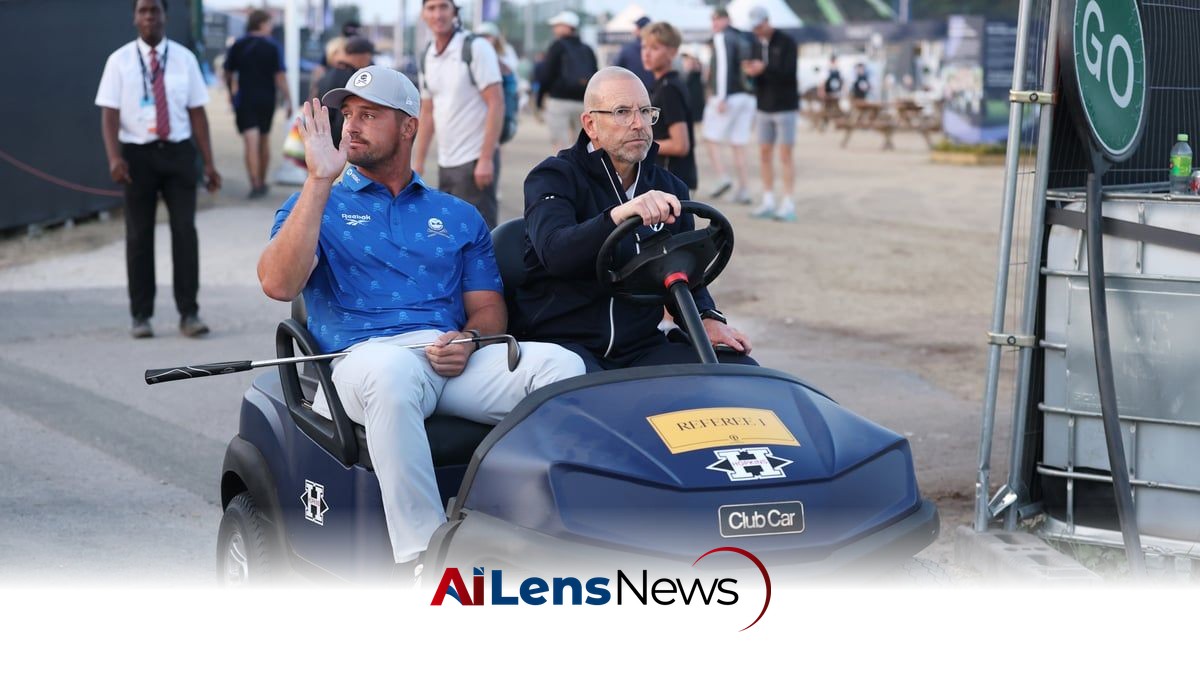


Bryson DeChambeau shares his thoughts on the controversial two-stroke penalty he received during The Open, igniting discussions on golf rules.
London, United Kingdom Jul 18, 2026 ALN: Bryson DeChambeau, the American golfer known for his powerful swing and analytical approach to the game, recently expressed his frustration regarding a two-stroke penalty he incurred during The Open at Birkdale. The penalty, which arose from a rules infringement, has sparked significant debate among fans and analysts alike. The incident has not only drawn attention to DeChambeau's performance but also highlighted the complexities and nuances of golf's rules, which can often lead to contentious situations, particularly in high-stakes tournaments.
During the tournament, DeChambeau was penalized after a ruling that many considered controversial. The incident occurred amidst a backdrop of impressive performances by fellow competitors, Herbert and Burns, who both delivered record-equalling rounds in the major championship. The juxtaposition of DeChambeau's misfortune against the backdrop of such stellar play only heightened the drama of the event, drawing attention to the often contentious nature of golf's rules. In a sport where precision is key, the stakes are particularly high, and players are acutely aware that every stroke can make a significant difference in their standings.
The penalty was imposed after DeChambeau was found to have violated specific rules governing equipment use. While the exact details of the infringement remain a topic of discussion, it is understood that the violation was related to the use of his driver, a club that DeChambeau has famously customized to suit his unique swing mechanics. This incident underscores the ongoing debates surrounding equipment regulations in professional golf, particularly as players like DeChambeau push the boundaries of technology and innovation in the sport. DeChambeau’s approach to club customization is a reflection of his scientific mindset, where he meticulously analyzes data to optimize his performance. However, this incident raises questions about how far players can go in customizing equipment before it crosses into the territory of rule violations.
The implications of the penalty were clear: it affected his overall score and standing in the tournament. The two-stroke deduction not only impacted his immediate performance but also had potential ramifications for his position in the overall championship standings. In a sport where every stroke counts, such penalties can be particularly disheartening for players, especially in high-stakes environments like The Open. The emotional toll of a penalty can be immense, as players invest significant time and effort in preparing for major tournaments, and a single misstep can derail their aspirations.
In a post-round interview, DeChambeau did not hold back his feelings about the situation. "I don't agree with it, this fires me up," he stated, emphasizing his belief that the ruling was unjust. His comments reflect a broader sentiment among players who feel that certain rules can be interpreted in ways that may not always align with the spirit of the game. DeChambeau's analytical approach to golf, often involving detailed statistics and data analysis, has made him a polarizing figure in the sport. His outspokenness regarding the penalty is indicative of his competitive nature and desire for fairness in the game. This incident serves as a reminder that professional athletes are not only competitors but also individuals who are deeply invested in the integrity of their sport.
Moreover, DeChambeau's frustration is not an isolated incident; it highlights a recurring theme in professional golf where players grapple with the strict enforcement of rules that can lead to unintended consequences. This incident has reignited discussions about the clarity and consistency of golf's regulations, with many advocating for reforms that could alleviate similar situations in the future. As the game evolves, the rules must also adapt to reflect the realities of modern play, particularly as technology continues to advance.
The penalty not only impacted DeChambeau's performance but also added an element of drama to The Open. As fans and commentators dissected the ruling, discussions about the need for clarity and consistency in golf's rules gained momentum. Many argued that the governing bodies of the sport, such as The Royal and Ancient Golf Club (R&A) and the United States Golf Association (USGA), should consider revising certain regulations to prevent similar controversies in the future. The ongoing discourse surrounding the enforcement of rules brings to light the tension between tradition and the need for modernization in a sport that prides itself on its storied history.
This incident also serves as a reminder of the human element in sports, where emotions can run high and decisions can have far-reaching consequences. The Open, one of golf's four major championships, is steeped in tradition and history, and the integrity of its rules is paramount. However, the debate surrounding DeChambeau's penalty underscores the challenges faced by governing bodies in balancing tradition with the evolving nature of the game. As players continue to innovate and push the boundaries of what is possible, the rules must be clear enough to accommodate these advancements while maintaining fairness.
As the tournament progresses, DeChambeau's focus will likely shift towards recovering from the setback and performing at his best in the remaining rounds. His determination to overcome this challenge could serve as a motivating factor for both him and his supporters. The ability to rebound from adversity is a hallmark of successful athletes, and DeChambeau's resilience will be tested in the coming days. The mental fortitude required to navigate such challenges is a critical aspect of competitive sports, and how DeChambeau handles this situation could define his performance moving forward.
In addition to his performance, the fallout from this incident may influence the discussions among players and officials about the need for clearer communication regarding rules and penalties. As golf continues to evolve with the introduction of new technologies and playing styles, the governing bodies may find it necessary to revisit and refine existing rules to ensure they are applicable and fair in modern play. The evolution of the game necessitates an ongoing dialogue about how to preserve the integrity of golf while accommodating the innovative approaches that players like DeChambeau bring to the sport.
In conclusion, Bryson DeChambeau's experience at The Open highlights the complexities of golf's rules and the emotional toll they can take on players. As discussions continue, the golfing community will be watching closely to see how this incident influences future tournaments and rule interpretations. The outcome of this situation may not only affect DeChambeau's career trajectory but could also pave the way for a broader reevaluation of how rules are enforced in the sport, ensuring that fairness and clarity remain at the forefront of golf's governance. The incident serves as a pivotal moment for the sport, prompting reflection on how to maintain the balance between tradition and progress in a rapidly changing landscape.
To learn more about the latest developments in Basketball, stay updated with our exclusive reports and analyses on AiLensNews.

