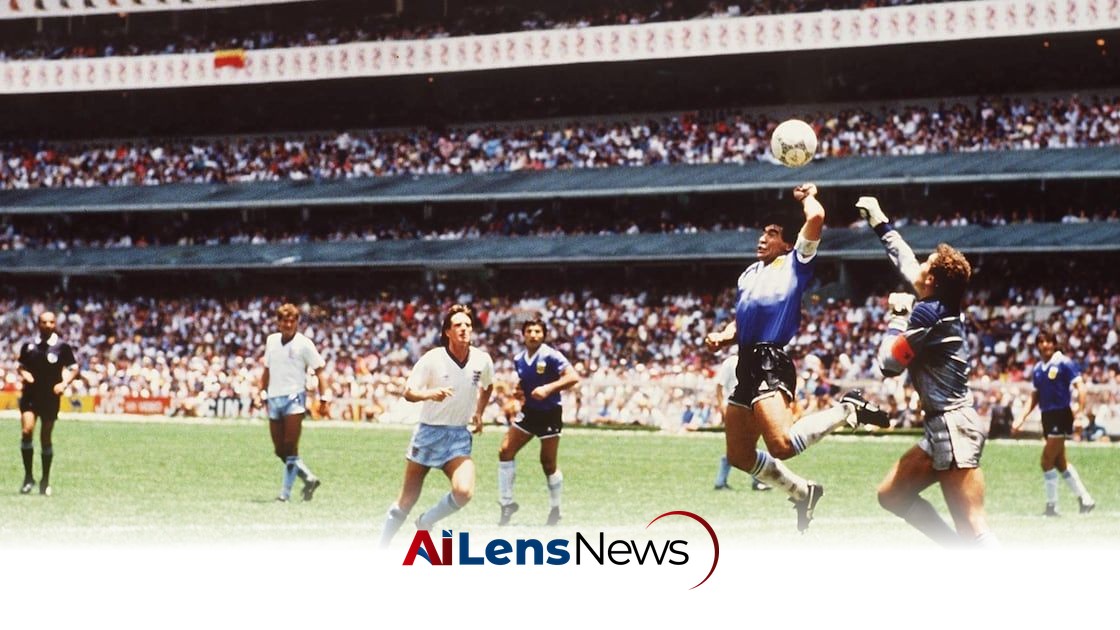


The England-Argentina football rivalry, marked by historic moments like Maradona's Hand of God, inspires a wealth of cultural works, from documentaries to songs.
Abu Dhabi, United Arab Emirates Jul 14, 2026 ALN: One of football’s favourite metaphors is that its sense of jeopardy, chance, and drama mirrors life, while its most passionate rivalries extend long beyond the final whistle.
Such is the case with England and Argentina, who meet again on July 15 in the 2026 World Cup semi-final. The fixture’s undercurrents include the Falklands War, fought four years before their famous 1986 World Cup quarter-final, and Diego Maradona’s unforgettable Hand of God goal, when he brazenly used his fist to send the ball into the net before scoring one of the greatest solo goals in World Cup history.
With so much drama coursing through the fixture, it is little wonder that it has inspired songs, documentaries, books, artworks, and memorabilia worth millions.
Ahead of the showdown, here are the cultural works that explain why England versus Argentina remains one of football’s richest stories.
The classic 1986 men’s encounter in Mexico City's Azteca Stadium was also given the documentary treatment with The Match, premiering at the Cannes Film Festival in May. The work features archive material and testimony from England players Gary Lineker, Peter Shilton, and John Barnes as well as Argentine counterparts Jorge Valdano, Oscar Ruggeri, and Jorge Burruchaga. The film places the game in the context of the Falklands War, highlighting how the political tensions of the time seeped into the players' psyche and the atmosphere surrounding the match.
Netflix’s 2023 documentary series Beckham revisited the rivalry through the 1998 World Cup, when England drew 2-2 with Argentina before losing on penalties. Three Lions midfielder David Beckham was sent off during the match, with the series examining the toll of the subsequent backlash, including harassment, death threats, and depression. This episode not only illustrates the intense scrutiny athletes face but also reflects broader societal issues regarding mental health and the pressures of public life.
One of the earliest encounters in the rivalry to be revisited on film appears in Copa 71, a documentary by Rachel Ramsay and James Erskine. The match was also played in the cauldron of the Azteca Stadium as part of the unofficial Women’s World Cup held in Mexico in 1971. The film details how the competition drew enormous crowds before disappearing from sporting history, highlighting the often-overlooked narratives of women in sports. Women’s football would return with a professionalized global tournament when the inaugural FIFA Women’s World Cup was held in 1991, but the legacy of early competitions like Copa 71 remains significant.
Among the surviving footage is Argentina’s 4-1 victory over England, with Elba Selva scoring all four goals. Selva reportedly saw recordings of the match for the first time during the making of the documentary, which serves as a poignant reminder of the historical significance of women’s football, particularly in the context of the rivalry between England and Argentina.
The 1986 encounter has been the subject of books by Argentine and British authors. A new-language account arrived in June with Asif Burhan’s The Other Side of the Hand of God, released this year. Drawing on interviews with players, commentators, photographers, journalists, and supporters, the book concentrates on the four minutes between Maradona’s two goals while also examining the respective teams’ troubled World Cup campaigns. This narrative not only captures the drama of the match but also delves into the larger implications of sports as a reflection of national identity and pride.
Argentine author Andres Burgo’s 2016 book El partido: Argentina-Inglaterra 1986 examines underreported details from the day, including Argentina’s improvised blue shirts and the political pressure placed on the players in the aftermath of the Falklands War. It also explores how the match became part of Argentine football mythology, solidifying Maradona’s status as a national hero. The book emphasizes the intersection of sport and politics, illustrating how the outcomes of such matches can resonate beyond the pitch and influence national sentiment.
In Argentina, the Hand of God inspired arguably the best-known Maradona anthem. This song captures the essence of Maradona's genius and the emotional highs and lows experienced by fans during the match. The anthem has become a staple in Argentine football culture, often sung in stadiums and during celebrations, serving as a cultural touchstone that connects generations of fans. The song not only celebrates Maradona's legacy but also reflects the passion and fervor that football evokes in its supporters.
The rivalry between England and Argentina has transcended the sport itself, becoming a cultural phenomenon that encompasses music, literature, and film. Each encounter between the two nations is imbued with historical significance, and the narratives surrounding these matches continue to evolve as new generations engage with the stories of their predecessors.
As the 2026 World Cup semi-final approaches, the anticipation builds not only for the match itself but for the myriad of cultural expressions that will undoubtedly accompany it. From new documentaries to musical tributes, the England-Argentina rivalry promises to inspire further exploration of its rich history and the emotions it evokes.
In the broader context, this rivalry serves as a reminder of how sport can reflect societal issues, such as national identity, historical grievances, and the quest for glory. The stories woven through the fabric of this rivalry provide a lens through which we can examine the complexities of human experience, both on and off the field.
As fans prepare for the upcoming clash, they do so with an understanding that this match is more than just a game; it is a continuation of a narrative that has been unfolding for decades, steeped in passion, rivalry, and cultural significance. The legacy of England versus Argentina is a testament to the power of sport to unite and divide, to inspire and provoke, and to create lasting memories that resonate long after the final whistle has blown.
To learn more about the latest developments in Basketball, stay updated with our exclusive reports and analyses on AiLensNews.

