

This article explains the 'lucky loser' system in , detailing how players can replace withdrawals in tournaments like Wimbledon.
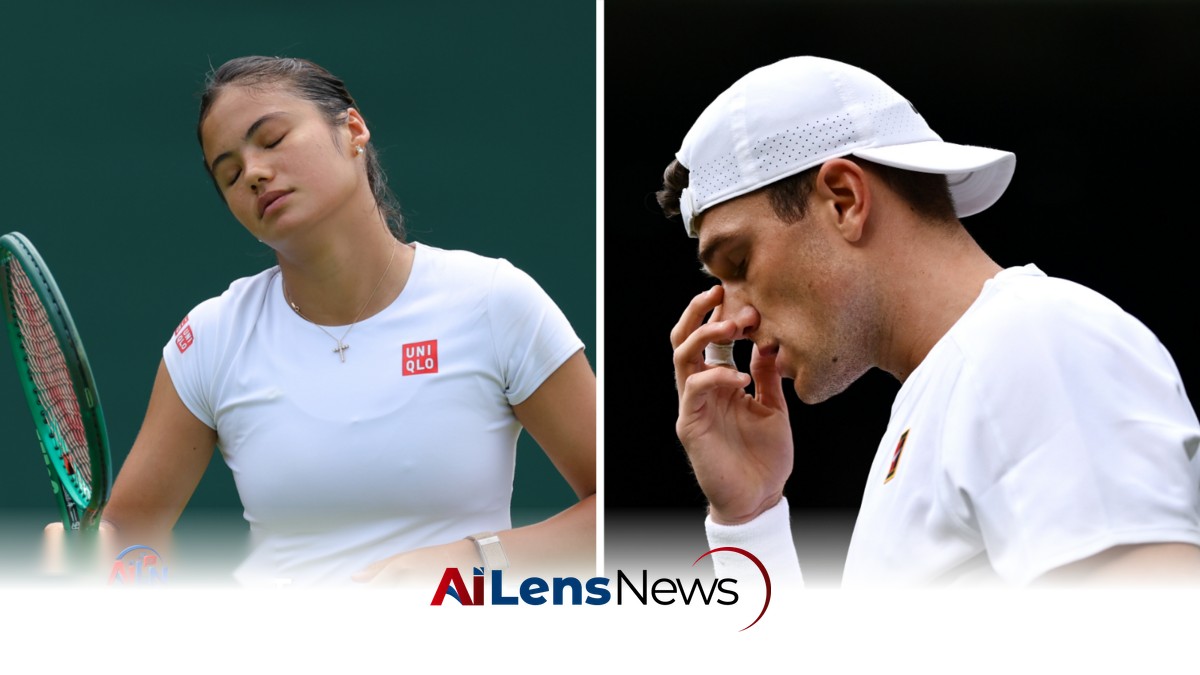
New Delhi, India Jun 29, 2026 ALN: Jack Draper has become the second British hopeful to make a last-minute withdrawal from Wimbledon because of injury.
He joins Emma Raducanu on the list, after the British women's number one withdrew through injury on the eve of the tournament. The withdrawal of these two players is significant not only for their personal competitions but also for the broader context of British , especially as both players have been seen as rising stars with the potential to make a significant impact on the .
World number 106, Latvia’s Darja Semenistaja, has been announced as the 'lucky loser' to replace Raducanu, with world number 153, Serbia's Dusan Lajovic, replacing Draper. The term 'lucky loser' refers to players who lose in the final qualifying rounds but are given a chance to compete in the main draw due to withdrawals from other competitors. This system allows for a dynamic entry process and ensures that the tournament remains competitive and engaging.
Semenistaja and Lajovic are the highest-ranked players to have reached the men's and women's final qualifying rounds but failed to progress to the main draw. The inclusion of these players as lucky losers highlights the importance of the qualifying rounds in determining not just who plays in the tournament, but also who might be able to seize unexpected opportunities when other players are unable to compete.
So how does the system work? Understanding the 'lucky loser' system is essential for fans and participants alike, as it outlines how players can still have a shot at competing even after a disappointing qualifying round.
The selection process for lucky losers depends on when the withdrawing player pulls out of the tournament:
One withdrawal once qualification is complete: The highest-ranked player who was eliminated in the final qualifying round is selected.
Subsequent withdrawals once qualification is complete: The highest-ranked players who were eliminated in the final qualifying round are selected in descending order of ranking.
One withdrawal before qualification is complete: The two highest-ranked players in the final qualifying round are entered into a random draw.
Two or more withdrawals before qualification is complete: Three or more highest-ranked players in the final qualifying round are entered into a random draw.
Players who are registered on the lucky loser list must be signed in and on-site, ready to play in the event of a withdrawal in the first round. This requirement ensures that the tournament can proceed smoothly and that there is always a replacement ready to step in at a moment's notice.
The list is posted each day at least one hour before the sign-in deadline, which is itself half an hour before the first scheduled match of the day. This timing is crucial for maintaining the tournament's schedule and for ensuring that all players are aware of potential changes to the draw.
In the rare event of there being more player withdrawals than players available who reached the final qualifying round to replace them, the selection moves on to the highest-ranked players in the penultimate qualifying round. This contingency ensures that the tournament can still fill its draw even in the face of unexpected withdrawals.
The random draw policy around withdrawals before qualification has concluded was introduced in 2006 to prevent ethical issues arising. This change was significant in ensuring the integrity of the competition and preventing players from manipulating the system.
Previously, it was possible for high-ranking players, who knew they had lucky loser status secured, to deliberately lose in final qualifying rounds in order to help another lower-ranking player progress. Such actions could undermine the competitive nature of the tournament and lead to questions about the fairness of the system.
One notable incident occurred during Wimbledon qualifying in 2005 when American Justin Gimelstob was advised to still play Switzerland's George Bastl in the final qualification round despite a back injury. Gimelstob was told by officials that he would be guaranteed lucky loser status if he played and lost, and that it was highly likely there would be at least one withdrawal before the start of Wimbledon, giving him time for his injury to heal. The introduction of the new random draw policy between the two highest-ranking players would have removed his guarantee of selection, thus promoting a fairer competitive environment.
Players are only eligible to be lucky loser entries if they have taken part in a tournament's qualifying rounds. This rule ensures that only those who have demonstrated their competitive capabilities through the qualifying process have the chance to compete in the main draw as replacements.
In some instances, players that already have a place at the tournament withdraw further in advance of it beginning, such as Carlos Alcaraz and Victoria Mboko. Their early withdrawals can lead to significant shifts in the tournament landscape, as they open up spots for other players who may not have qualified initially.
Wimbledon already announced their wildcard replacements close to the time that they withdrew. This proactive approach helps maintain the tournament's integrity and ensures that fans are aware of any changes well in advance.
The ATP rulebook states:
"The tournament shall pay prize money equal to that paid first-round losers to each player who would have been a direct acceptance if not for the late substitution. This payment shall not apply in the case where the player gained entry into a main draw singles, at any event, by other means."
In this instance, both Raducanu and Draper will receive first-round prize money despite not playing. This policy is in place to protect players who may face unforeseen circumstances that prevent them from competing, ensuring that they are not financially penalized for situations beyond their control.
Several lucky losers have progressed beyond the opening rounds of Grand Slam tournaments, but none have ever won a title. The concept of a lucky loser making a significant impact in a Grand Slam event adds an element of intrigue and excitement to the tournament, as fans often rally behind these players who seize unexpected opportunities.
The furthest a lucky loser has advanced in Wimbledon is American Lauren Davis, who reached round three in 2019. Her journey serves as an inspiring story for other players who may find themselves in similar situations, demonstrating that perseverance and opportunity can lead to unexpected success.
However, there have been a handful of lucky losers who have won lower-tier ATP and WTA tournaments. A notable example of this was then-15-year-old Coco Gauff winning her first title at the Linz Open, after qualifying as a lucky loser. Such instances illustrate that while the path to victory may be challenging, it is not impossible for those who take advantage of the circumstances presented to them.
WTA
Victoria Mboko (world number 9) - replaced by Darja Vidmanova (world number 92)
Hailey Baptiste (26) – replaced by Hanne Vandewinkel (103)
Cristina Bucșa (31) – replaced by Victoria Jimenez Kasintseva (110)
Emma Raducanu (37) – replaced by Darja Semenistaja (106)
Marketa Vondrousova (44) – replaced by Nadia Podoroska (574)
Sonay Kartal (60) – replaced by Paula Badosa (141)
Varvara Gracheva (67) – replaced by Sinja Kraus (93)
Veronika Kudermetova (86) – replaced by Francesca Jones (106)
ATP
Carlos Alcaraz (world number 2) – replaced by Jan Choinski (world number 100)
Lorenzo Musetti (15) – replaced by Matteo Berrettini (51)
Valentin Vacherot (20) – replaced by Sho Shimabukuro (90)
Tomas Machac (42) – replaced by Jesper de Jong (73)
Sebastian Korda (46) – replaced by Alexandre Muller (126)
Holger Rune (63) – replaced by Titouan Droguet (116)
Mattia Bellucci (65) – replaced by Pablo Llamas Ruiz (119)
Arthur Cazaux (81) – replaced by Alex Molcan (101)
Eliot Spizzirri (92) – replaced by Martin Damm (106)
Reilly Opelka (102) – replaced by Dalibor S
To learn more about the latest developments in Tennis, stay updated with our exclusive reports and analyses on AiLensNews.

