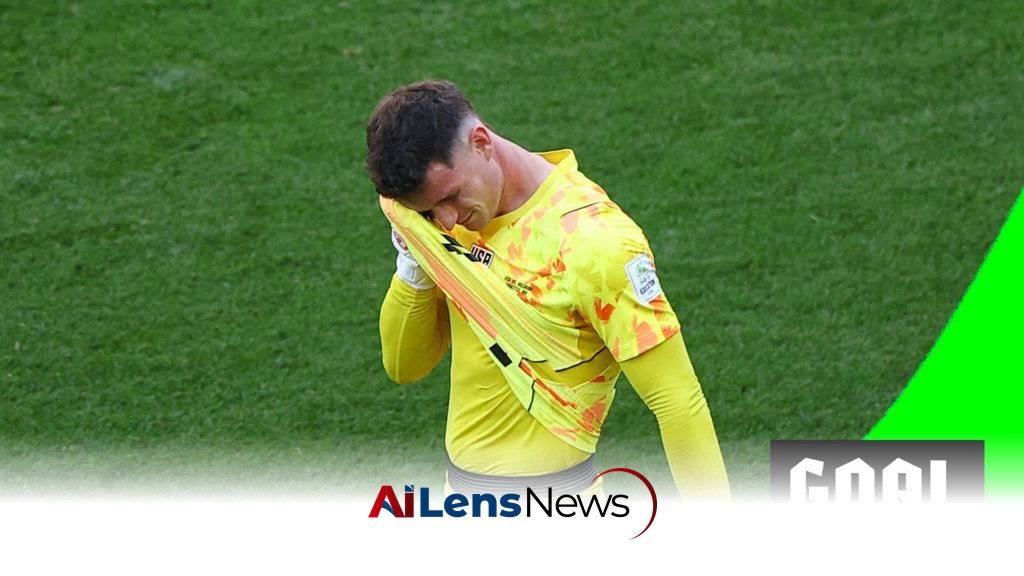


USA goalkeeper Matt Freese makes a critical error, allowing Belgium's Hans Vanaken to score easily, contributing to a 4-1 defeat in the round of 16.
New Delhi, India Jul 7, 2026 ALN: In a stunning display of misjudgment, United States goalkeeper Matt Freese handed Belgium a crucial third goal during their round of 16 match. This error not only highlighted the vulnerabilities in the US defense but also allowed Belgium to seize control of the game. Such moments can be pivotal in high-stakes matches where every decision and play can have significant implications on the outcome.
Freese's blunder occurred when he misplayed a pass, gifting the ball directly to Belgium's Hans Vanaken. With an open net in front of him, Vanaken made no mistake, slotting the ball home with ease. This moment epitomized the struggles faced by the US team throughout the match and underscored the high stakes of international competition, where even a minor lapse in concentration can lead to significant consequences. The psychological pressure on players in these scenarios can be immense, especially when the stakes are high and the eyes of the world are watching.
The match concluded with a final score of US 1-4 Belgium, marking a disappointing exit for the United States in the tournament. The team had hoped to advance further but was ultimately outclassed by a more experienced Belgian side. Belgium, known for its talented roster and tactical prowess, showcased why they are considered one of the top teams in the world. The Belgian side has been a consistent performer on the international stage, boasting a mix of seasoned veterans and rising stars who have honed their skills in some of the most competitive leagues globally.
Despite the setback, the US team showed moments of promise, particularly in the early stages of the match. The players displayed determination and skill, creating several opportunities to score. However, defensive errors like Freese's proved too costly, as they allowed Belgium to capitalize on mistakes. The match served as a reminder of the importance of composure and decision-making under pressure, especially in high-stakes games where the margin for error is razor-thin. The ability to remain calm and execute plays effectively is crucial in international tournaments, where teams are often evenly matched.
Throughout the tournament, the US team had been praised for their youthful exuberance and attacking style of play. However, the round of 16 match exposed some of the vulnerabilities that had been overlooked in earlier games. The defense, while occasionally solid, struggled to maintain consistency, and moments of panic led to critical mistakes. This was particularly evident in the case of Freese, who, despite being a promising talent, faced immense pressure in a high-pressure match. The experience of playing on such a grand stage can be daunting for young players, and it is not uncommon for them to falter under the weight of expectations.
Freese's mistake was not an isolated incident but rather a reflection of the challenges faced by the entire US squad. The team has been in a rebuilding phase, focusing on developing young talent and integrating them into a cohesive unit. While this approach has its merits, it also comes with the risk of inconsistency, particularly in crucial moments of a tournament. The US Soccer Federation has been investing in youth development programs to ensure that the next generation of players is equipped with the skills and mental fortitude needed to compete at the highest levels.
Belgium, on the other hand, demonstrated the benefits of experience and tactical discipline. The team has been a formidable force in international soccer for several years, with a blend of seasoned veterans and emerging stars. Their ability to capitalize on the US's mistakes was a testament to their preparation and understanding of the game. Belgium's attack was relentless, and they showcased their depth by scoring four goals, each one a product of teamwork and strategic execution. The synergy between players on the field is crucial, as it allows teams to exploit weaknesses in their opponents' defenses effectively.
The implications of this match extend beyond just the immediate disappointment for the US team. It raises questions about the future direction of the program and the strategies that need to be employed to compete at the highest levels. The coaching staff will need to analyze the performance closely, identifying areas for improvement, particularly in defensive organization and decision-making under pressure. Developing a robust tactical framework that emphasizes both offensive creativity and defensive solidity will be vital for the US to succeed in future tournaments.
As the tournament progresses, Belgium will look to build on this victory, aiming to advance deep into the knockout stages. They will face increasingly difficult opponents, and their ability to maintain form and composure will be critical. The success of their campaign could further elevate their status in international soccer and solidify their reputation as a powerhouse. The pressure of being a favorite can be daunting, but Belgium's experience in handling such situations will be an asset as they seek to capture a major trophy.
Meanwhile, the US squad will need to regroup and address the issues that led to their early exit. The focus will likely shift to developing a more robust defensive strategy and enhancing the players' mental resilience in high-pressure situations. The experience gained from this tournament can serve as a valuable learning opportunity for the younger players, who will carry these lessons into future competitions. Building a culture of accountability and resilience will be essential for the team's growth moving forward.
The disappointment of the US team's exit is palpable among fans and analysts alike. Many had hoped to see the team make a deeper run in the tournament, building on the momentum generated by previous performances. However, the reality of international soccer is that the competition is fierce, and the margin for error is slim. The US will need to take this setback as a catalyst for growth and improvement. Fans and stakeholders will be watching closely to see how the team responds and evolves in the coming years.
In conclusion, while the match against Belgium was a painful reminder of the challenges faced by the US team, it also presents an opportunity for reflection and development. The path forward will require a commitment to addressing the weaknesses exposed during the tournament, fostering a stronger team dynamic, and preparing for future challenges on the international stage. Only time will tell how the lessons learned from this experience will shape the future of US soccer. The journey ahead will demand resilience, strategic foresight, and a collective effort to elevate the program to new heights.
Available to UK users only.
To learn more about the latest developments in Football (Soccer), stay updated with our exclusive reports and analyses on AiLensNews.

