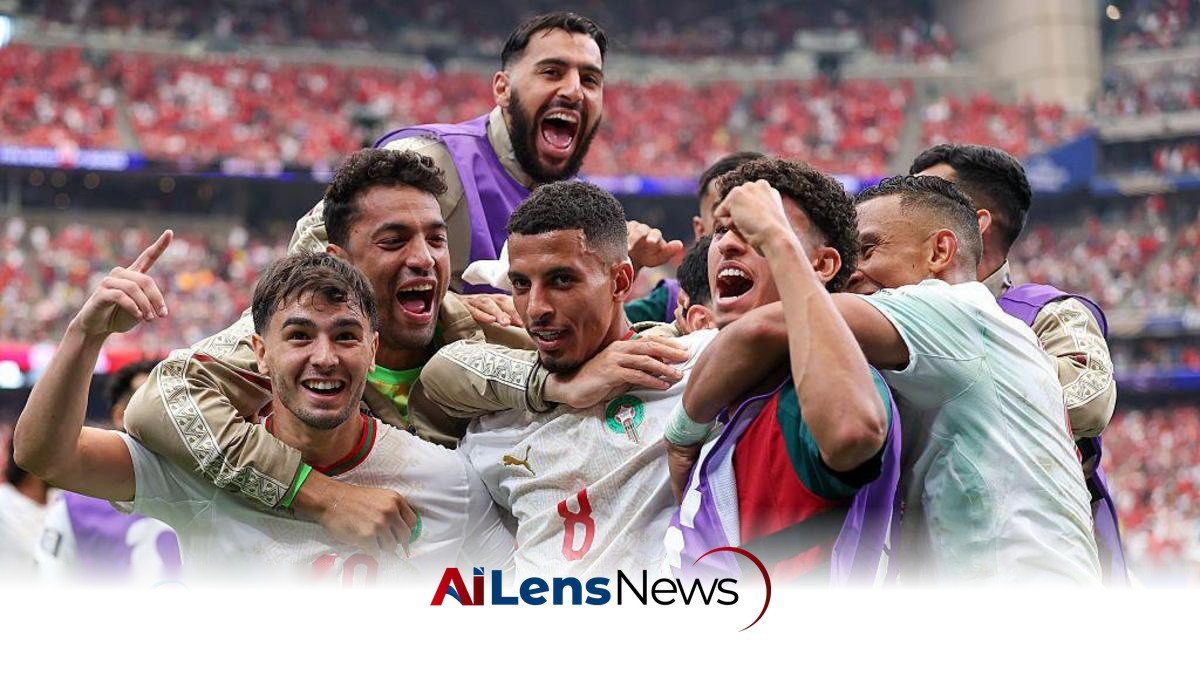


Morocco faces France in the 2026 World Cup quarter-finals, aiming to reach the last four again, showcasing their ambition and growth in .
New Delhi, India Jul 9, 2026 ALN: "Morocco has the potential to be a powerhouse of the world."
This bold statement comes from Welshman Neil Ward, who has witnessed Morocco's passion and plans firsthand. After serving as chief executive at the Association of Wales Trust, Ward took on the role of director of technical operations at the Royal Moroccan Federation (RMFF) in 2020. His unique perspective allows him to see the transformative changes occurring in Moroccan .
Ward was present in Rabat when Morocco made history by becoming the first African nation to reach the World Cup semi-finals in 2022. This unprecedented achievement not only elevated the nation's status in international but also ignited a wave of national pride and enthusiasm. Ward recalls the excitement, stating, "It took over all the city right through until the early hours of the morning, with the king out celebrating as well." The Atlas Lions, as they are affectionately known, were eliminated by France but have since set their sights on further accomplishments, aiming to solidify their place as a formidable force in global .
Regardless of the outcome at Boston Stadium, it seems the co-hosts of the next World Cup in 2030 are far from finished. Another Briton, Simon Jennings, understands this ambition well. As a coaching educator responsible for youth development across Morocco from 2020 to 2024, he emphasizes that this progress is not accidental but a result of clear national ambition and strategic planning. The Moroccan government and authorities have demonstrated a commitment to elevating the within the country, reflecting a broader vision for national development.
This ambition has been supported from the highest levels, with sustained investment in the game backed by King Mohammed VI. Significant funds have been allocated for a state-of-the-art training facility, a national academy, regional training centers, stadium redevelopments, and thousands of amateur pitches. Ward notes, "You need those top facilities for players in Europe who are used to it. So when you come in and see a training facility of this calibre, it shows you these people are serious and want to be successful." This investment is crucial in providing Moroccan players with the resources they need to compete at higher levels, both domestically and internationally.
Despite calls from youth protesters for funds to be redirected toward education and healthcare, the royal palace has committed to allocating £11.2 billion in the 2026 budget for health and education, marking a 16% year-on-year increase. This dual commitment to both s and social services indicates a holistic approach to national development, where the growth of is seen as a catalyst for broader economic and social progress. For Ward, the motivation behind Morocco's investment is clear: tapping into the nation's passion for and enhancing their international presence.
Morocco's mentality has shifted significantly in recent years. Prior to the 2022 World Cup, they had only reached the knockout stages once before, in 1998. However, former manager Walid Regragui instilled a sense of purpose and ambition in his players, making it clear that they were not just there to play three group games; they were there to achieve something remarkable. This change in mindset has been pivotal in fostering a culture of success and resilience within the team.
Morocco has the talent to succeed, aided by their diaspora and players born in the country. The ministry of foreign affairs estimates that over five million Moroccans live abroad, and the RMFF has been proactive in identifying and reaching out to promising players with Moroccan roots by deploying full-time scouts across Europe. This outreach is critical in ensuring that talented individuals who may have been overlooked are given the opportunity to represent their homeland.
Jennings emphasizes that these players are embraced as Moroccans, stating, "You don't get a feeling that it's a second nation. They are totally into being Moroccan. It's a passion they have and a nationality they feel strongly about." This sense of belonging plays a vital role in the players' commitment and performance on the field. The results are evident, with 19 of the 26 members of Morocco's current World Cup squad born outside the country. Notably, six of these players were also eligible to play for quarter-final opponents France, including highly-rated Lille midfielder Ayyoub Bouaddi.
Although Bouaddi represented France at youth levels, he has always been proud of his Moroccan heritage. Similarly, Spain's teenage starlet Lamine Yamal, who has a Moroccan father, has been engaged by the RMFF. Ward asserts that "no stone is left unturned" in the search for talent, even if some efforts do not yield results. This comprehensive approach to talent identification and development is crucial for Morocco's long-term success in international .
Looking ahead, the next step for Morocco is to develop more senior internationals through their domestic production line. Chris van Puyvelde, who served as technical director at the RMFF from 2022 to 2025, stated that the goal for the next World Cup is to achieve an equal split between Moroccan-born players and those raised abroad. However, he cautioned that the overall organization within the country needs improvement. This highlights the importance of building a robust infrastructure that can support the growth of at all levels, from grassroots to the professional ranks.
Morocco manager Mohamed Ouahbi has faced pressure for results, especially after his under-20 side failed to qualify for the African Nations Cup in 2023. Nevertheless, with renewed support and patience, Ouahbi's staff won the Under-20 World Cup in 2025. This victory not only provided a morale boost for the team but also showcased the potential of the next generation of Moroccan players. Following this success, Ouahbi was subsequently promoted to senior team manager after Regragui's resignation following the African Nations Cup. This transition reflects a commitment to continuity and the belief in the potential of homegrown talent.
As Morocco prepares to co-host the next World Cup with Portugal and Spain, it feels as though they are building towards something significant. The implications of hosting such a prestigious event extend beyond , as it presents an opportunity for Morocco to showcase its culture, hospitality, and development to the world. Van Puyvelde notes, "They are building stadiums, but they are also building the structure from the ground up. Once you get a little bit of oxygen, like Morocco did in Qatar, you see this oxygen is spreading very fast all over the country." This metaphor of "oxygen" symbolizes the newfound energy and enthusiasm surrounding Moroccan , which has the potential to inspire future generations and elevate the nation's status on the global stage.
In conclusion, Morocco's journey towards becoming a powerhouse in world is marked by strategic investments, a shift in mentality, and a commitment to inclusivity within its ing community. The nation's passion for the , combined with a clear vision and robust infrastructure, positions Morocco well for future success on both domestic and international fronts. As the world watches Morocco's progress, the implications of their achievements will resonate far beyond the pitch, impacting the nation's identity and pride for years to come.
To learn more about the latest developments in Football (Soccer), stay updated with our exclusive reports and analyses on AiLensNews.

