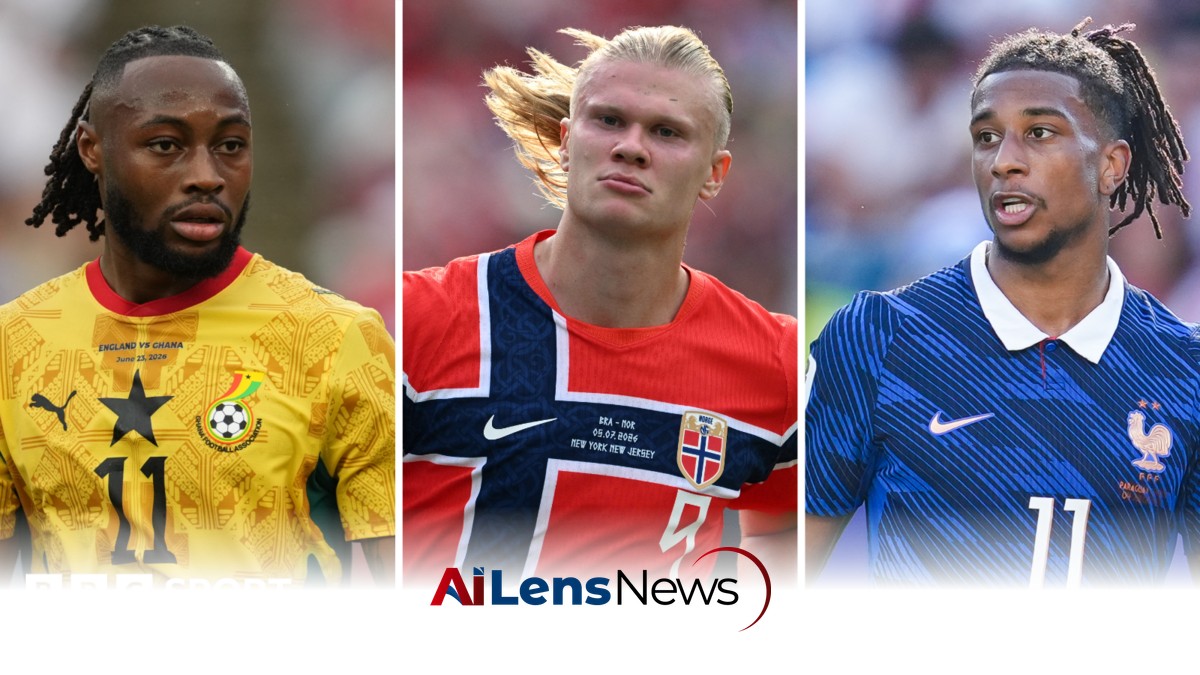


While England boasts a talented squad, several World Cup stars from other nations could have represented the Three Lions under different circumstances.
New Delhi, India Jul 8, 2026 ALN: Erling Haaland will be the man England fear most when they face Norway in the World Cup quarter-finals on Saturday (22:00 BST) - but things could have been very different.
The Manchester City striker was born in Leeds, so would be lining up for the Three Lions if he had opted to represent the country of his birth. But he isn't the only one.
There are a number of World Cup stars who could have played for England, but are representing other countries. The phenomenon of players choosing to represent nations other than the one in which they were born is not new, but it has gained prominence in recent years, particularly in the context of globalized where players often have multiple national identities due to their family backgrounds or residency.
Interestingly, 20 of the 26 players in Thomas Tuchel's squad for this World Cup were eligible to play for other nations but committed to England. This statistic underscores the depth of talent that England has cultivated through its youth systems, as well as the competitive nature of international , where players must make significant decisions regarding their international careers.
BBC has selected a team of players from this tournament who slipped through the Three Lions' net - have your say and let us know if there is anyone you think we have missed in the comments section.
Switzerland goalkeeper Marvin Keller, 23, was born in London but came through the youth system at Grasshoppers, a club renowned for developing young talent in Switzerland. His move to FC Wil marked the beginning of his professional career, and he later joined Young Boys, where he has established himself as their first-choice keeper. Keller made his only Switzerland appearance so far in a pre-World Cup friendly, a significant milestone for any young player.
West Ham defender Aaron Wan-Bissaka, who was born in London, represented England at under-20 and under-21 levels but switched international allegiance to DR Congo in 2025. This decision came after a series of injuries that hampered his chances of making a lasting impact with the England senior team. The 28-year-old was called up by England in September 2019 but was forced to withdraw with an injury, which may have influenced his decision to seek opportunities elsewhere.
Antonee Robinson was born in Milton Keynes and raised on Merseyside, where he came through the ranks at Everton before moving on to Wigan and Fulham. His father was born in England but raised in New York and gained American citizenship, which provided Robinson with the option to represent the USA. Committing his international future to the USA in 2018, the 28-year-old's decision reflects a growing trend among players with dual nationalities opting for the country that offers them a clearer path to international competition.
Axel Tuanzebe was born in Bunia, DR Congo, but moved to England as a child. The 28-year-old, who made one appearance for England Under-21s, is a graduate of Manchester United's academy. His journey through the ranks of one of England's most prestigious clubs speaks to the opportunities available to young talent in the country, yet his switch to represent DR Congo highlights the complexities of national allegiance in .
Lancashire-born Scotland international Scott McTominay certainly merits his place in this line-up despite a quiet World Cup. The 29-year-old made 255 appearances for Manchester United after coming through their academy. His career took off upon switching to Napoli in 2024, where he was named Serie A player of the year in a title-winning debut season. McTominay has also become a central player for his country, scoring 15 goals in 73 appearances, showcasing his commitment to his Scottish roots.
The son of a German mother and a Nigerian father, Felix Nmecha was born in Hamburg but moved to England with his family in 2007. He joined Manchester City's academy and went on to make three appearances for the club before moving on to Wolfsburg and Borussia Dortmund. Nmecha, 25, played for both Germany and England at youth international level, illustrating the tough choices young players must make as they progress in their careers.
Antoine Semenyo, 26, is another player who was born in London and whose career developed exclusively in England. Brought up by Ghanaian parents (his mother is also half-French), he has long been a supporter of the Ghana national side. His first appearance for the Black Stars came in 2022, while he was at Bristol City, and he has since made a name for himself at Bournemouth and Manchester City, further emphasizing the impact of cultural identity on international representation.
Born in Stuttgart to a Nigerian-British father and a German mother with Polish roots, Jamal Musiala moved to England when he was seven and spent much of his childhood in the UK. The attacking midfielder, 23, also played for England from under-15 to under-21 levels alongside the likes of Jude Bellingham. However, after moving to play for Bayern Munich in 2020, he opted to pledge his allegiance to the country of his birth in 2021, a decision that sparked discussions about the influence of club allegiance on national team choices.
With a British-Nigerian father and French-Algerian mother, Michael Olise, 24, had a choice of four international sides. Born in London and coming through the English academy system at clubs like Arsenal, Manchester City, Chelsea, and Reading, he ultimately opted to represent France. His first senior call-up for Les Bleus arrived just over a month after his £50m move from Crystal Palace to Bayern Munich in 2024, illustrating how club success can play a pivotal role in international selection.
Erling Haaland has set all kinds of goalscoring records at Manchester City since moving to the Premier League in 2022. He has also been prolific on the European and international stage, with 60 goals in 53 games for Norway and aspirations for the Golden Boot at this year's World Cup, having already scored seven goals. Born in England while his father, Alf-Inge Haaland, played for Leeds, he moved to Bryne, his parents' hometown, at the age of three. This early relocation to Norway and his subsequent development in their youth teams led him to represent Norway at the senior level.
Here is a name you will have heard plenty about over the past few days. Folarin Balogun was born when his mum was on a trip to New York and could also have played for England or Nigeria. The Arsenal academy product played for both the US and England at under-18 level and was at the heart of Lee Carsley's England U21 plans, scoring seven goals in 13 games as they geared up for the 2023 Under-21 European Championships. However, the public support for him to commit to the US grew as the path to England's senior side appeared more convoluted, leading him to make his debut for the USA in June 2023. Balogun's performance at the World Cup, where he scored three times before the US was eliminated in the last-16 stage, has further ignited discussions about player eligibility.
In conclusion, while England has a strong squad, the presence of these talented players on other national teams highlights the complexities of international eligibility. The decisions made by these players reflect personal histories, family ties, and professional opportunities that shape their careers. As the global landscape of continues to evolve, the narratives surrounding international representation will likely become even more intricate, with players weighing their options based on factors that extend beyond mere nationality.
To learn more about the latest developments in Football (Soccer), stay updated with our exclusive reports and analyses on AiLensNews.

