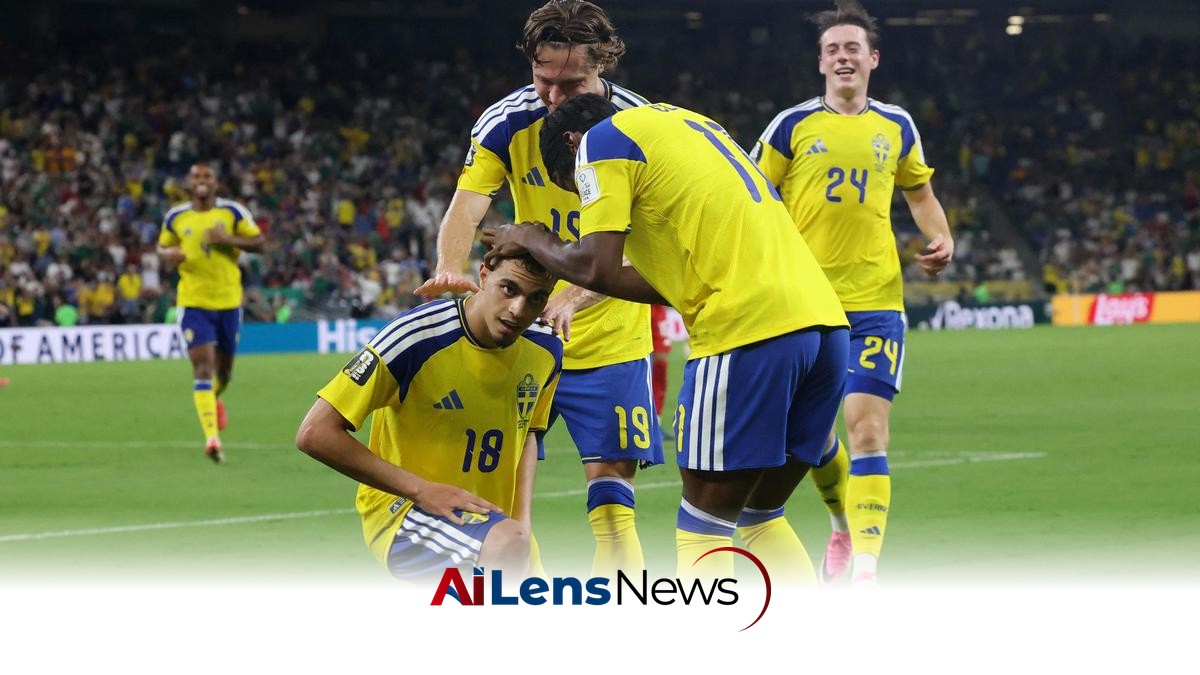


Sweden secured a commanding 5-1 victory over Tunisia in their World Cup opener, with Yasin Ayari scoring two stunning goals.
Sweden, Sweden Jul 1, 2026 ALN: Sweden made a resounding statement in their opening match of the FIFA World Cup 2026 by defeating Tunisia 5-1 in Guadalupe, Mexico, on June 14, 2026. This match not only showcased Sweden's attacking capabilities but also raised questions about Tunisia's defensive strategies and overall performance on the world stage. With this victory, Sweden took early control of Group F, positioning themselves favorably for the remainder of the tournament.
The FIFA World Cup is the pinnacle of international football, held every four years, and it attracts the best teams from around the globe. The 2026 edition is particularly notable as it is being hosted jointly by the United States, Canada, and Mexico, marking the first time the tournament will feature an expanded format with 48 teams. This change allows for more nations to participate, increasing the competitiveness and excitement of the tournament. Sweden's strong performance against Tunisia in their opener is indicative of their ambitions to make a deep run in this prestigious event.
The match commenced with a high level of intensity as Yasin Ayari, a young and talented midfielder, opened the scoring for Sweden. His goal came in the 10th minute with a powerful shot from outside the box, a moment that set the tone for what would unfold. Ayari's ability to strike from distance has been a hallmark of his playing style, and his early goal not only energized the Swedish squad but also stunned the Tunisian defense. This early advantage allowed Sweden to dictate the pace of the match and assert their dominance on the field.
Following Ayari's impressive opener, Sweden continued to apply pressure on Tunisia's backline. In the 30th minute, Alexander Isak, a forward known for his pace and technical skill, increased Sweden's lead to 2-0. Isak's goal exemplified the fluidity of Sweden's attack, as he maneuvered through defenders with ease before slotting the ball into the net. This goal demonstrated Sweden's tactical prowess and ability to exploit gaps in the opposition's defense. Isak's performance, characterized by his agility and sharp decision-making, is crucial for Sweden's aspirations in the tournament.
Despite the mounting pressure, Tunisia managed to rally and create opportunities of their own. Their efforts culminated in a goal by Omar Rekik just before halftime, which came as a relief for the North African side. Rekik's goal not only provided Tunisia with a sense of hope but also highlighted their resilience in the face of adversity. The goal was a product of a well-executed counter-attack, showcasing Tunisia's potential to capitalize on Sweden's defensive lapses. However, the joy was short-lived for Tunisia, as Viktor Gyokeres quickly responded for Sweden, restoring the two-goal cushion with a well-placed shot shortly after the second half began.
The match's tempo remained high, with both teams exchanging chances. Mattias Svanberg, another key player for Sweden, added to the scoreline, making it 4-1. Svanberg's goal was a testament to Sweden's depth in midfield, as he showcased his ability to contribute offensively. His performance reflects the strategic depth of the Swedish squad, which has been a focus of coach Graham Potter since he took over the national team in 2023. Potter has emphasized a more dynamic and attacking style of play, which has evidently paid dividends in their World Cup opener. The final goal of the match came from Ayari, who capped off his remarkable performance with a second stunning strike, bringing the final score to 5-1. His two-goal effort not only highlighted his individual talent but also underscored Sweden's collective strength as a team.
The implications of this match are significant for both teams. For Sweden, the victory serves as a confidence booster as they aim to advance beyond the group stages. Historically, Sweden has been a competitive force in international football, with a rich history in the World Cup, including reaching the finals in 1958 and 1994. Under Potter's guidance, the team has sought to rebuild and adapt their playing style, focusing on a more attacking approach. The transition has not been without challenges, especially considering the team's struggles during the qualification phase, where they finished at the bottom of their group and had to rely on a Nations League playoff to secure their place in the tournament. This win could mark a turning point for the squad, instilling belief in their capabilities as they look ahead.
On the other hand, Tunisia's heavy defeat raises concerns about their defensive organization and tactical setup. Known for their disciplined and compact defensive play, Tunisia will need to reassess their strategies moving forward in the tournament. The team's performance against Sweden starkly contrasts with their reputation, and they will need to regroup quickly to avoid further setbacks. Tunisia has historically been a competitive side in African football, qualifying for several World Cups, but they have yet to advance past the group stage. This match could serve as a wake-up call for the Tunisian squad to address their vulnerabilities and improve in subsequent matches. The pressure will be on their coaching staff to analyze the game thoroughly and implement necessary changes to enhance their defensive solidity.
In the other Group F match, Japan and the Netherlands played to an exciting 2-2 draw, which sets the stage for a highly competitive group. The results of the opening matches highlight the unpredictability of the tournament and the potential for upsets. With Sweden's commanding win and Japan's draw against a strong Dutch side, the dynamics of Group F have become increasingly intriguing. As the group progresses, each team will be vying for points to secure a place in the knockout stages, making every match critical. The draw between Japan and the Netherlands emphasizes that the competition is fierce, and any team can claim vital points, further complicating Sweden's path to advancement.
As the tournament unfolds, fans and analysts alike will be closely watching how both Sweden and Tunisia respond in their upcoming matches. Sweden will look to build on their momentum, while Tunisia will need to quickly adapt and find a way to bounce back from this disappointing start. The World Cup is known for its surprises and dramatic turns, and with several matches still to be played, anything can happen. The pressure is mounting, and every match will be a test of character and strategy for each team involved.
In conclusion, Sweden's 5-1 victory over Tunisia not only highlights their attacking strength and tactical acumen but also raises questions about Tunisia's ability to compete at this level. As both teams prepare for their next challenges in the tournament, the implications of this match will resonate throughout Group F and potentially shape the outcomes of future matches. The excitement of the World Cup continues to build, and fans around the globe eagerly anticipate the next chapter in this prestigious tournament. Sweden's performance could signal their readiness to reclaim their status as a formidable force in international football, while Tunisia must find a way to regroup and harness their strengths to remain competitive in the tournament.
To learn more about the latest developments in Football (Soccer), stay updated with our exclusive reports and analyses on AiLensNews.

