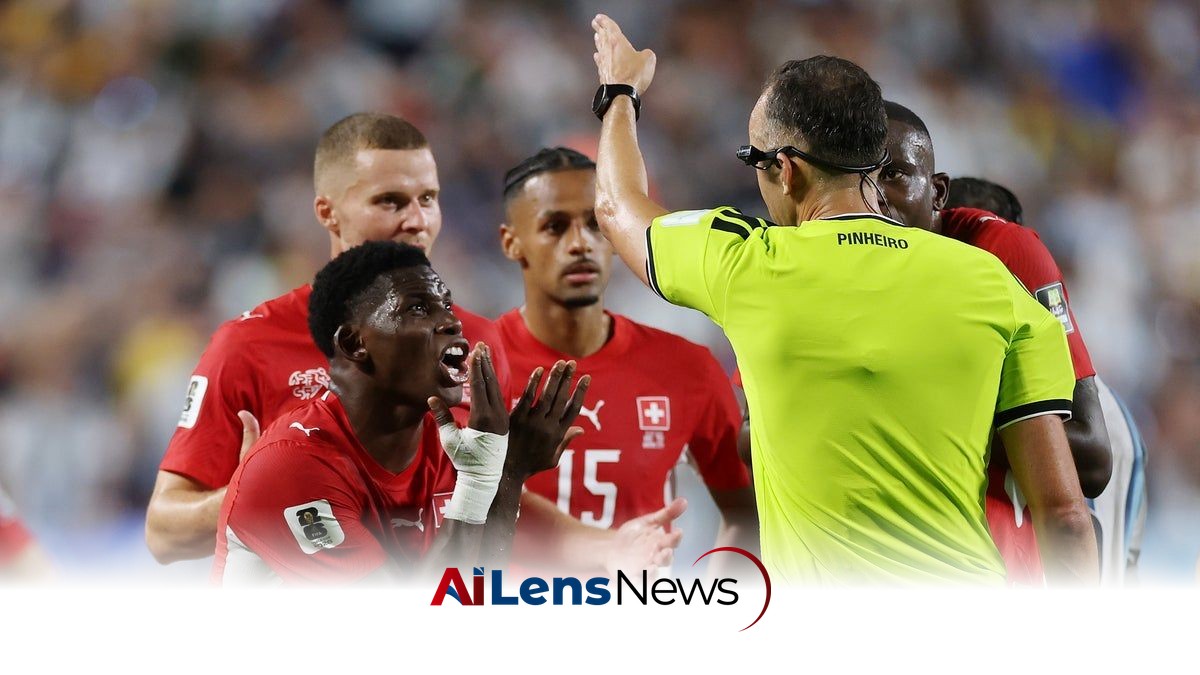


Switzerland's quarter-final loss to Argentina was marred by a controversial red card for Breel Embolo, leading to criticism from manager Murat Yakin.
London, United Kingdom Jul 12, 2026 ALN: Switzerland's manager, Murat Yakin, expressed his frustration following the team's World Cup quarter-final exit, which he attributed to the controversial new 'mistaken identity' rule. This rule played a pivotal role in the match against Argentina, resulting in Breel Embolo receiving a red card during their 3-1 defeat. The incident has ignited a firestorm of debate regarding the effectiveness and fairness of officiating in high-stakes matches, as well as the overall impact of new rules on the game.
The 'mistaken identity' rule was introduced to combat instances of simulation and to ensure that players who engage in dishonest behavior are held accountable. However, its application has raised questions among players, coaches, and fans alike. In the match against Argentina, the sequence of events began when Leandro Paredes was cautioned for a foul on Embolo. However, after a review by referee Joao Pinheiro, it was determined that Embolo had dived, leading to his second yellow card and subsequent dismissal. This decision not only altered the course of the match but also sparked significant controversy and debate about the integrity of officiating in football.
Yakin argued that the situation should never have escalated to that point, asserting that Paredes should not have been booked for the challenge. His comments reflect a growing sentiment among coaches and players who feel that the implementation of new rules, particularly those involving video assistant referees (VAR), can lead to unintended consequences that detract from the spirit of the game. The implications of this incident extend beyond just the match; they touch on the broader conversation regarding the role of technology in officiating and the potential for it to influence the outcomes of critical games.
“Embolo was left shattered by the decision,” Yakin stated, highlighting the emotional toll on the player. Switzerland had equalized through Dan Ndoye shortly before Embolo's dismissal, but ultimately succumbed to extra-time goals from Julian Alvarez and Lautaro Martinez. The emotional rollercoaster of the match was evident, as Switzerland appeared to be gaining momentum before the controversial decision drastically altered the course of the game. The dismissal of Embolo not only affected the team's tactical approach but also took a significant psychological toll on the players, who had fought hard to equalize and were now faced with the daunting task of playing a man down.
Yakin criticized the introduction of the rule, saying, “The VAR and referee, the fact they introduced such a rule is unnecessary. I try to put it in very kind words, but I think it is extremely hurtful. We deserved to be in the semi-finals.” His comments underscore a sentiment echoed by many in the football community who argue that while the intention behind new rules may be to promote fair play, their execution can lead to outcomes that feel punitive and unjust. The emotional weight of such a loss, especially in the context of a World Cup, can have lasting effects on both players and coaching staff, shaping their perspectives on the game and their future strategies.
Furthermore, Yakin lamented, “We were punished for a rule that is completely unacceptable. It is very painful to be eliminated in this manner. I don’t think we deserved it, and in my opinion, our boys are the real heroes.” This statement underscores Yakin's belief that the team performed admirably and that their efforts were undermined by a decision that he perceives as unjust. The emotional toll of such a defeat can linger, affecting players' confidence and morale as they look ahead to future competitions.
Yakin emphasized the referee's decision as a critical turning point, stating, “There was definitely no reason to award that yellow card. It was a harmless situation, and he should have let the game flow.” This highlights a common frustration among teams that feel their chances are diminished due to officiating errors or overly strict interpretations of the rules. The balance between maintaining the integrity of the game and allowing it to flow naturally is a delicate one that referees must navigate. The challenge lies not only in making accurate calls but also in managing the game’s rhythm and ensuring that players can compete without excessive interruption.
Despite the setback, Yakin refused to place blame on Embolo, saying, “I don’t blame him at all. That would be absurd. Obviously, he is shattered. He couldn’t help the team today, and it hurts him and us. I think it was a referee mistake.” This statement illustrates Yakin's understanding of the pressures players face and his commitment to supporting his team in the wake of adversity. By deflecting blame away from Embolo, Yakin reinforces the idea that the team operates as a unit, and the responsibility for the outcome does not rest solely on one individual. This approach fosters a sense of solidarity within the team, crucial for maintaining morale in the aftermath of a difficult loss.
Switzerland's exit marks their first quarter-final appearance in 72 years, a significant achievement that highlights the progress the team has made in international football. Their journey to the quarter-finals was marked by strong performances and resilience, making their exit all the more poignant. The team had shown promise throughout the tournament, and many fans were hopeful that they could advance further. The disappointment of elimination, particularly under such controversial circumstances, is likely to fuel discussions about the future direction of Swiss football and the potential for further success on the international stage.
As the tournament progresses, Argentina advances to face England in the semi-finals, a matchup that is sure to capture the attention of football fans worldwide. The implications of Switzerland's exit extend beyond their own team; they also open the door for discussions about the future of officiating and rule enforcement in football. The 'mistaken identity' rule, which was introduced in an effort to combat simulation and unfair play, has come under scrutiny as a result of this incident. Critics argue that while the intention behind the rule is to maintain fair play, its execution can lead to confusion and controversy, as seen in this match.
In the aftermath of the match, football analysts and commentators have begun to dissect the broader implications of the rule. Discussions surrounding the effectiveness of VAR technology have intensified, with many arguing that while it was designed to provide clarity, it has sometimes resulted in confusion and controversy. The reliance on technology to make critical decisions in high-pressure situations can create a disconnect between the flow of the game and the rigid application of rules, leading to dissatisfaction among players and fans alike.
The introduction of new rules in football often leads to a period of adjustment for players, coaches, and referees alike. The challenge lies in ensuring that the spirit of the game is upheld while also adapting to evolving standards of play. As teams prepare for future tournaments, the lessons learned from incidents like this one may prompt calls for reconsideration of certain rules or for more comprehensive training for referees on their application. The need for clarity in officiating and the potential for rules to be interpreted more flexibly could become focal points in discussions among football governing bodies.
Ultimately, Switzerland's exit from the World Cup serves as a reminder of the unpredictable nature of football and the fine margins that can determine success or failure. As the team reflects on their performance and looks toward future competitions, the experience gained from this tournament will likely shape their approach moving forward. The emotional impact of this match will linger, but it may also serve as motivation for the players to strive for greater achievements in the future. The discourse surrounding the officiating and rule enforcement will likely continue, influencing how the game is played and perceived in the years to come. The road ahead for Switzerland may be challenging, but their recent performance demonstrates that they have the potential to compete at the highest level.
To learn more about the latest developments in Football (Soccer), stay updated with our exclusive reports and analyses on AiLensNews.

