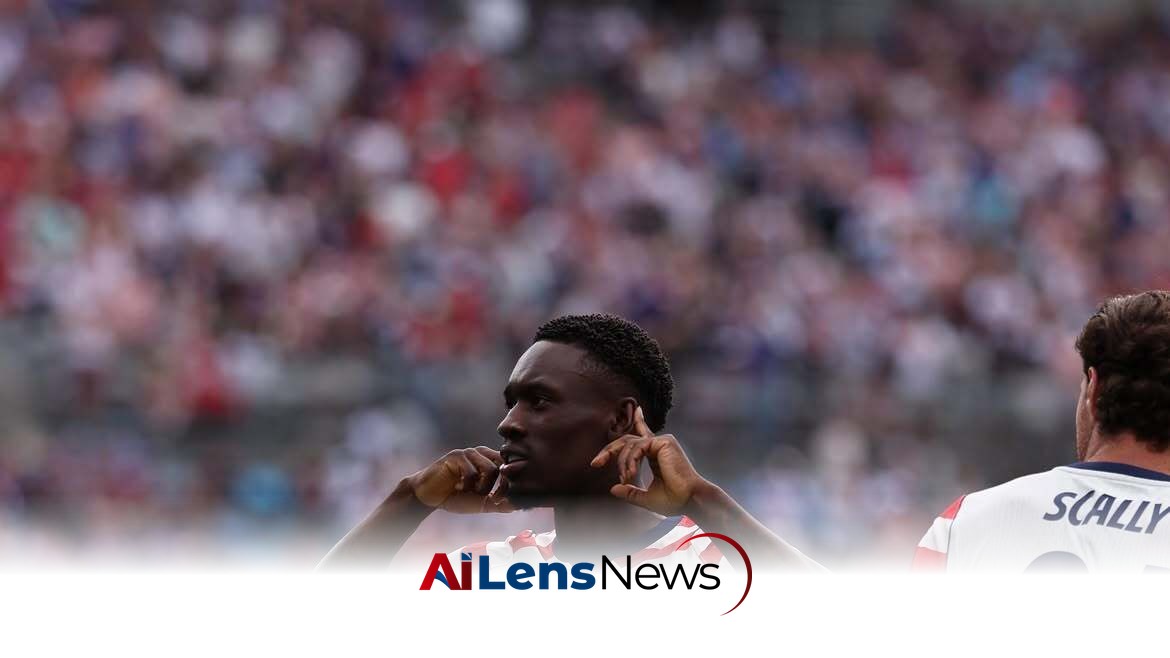


UEFA has criticized FIFA's decision to suspend U.S. striker Folarin Balogun's automatic one-match ban, calling it unprecedented and unjustifiable.
Doha, Qatar Jul 6, 2026 ALN: UEFA has criticized FIFA's decision regarding Balogun's suspension.
The Union of European Football Associations (UEFA) has issued a strong condemnation of FIFA's recent decision to suspend on probation the automatic one-match ban imposed on U.S. striker Folarin Balogun. This ban was a consequence of a red card received during the United States' match against Bosnia and Herzegovina. The incident has stirred significant debate and controversy within the football community, highlighting the complexities of disciplinary actions in sports.
Red cards in football are serious disciplinary measures that are typically issued for severe infractions such as serious foul play, violent conduct, or using offensive language. The mandatory one-match suspension that follows a red card is intended to serve as a deterrent against such behaviors, ensuring that the integrity of the game is maintained. In Balogun's case, the circumstances surrounding the foul that led to the red card have been closely scrutinized. Many commentators and analysts argue that the punishment may not have been commensurate with the actions that led to the card being issued. As a player who has made significant contributions to the U.S. national team, Balogun's absence from upcoming matches would represent a considerable setback for the squad, particularly in a high-stakes tournament setting.
In its official statement, UEFA described FIFA's ruling as “unprecedented, incomprehensible and unjustifiable,” asserting that it has crossed “a red line.” This strong language reflects UEFA's deep concern that FIFA's decision undermines the established disciplinary framework that governs football. UEFA emphasized that an automatic one-match suspension following a red card should not be subject to discretionary exceptions, particularly in a tournament environment where other players have already served similar bans without question. This sentiment resonates with the broader principle of fairness in sports, which dictates that all players should be held to the same standards, irrespective of their nationality or external influences.
Reports indicate that FIFA's decision to intervene in Balogun's case was influenced by a personal appeal from U.S. President Donald Trump, who reportedly contacted FIFA President Gianni Infantino in an effort to advocate for Balogun. The involvement of a high-profile political figure in a sports disciplinary matter raises serious questions about the integrity of the decision-making process within FIFA. Critics of the intervention argue that such actions can lead to perceptions of favoritism and bias, which may erode trust among fans and participants in the sport. The implications of this political involvement could extend beyond Balogun's case, potentially affecting how future disciplinary decisions are viewed and accepted by the football community.
The red card had put Balogun's participation in jeopardy for the Round of 16 match against Belgium, where he had already scored three goals in the tournament. His performance had made him a standout player, and the potential loss of his presence on the field could significantly affect the dynamics of the match. The U.S. team, which has been striving to make a notable impact in the tournament, would face considerable challenges without one of its key players. The stakes are particularly high during knockout stages, where every match can determine the fate of a team's tournament run.
Subsequently, FIFA's Disciplinary Committee placed the suspension under a one-year probation, allowing Balogun to continue playing. This decision has drawn mixed reactions; while some support the leniency shown towards Balogun, others express concern that it sets a dangerous precedent that could lead to further inconsistencies in how disciplinary actions are enforced across different competitions and player profiles. Following this decision, Trump publicly expressed his gratitude on Truth Social, stating, “Thank you to FIFA for doing what was right, and reversing a great injustice.” This statement has fueled further debate regarding the intersection of politics and sports, as well as the potential implications for future disciplinary actions and the integrity of the sport itself.
In response to FIFA's ruling, UEFA cautioned that this decision undermines the integrity of the competition. They stated, “When the certainty of rules is no longer guaranteed by its guardians, the integrity of the game is at stake.” This assertion underscores the critical role that governing bodies play in maintaining fair play and accountability within football. The integrity of any sport relies heavily on the consistent application of its rules, and deviations from these standards can lead to a slippery slope where decisions may be influenced by external pressures rather than established guidelines.
Moreover, UEFA warned that the ruling sets a troubling precedent, necessitating equal treatment for all similar cases in the ongoing tournament. The concern is that if FIFA allows exceptions for certain players, it could foster a culture where players feel entitled to preferential treatment based on their status or connections, rather than their conduct on the pitch. This could lead to resentment among players and teams who abide by the rules and face penalties for infractions, undermining the foundational principles of sportsmanship that are vital to the game.
Belgium's football authorities have also voiced their concerns about the decision, labeling it a breach of competition rules. The Belgian team has been preparing rigorously for the knockout stages of the tournament, and they have expressed their desire for a level playing field where all teams are subject to the same rules and regulations. This desire for fairness is echoed by many within the football community who believe that the integrity of the sport must be upheld at all costs. As of now, FIFA has not publicly responded to UEFA's statement, leaving many to speculate about the organization's next steps and whether they will address the growing concerns regarding the integrity of their disciplinary processes.
This situation reflects broader issues within the governance of international football, where the balance between upholding rules and accommodating external influences can create complex challenges. The integrity of football is built on the foundation of fair play, accountability, and the consistent application of rules. As the tournament progresses, all eyes will be on FIFA and UEFA to see how they navigate this controversy and ensure that the principles of fair play and justice are upheld in the world of football.
In conclusion, the ongoing debate surrounding Balogun's suspension highlights significant issues regarding the enforcement of disciplinary measures in football. The reactions from UEFA, FIFA, and the involved parties will likely shape future discussions on the integrity of the sport and the importance of adhering to established rules. As the tournament unfolds, the implications of this decision will be closely monitored by fans, players, and officials alike, as they seek to understand the impact of political influence on the beautiful game. The outcome of this controversy may set a precedent for how similar cases are handled in the future, potentially altering the landscape of football governance for years to come.
To learn more about the latest developments in Football (Soccer), stay updated with our exclusive reports and analyses on AiLensNews.

