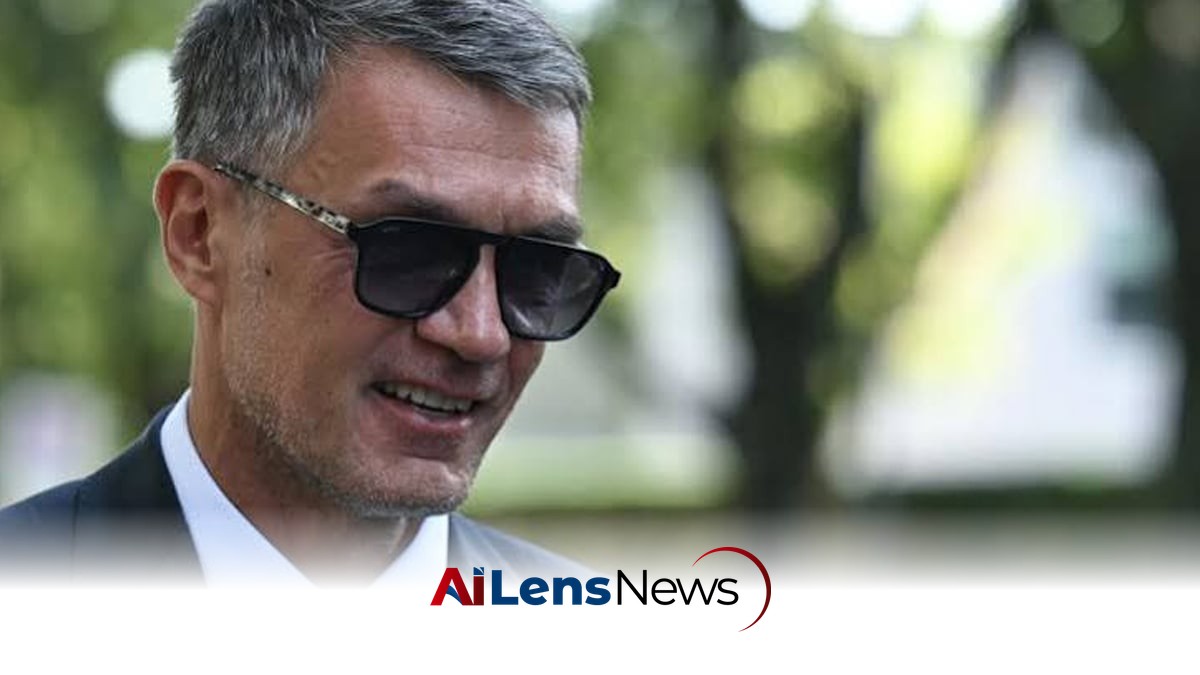


Paolo Maldini has been appointed as the technical director of the Italian Football Federation, aiming to revitalize the national teams after recent World Cup failures.
Islamabad, Pakistan Jul 12, 2026 ALN: Italian football icon Paolo Maldini has been appointed technical director of the national football federation (FIGC) as it seeks to rebuild following Italy’s failure to qualify for a third consecutive World Cup.
“Maldini has always been my target,” said newly-appointed FIGC president Giovanni Malago. “I felt he was the right person to oversee the FIGC’s technical sector — a role that encompasses not just the senior national team, but the entire youth national team setup.”
“We are embarking on a four-year commitment designed to take us from now through the next World Cup in 2030, with the European Championship along the way.”
The 58-year-old Maldini will work alongside Leonardo, the former sporting director of Paris Saint-Germain and AC Milan, who will serve as his advisor, the FIGC added. This collaboration is expected to bring a wealth of experience and insight to the Italian football structure, drawing from both Maldini's legendary playing career and Leonardo's extensive background in football management.
Maldini will also assume the role of president of Club Italia, the body overseeing all national teams across all age groups, both men’s and women’s. This unprecedented dual role in the FIGC grants Maldini ultimate authority over all sporting decisions, a significant responsibility that reflects the trust placed in him by the federation's leadership.
His primary mission will be to revitalize the Azzurri, who have lost their place among the global elite after missing out on the last three World Cup tournaments, despite a European triumph in 2021. The contrast between the national team’s success in the UEFA Euro 2020 tournament, held in 2021 due to the pandemic, and their subsequent failures to qualify for the World Cup highlights the challenges ahead for Maldini and the FIGC. The team, once a powerhouse in international football, now faces the daunting task of rebuilding its reputation on the world stage.
Maldini and Malago, who was elected FIGC chief in late June after previously heading the 2026 Milan-Cortina Winter Olympics, must quickly find a new coach. This urgency is compounded by the national team's recent struggles, as they aim to establish a strong foundation ahead of future competitions.
Maldini’s former AC Milan teammate Gennaro Gattuso resigned as head coach after Italy lost to Bosnia-Herzegovina on penalties in a European play-off for the 2026 World Cup in late March. This defeat marked a low point for Italian football, as it underscored the ongoing difficulties the national team has faced in recent years. The search for a new coach will be critical, as the right appointment could set the tone for the team’s future performance.
Former Italian international Antonio Conte has been suggested as a possible successor, having held the role between 2014 and 2016. Conte left Napoli after two seasons last month, and his return to the national team could bring a wealth of tactical knowledge and experience, having previously led Italy to the quarter-finals of Euro 2016 and secured qualification for the 2018 World Cup. His familiarity with the pressures of international management and his success in club football make him a strong candidate for the position.
Maldini spent his entire playing career with AC Milan, winning seven Italian league titles and five Champions League trophies. His legacy at the club is unparalleled, and he is widely regarded as one of the greatest defenders in the history of football. Capped 126 times for Italy, he played in four World Cups and three European Championships, achieving runner-up finishes in the 1994 World Cup and Euro 2000. His international experience adds significant credibility to his new role, as he understands the expectations and pressures faced by players on the global stage.
After retiring as a player, he succeeded Brazilian Leonardo as AC Milan’s sporting director in 2019, holding the position until 2023. Under his stewardship, AC Milan saw a resurgence, culminating in the club's return to the top of Italian football and a strong showing in European competitions. This experience will be invaluable as he transitions to his new role with the FIGC, where he will need to implement a long-term vision for the development of both senior and youth teams.
The appointment of Maldini comes at a crucial time for Italian football, which has faced significant scrutiny following its recent performances. The national team's failure to qualify for the World Cup in 2018, 2022, and now 2026 has raised questions about the overall health of football in Italy, including youth development, coaching standards, and the competitive environment within domestic leagues.
Moreover, the dual role of Maldini as technical director and president of Club Italia is a strategic move that aims to create a cohesive vision for Italian football. By overseeing all national teams, Maldini can ensure that there is a consistent approach to player development, coaching philosophies, and tactical strategies across all levels of the game. This holistic approach could prove essential in restoring Italy's status as a footballing powerhouse, as it seeks to cultivate a new generation of talent that can compete at the highest levels.
As Maldini embarks on this ambitious journey, the eyes of the footballing world will be watching closely. The implications of his leadership will extend beyond just the immediate results on the pitch; they will also shape the future of Italian football for years to come. The success of this initiative may hinge on the ability to foster a culture of excellence, resilience, and innovation within the sport, ensuring that Italy can once again compete with the best teams in the world.
In recent years, Italian football has seen a decline in its global standing, with domestic leagues struggling to attract top talent and maintain competitive standards. The Serie A, once home to some of the world's best players, has faced challenges in terms of financial stability and international appeal. The influx of foreign players and investments has changed the landscape, leading to concerns about the development of homegrown talent.
Furthermore, the Italian youth system has been criticized for not producing enough players capable of competing at the highest levels. The FIGC has recognized the need for reform in youth academies and coaching methodologies to ensure that young players receive the best training and opportunities to develop their skills. Maldini's comprehensive approach is expected to address these issues, focusing on the integration of youth teams with the senior national team and promoting a unified philosophy across all levels.
Additionally, the emotional connection that fans have with the national team plays a significant role in the sport's culture in Italy. The disappointment of missing out on consecutive World Cups has led to a sense of disillusionment among supporters. Restoring faith in the national team and reigniting the passion of the fans will be crucial for Maldini as he embarks on this task. Engaging with the fan base, communicating a clear vision, and demonstrating progress on the pitch will be vital components of his strategy.
As the FIGC looks towards the 2030 World Cup and the European Championship in 2024, the pressure will be on Maldini and his team to deliver results. The expectations are high, and the path to redemption will require not only tactical acumen but also the ability to inspire and unite players, coaches, and fans alike. The journey ahead is undoubtedly challenging, but with Maldini's experience and passion for the game, there is hope that Italian football can reclaim its place among the elite in the world of football.
To learn more about the latest developments in Football (Soccer), stay updated with our exclusive reports and analyses on AiLensNews.

