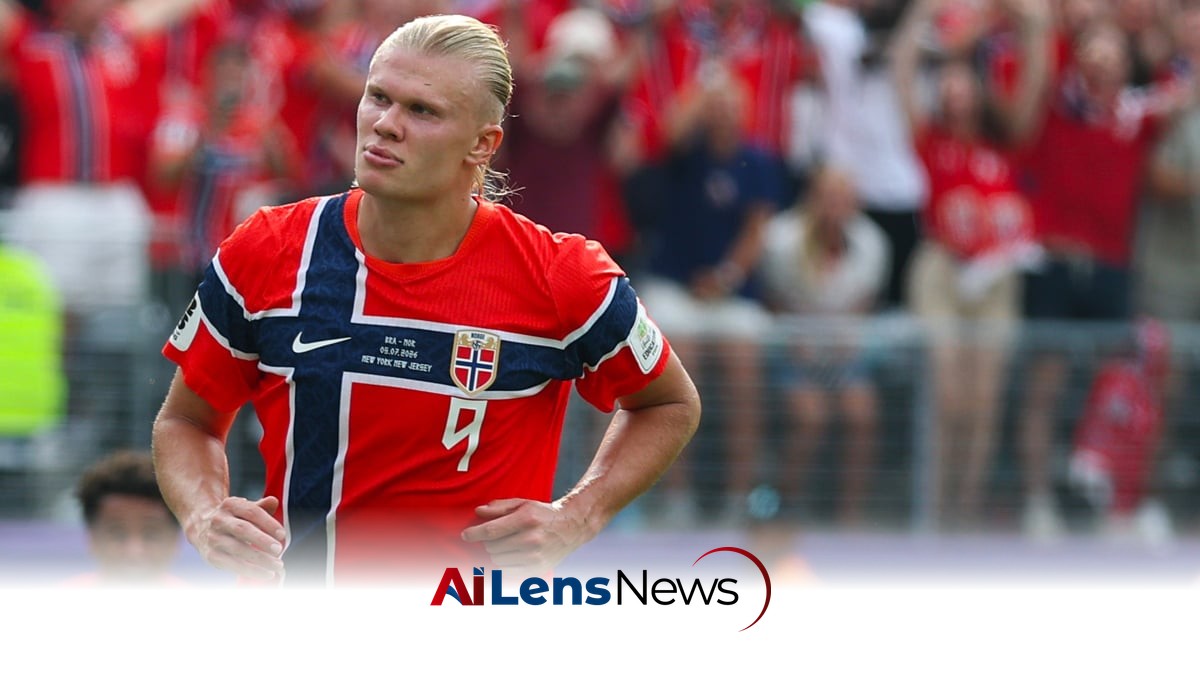


Erling Haaland reflects on Norway's inspiring World Cup journey despite a quarter-final defeat to England, emphasizing the impact on future generations.
Islamabad, Pakistan Jul 12, 2026 ALN: MIAMI, United States: Erling Haaland said Norway’s World Cup performances had inspired a new generation despite the disappointment of a 2-1 quarter-final defeat to England after extra-time on Saturday.
Haaland failed to score for the first time in 15 competitive games for his country in Miami as Jude Bellingham’s double fired England into the last four. The match was a hard-fought contest that highlighted the growing competitiveness of international football, especially as teams like Norway continue to emerge on the world stage.
Norway's journey to the quarter-finals marked a significant achievement, as it was their first appearance in a World Cup in 28 years. Historically, Norway has had sporadic success in international football, with their last major tournament appearance being in the 1998 World Cup in France. The team has often been overshadowed by more dominant European footballing nations like Germany, France, and Italy. However, the current generation of players, led by the likes of Haaland, has begun to change that narrative.
During the tournament, Haaland showcased his exceptional talent, scoring seven times in four matches. His contributions were pivotal in Norway's advancement, including a stunning performance in the round of 16 where they eliminated Brazil, a five-time World Cup champion. This victory not only highlighted Norway's potential but also served as a wake-up call to the footballing world about the rising talent in Scandinavian football.
“How we put Norway on the map is maybe one thing that touches me the most,” said Haaland. His sentiment reflects a broader trend in which smaller footballing nations are beginning to make their mark on the international stage. The success of teams like Norway, Denmark, and Sweden in recent tournaments has sparked a renewed interest in football within these countries, inspiring young athletes to pursue the sport with greater ambition.
Haaland expressed hope that Norway could build on their success in the United States to establish themselves as a formidable force in future international competitions, including the UEFA European Championship and subsequent World Cups. “Hopefully now we can establish something when it comes to Euros, World Cups and everything because our generation is amazing and also all this gives motivation to young people back in Norway that it’s possible to play a big stage in the world with a Norwegian shirt,” he stated. This belief in the potential for growth is indicative of a changing mindset within Norwegian football, where aspirations are now aligned with the possibility of competing at the highest levels.
The Manchester City striker's brand as a global superstar has soared in recent weeks, with waves of new American fans taking to his affable off-field personality as well as his goalscoring prowess. His rise in popularity is not just a personal triumph; it represents a shift in the perception of Norwegian football on the global stage. With the advent of social media and the increasing visibility of international football, players like Haaland can leverage their platforms to inspire a new generation of fans and players alike.
“It’s kind of difficult to take in this kind of a show or rollercoaster that we’ve been in now for the last six weeks,” added the 25-year-old. The journey through the tournament was indeed a rollercoaster of emotions for the Norwegian team, filled with highs and lows, triumphs and disappointments. This experience is likely to have a lasting impact on the players and the national team as they look to the future.
“I think this changes Norway, I think it changes me. I’ve said it many times, we’re building on something in Norway,” he continued. The idea of building a legacy in Norwegian football is crucial, as it requires not only talent but also the infrastructure, support, and investment necessary to nurture young players. The success at the World Cup could lead to increased funding and resources for grassroots football in Norway, which in turn could further enhance the talent pool available to the national team.
“It’s about maintaining this because again we’ve shown that it’s possible to be one of the biggest football nations in the world.” Haaland's words resonate with a sense of responsibility, not just for himself but for the future of Norwegian football as a whole. The challenge now lies in sustaining the momentum generated by their World Cup journey and ensuring that future generations have the opportunity to shine on the international stage.
In the match against England, Haaland's former Borussia Dortmund teammate Jude Bellingham played a crucial role, scoring both goals for England and demonstrating his own burgeoning talent on the world stage. Haaland praised Bellingham, stating, “We had so much fun together and I’m not surprised that he scores two goals today and performs the way he does.” Their friendship and shared experiences at Dortmund highlight the importance of teamwork and camaraderie in football, which often translates into success on the pitch.
“I think he’s one of the best in the world and he’s a midfielder. He still scores goals, he still manages to dribble every single player on the field,” Haaland added. This acknowledgment of Bellingham's talent speaks to the increasing competitiveness of midfielders in modern football, where they are expected to contribute not only defensively but also offensively.
Despite Norway needing a goal, Haaland was substituted at half-time in extra-time as he struggled to cope with the searing Miami heat. The physical demands of the tournament, combined with the intense pressure of knockout football, took their toll on the players. Norway boss Stale Solbakken reflected on the decision, saying, “It was not a tough decision to take him out because he was finished and maybe I should take him out before.” This decision underscores the importance of player management in high-stakes matches where fatigue can significantly impact performance.
“We used all his energy and power for game after game. He also got a dead leg in the second half, so that combined with the fatigue — he did everything he could,” Solbakken explained. The coach's comments highlight the rigorous nature of international tournaments, where players are pushed to their limits. Moving forward, Norway will need to consider player rotation and recovery strategies to ensure that their key players remain fit and available for crucial matches.
In conclusion, while Norway's World Cup journey ended in disappointment, the impact of their performance will likely resonate for years to come. The emergence of players like Haaland and the team's ability to compete against some of the best in the world has set a new standard for Norwegian football. As the nation looks ahead to future competitions, there is a palpable sense of optimism and excitement, not only for the players but also for the fans who have long awaited a resurgence of their national team on the global stage.
To learn more about the latest developments in Football (Soccer), stay updated with our exclusive reports and analyses on AiLensNews.

