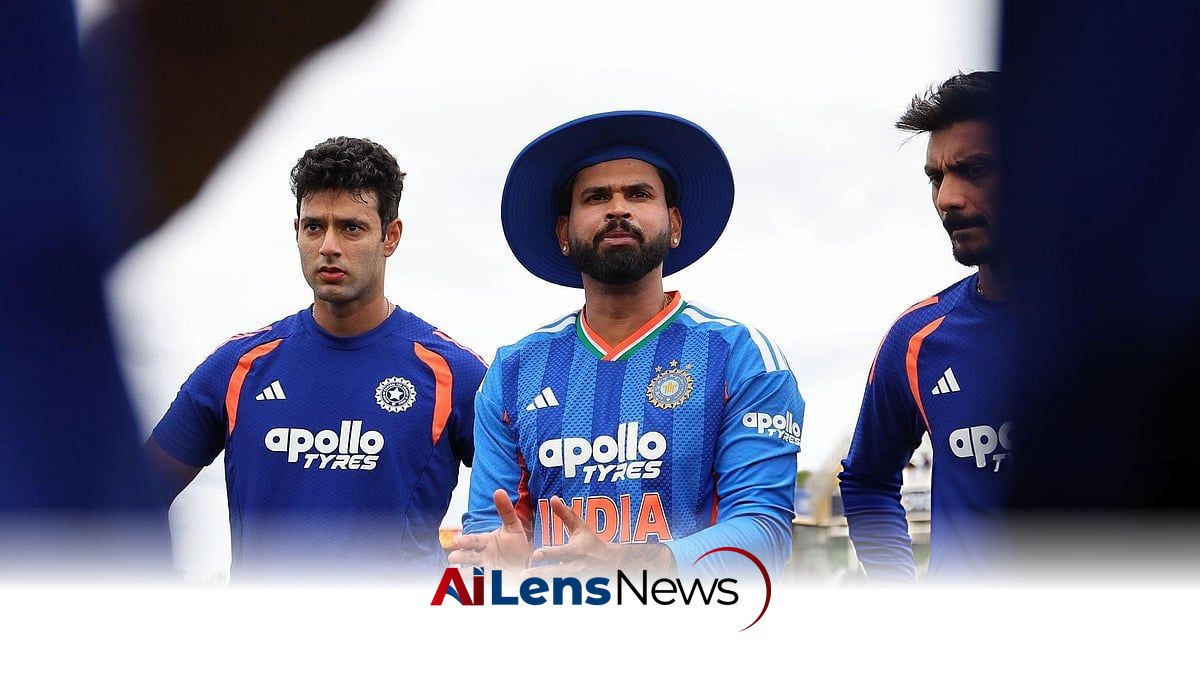


Shreyas Iyer's captaincy has begun poorly, with India suffering defeats against Ireland and England. The team has lost 6 of 7 matches under his leadership.
New Delhi, India Jul 12, 2026 ALN: India's transition to a new era under Shreyas Iyer has begun in the worst possible fashion, with the side slumping to back-to-back T20I series defeats against Ireland and England. The defeats mark a dramatic reversal for a team that only months ago stood at the summit of world cricket after winning the T20 World Cup. With six losses in seven matches under his leadership, the spotlight is firmly on Iyer's difficult start as captain.
Since taking over the captaincy, Iyer has led India in seven T20Is but is yet to register a victory. India have lost six matches, while the remaining game was washed out, leaving the skipper without a win in his opening stretch. It is the poorest start by an Indian captain in recent memory and has triggered questions over the team's sudden decline.
The downturn is particularly striking given India's remarkable run before the leadership change. The Men in Blue lifted the T20 World Cup earlier this year and had not lost a bilateral T20I series since 2024. They entered the new captaincy era with confidence and consistency, making the recent slump all the more surprising.
Although captaincy alone cannot explain India's struggles, the team's results have inevitably placed Iyer under intense scrutiny. India's defeats against Ireland and England have exposed shortcomings with both bat and ball, while the inability to close out key moments has proved costly. With bigger assignments on the horizon, Iyer will be under pressure to deliver a swift turnaround and restore India's winning habit.
To understand the gravity of the situation, it's essential to consider the broader context of Indian cricket. The Indian cricket team has long been a powerhouse in international cricket, boasting a mix of experienced players and emerging talents. The T20 format, in particular, has been a domain where India has excelled, with a robust domestic structure and a plethora of skilled players. The team's victory in the T20 World Cup earlier this year was a culmination of years of hard work and strategic planning, showcasing their ability to perform on the global stage.
The abrupt shift in fortunes under Iyer's captaincy raises questions about the stability and consistency that have characterized Indian cricket for so long. Following the World Cup triumph, expectations were high, and the team was anticipated to build on that success. However, the defeats against Ireland and England have not only dented the team's morale but have also sparked debates among fans and analysts regarding the effectiveness of Iyer's leadership style.
In the recent series against Ireland, the Indian team faced a spirited challenge from a side that has been steadily improving in the T20 format. Ireland's players, buoyed by their home advantage, capitalized on India's mistakes, particularly in the fielding department where lapses led to crucial runs being conceded. The batting lineup, once considered one of the most formidable in T20 cricket, struggled to find form, with key players failing to convert starts into significant contributions. The loss against Ireland was a wake-up call, highlighting the need for introspection within the squad.
The subsequent series against England further compounded India's woes. England, known for their aggressive style of play, took full advantage of India's faltering confidence. The Indian bowlers, who had previously been lauded for their ability to defend totals and take wickets at crucial junctures, found themselves on the back foot. England's batsmen, with their aggressive intent, dismantled India's bowling attack, leading to comprehensive victories. This series not only resulted in losses but also exposed the vulnerabilities in India's game plan, particularly in adapting to different match situations.
Iyer's captaincy has come under scrutiny for various reasons. Critics have pointed out that his decision-making in high-pressure situations has been questionable. Whether it be field placements, bowling changes, or batting order adjustments, the choices made during the matches have often left fans and analysts baffled. Moreover, the lack of clarity in roles within the team has also been a point of contention. Players need to have defined roles to perform at their best, and the recent performances suggest that this clarity may be lacking.
The implications of these defeats extend beyond just the immediate results. With major tournaments on the horizon, including the ICC T20 World Cup and other international series, the Indian team must find a way to regroup and regain their winning mentality. The pressure on Iyer will only intensify as the team prepares for these challenges. A captain's ability to inspire and lead a team through tough times is often what distinguishes successful leaders from the rest, and this period will be a crucial test for Iyer.
Additionally, the Indian cricket board and selectors will be watching closely. The performance of the team under Iyer's leadership may influence future selection decisions, both in terms of team composition and captaincy. The board has historically favored stability, but if the losses continue, they may be compelled to reassess their strategy and leadership structure. The repercussions of this transition phase could be felt for years to come, impacting not just the immediate future but also the long-term vision for Indian cricket.
As the team navigates this challenging period, there is also a need for collective responsibility. Veteran players must step up and provide guidance to the younger members of the squad. The experience of seasoned players can often be invaluable during times of adversity, and their leadership on the field can help instill a sense of confidence and direction. The support from the coaching staff will also be crucial in helping Iyer find his footing as captain and developing a cohesive team strategy.
In conclusion, while the start to Shreyas Iyer's captaincy has been far from ideal, history has shown that teams can bounce back from periods of struggle. The key will be for Iyer and his squad to learn from these setbacks, address their weaknesses, and come together as a unit. The cricketing world will be watching closely as India seeks to turn their fortunes around and reclaim their status as one of the top teams in T20 cricket.
To learn more about the latest developments in Cricket, stay updated with our exclusive reports and analyses on AiLensNews.

