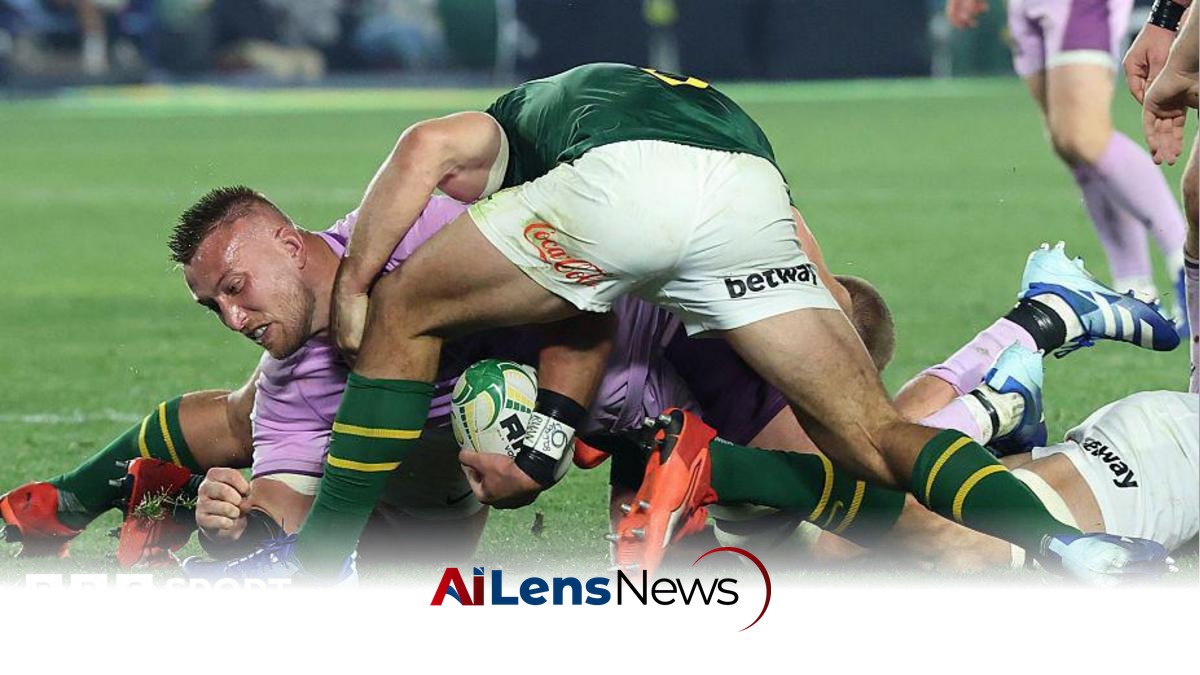


Scotland scored four tries but fell short against South Africa in a thrilling 42-28 Nations Championship match at Loftus Versfeld Stadium.
New Delhi, India Jul 11, 2026 ALN: Nations Championship round two
South Africa (14) 42
Tries: Papier, Roos, Louw, Willemse, Porthen, Kriel Cons: Pollard 6
Scotland (14) 28
Tries: M Fagerson, Rowe, Bayliss, White Cons: Russell 4
Scotland pushed a much-changed South Africa all the way in a thrilling Nations Championship contest but were left to rue wasted opportunities in Pretoria. The match showcased the competitiveness of international , particularly in the context of the Nations Championship, which has become a significant platform for teams to test their mettle against each other.
Seeking a first win on South African soil, Scotland scored four tries to gain a bonus point. Their ability to score four tries against a formidable opponent like South Africa is a notable achievement, as they had never accomplished this feat before. However, they might have matched the home tally of six if they had been slightly more clinical in attack, which is a critical aspect of that can often determine the outcome of a match.
The world champions made 10 starting alterations after flattening England in Johannesburg, showcasing their strength in depth. This depth is crucial for any successful international side, allowing them to rotate players without sacrificing performance. The adjustments made by South Africa extended their winning streak against Scotland to 10 Tests, highlighting the challenges that Scotland faces when competing against one of the top teams in the world.
After a cagey opening, two home tries inside two minutes from Embrose Papier and Evan Roos had Scotland gasping for air at altitude. This quick succession of tries by South Africa set the tone for the match, demonstrating their ability to capitalize on early opportunities and put pressure on their opponents. However, Scotland responded admirably and finished the first half strongly, with Matt Fagerson and Kyle Rowe going over to level the game at the break. This resilience is a testament to Scotland's determination and ability to compete at high levels.
A yellow card for Ben-Jason Dixon gave Scotland impetus, but they could not find a score in the subsequent 10 minutes, spurning good chances in the face of ferocious Springbok defending. The physicality and intensity of South Africa's defense are hallmarks of their playing style, making it difficult for opponents to penetrate their lines. Scotland's inability to capitalize on their numerical advantage during this period proved costly, as they failed to build momentum.
Another quick one-two from Elrigh Louw and Damien Willemse gave South Africa breathing space, and the game looked over when Zachary Porthen extended their lead. At this point, it seemed that South Africa had regained control of the match, utilizing their experience and skill to maintain their advantage. However, Scotland had other ideas and came roaring back again as Josh Bayliss finished off after great work from Scott Cummings before Ben White found a gap. This resurgence from Scotland illustrated their fighting spirit and unwillingness to back down, characteristics that are essential in high-stakes matches.
Play was stretched and utterly frantic as the visitors threw what they had left in the tank at finding a way to get back on level terms, but fatigue looked a factor as Jesse Kriel bounced through two tackles to finish the job for South Africa. The physical toll of the match was evident, with both teams pushing their limits. South Africa's ability to execute under pressure ultimately secured their victory.
Scotland have never scored four tries against South Africa before, and while they should have had more, that will sting. The match was filled with moments of brilliance but also highlighted areas for improvement. There were two stirring comebacks within the 80 minutes, but there were also too many mistakes that cost them dearly.
Soon after Papier slalomed through for the opening score on 16 minutes, Roos rumbled over after the strange sight of Cobus Weise being hoisted forward in the air by his teammates. Such moments are often indicative of the physical nature of , where players must work in unison to create scoring opportunities. Scotland responded well, and a South Africa team missing several of their big names were rattled, showing that even a team missing key players can be vulnerable.
The hosts were pinned back for a long period, and Matt Fagerson finally found a way through from close range. This try was crucial for Scotland, as it demonstrated their capability to break through South Africa's defense when they maintained composure and executed their game plan effectively. On the stroke of half-time, inventive scrambling from Finn Russell allowed Sione Tuipulotu to blast through a flurry of flailing hands and set up Rowe to run under the posts, leveling the match. Such creativity is vital in , where split-second decisions can lead to scoring opportunities.
Early in the second half, Dixon was penalized as his burrowing head clashed with Cummings, and with Russell at the heart of everything, Scotland really cranked up the tempo. Kyle Steyn was stopped short after an electric burst, and Ewan Ashman was held up while over the whitewash moments later, showcasing Scotland's attacking intent. However, they could not profit from their advantage in personnel as South Africa dug in with impressive belligerence, demonstrating their defensive prowess.
Then came a huge momentum shift as Louw crashed in from close range and Willemse wriggled free. The ability of South Africa to regain momentum at critical moments is a hallmark of their play style, often turning the tide in their favor. The Scottish defense was creaking under pressure, and Porthen became the third home player to celebrate a first international try, after Papier and Roos. This moment not only highlighted South Africa's depth in talent but also the importance of taking advantage of scoring opportunities.
The Loftus Versfeld crowd were in full party mode, but the reply was immediate as Cummings bolted through a hole of his own making and popped a pass off to Bayliss for a simple score. Scotland's ability to respond quickly after conceding points is crucial in maintaining competitiveness in matches, but they still found themselves trailing. A stretching White then touched down with his fingertips, and suddenly there were seven points in it. Scotland kept coming, and winger Steyn just couldn't hold on to a tremendous crossfield kick from Tom Jordan, which could have shifted the momentum further in Scotland's favor.
With three minutes left on the clock, Handre Pollard knocked the ball in behind the Scottish line, and Kriel saw off two tired opponents to end the visitors' positive resistance. This final score epitomized the challenges Scotland faced, as fatigue and missed opportunities ultimately cost them dearly against a world-class opponent.
Scotland head coach Gregor Townsend told ITV: "We're really frustrated we didn't get more points on the board in the first half and then during that period when the Boks go down to 14 men. We were sloppy for 10 minutes and found ourselves 21 points down. I'm massively proud of the effort to come back in. At 70 minutes I was believing we would go on and win, but it wasn't to be. It's a learning for us; there were a lot of good parts to the play, but we've got to be better for 80 minutes. There's a lot more in us. I just know, with the amount of opportunities the players created through work, skill, and intelligence, we've got to take more to beat the world champions. So that's the frustrating element, because we don't get to play South Africa very often; we don't get to play them here, so that'll be the feeling we'll have tonight. But I know we've come a long way this season, and that was another step forward. Credit to South Africa; they found a way to win, but I'd like to think they knew they were up against a serious opponent."
This reflection from Townsend encapsulates the dual nature of the match for Scotland: the pride in their performance juxtaposed with the frustration of missed opportunities. Such sentiments are common in s, particularly in high-stakes matches where the margin for error is slim.
South Africa: Fassi; Van der Merwe, Kriel, Willemse, Hooker; Pollard, Papier; Venter, Grobbelaar, W Louw, C Wiese, Nortje, De Villiers, PS du Toit (capt), Roos.
Replacements: Wessels, Mchunu, Porthen, Dixon, Tshituka, E Louw, Williams, Horn.
Scotland: Rowe; Steyn, Hutchinson, Tuipulotu (capt), Dobie; Russell, White; Schoeman, Ashman, Z Fagerson, Brown, Cummings, M Fagerson, Darge, Dempsey.
Replacements: Hiddleston, Sutherland, Hurd, Williamson, Bayliss, Bradbury, Jordan, McDowall.
In conclusion, while Scotland may have fallen short in their quest for victory, the match served as a critical learning experience. It highlighted their potential and areas for growth as they continue to develop as a team. The implications of this match extend beyond the scoreline, as it provides valuable insights into their capabilities and resilience against one of the strongest teams in international .
To learn more about the latest developments in Basketball, stay updated with our exclusive reports and analyses on AiLensNews.

