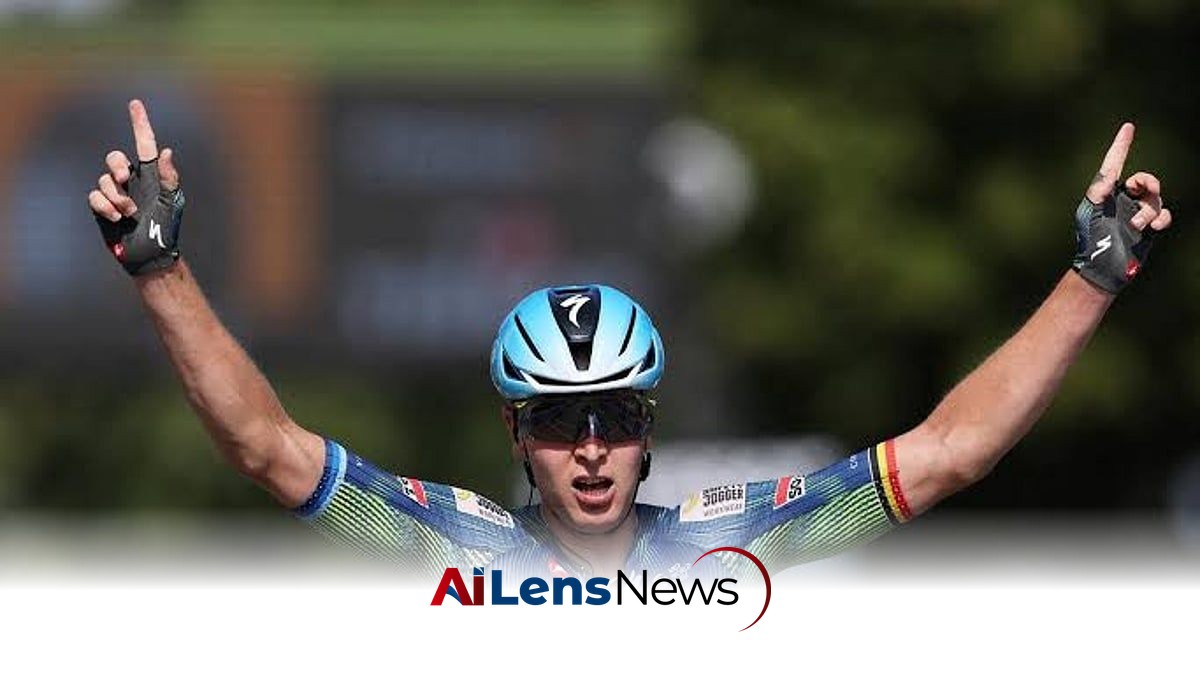


Belgian cyclist Tim Merlier clinched his second consecutive stage victory at the Tour de France, dominating the Dordogne sprint finish.
Brussels, Belgium Jul 12, 2026 ALN: Belgian Tim Merlier dominated a bunch sprint finish for the second day running to win the eighth stage of the Tour de France on Saturday. This victory marks a significant achievement in Merlier's cycling career, as he continues to showcase his exceptional sprinting abilities and tactical acumen on one of the world's most prestigious cycling stages.
Merlier's victory is particularly impressive given the intense competition he faced. He seemed out of contention when he was caught out of position in the last few hundred metres, a critical moment in any sprint finish. However, he launched a long-range charge that allowed him to reel in his rivals, ultimately beating Ethiopia’s Biniam Girmay into second place. Dutchman Olav Kooij finished third, marking a competitive finish that highlighted the intensity of the race. The performance of these riders illustrates the high stakes and fierce competition that characterizes the Tour de France, where every second counts and positioning is crucial in the final moments of a stage.
This win is particularly noteworthy as it is Merlier’s fifth stage victory in his third Tour appearance. Such a record underscores his rapid ascent in professional cycling and hints at a promising future for the Belgian sprinter. His consistency and ability to perform under pressure are qualities that have become increasingly important in the world of competitive cycling, where the margins for victory can be razor-thin. Additionally, the victory brings him to within 15 points of Denmark’s Mads Pedersen in the sprinters’ green jersey competition, a coveted accolade that rewards consistency and speed throughout the Tour.
The eighth stage in the Dordogne region, known for its 1,000 castles and ancient cave drawings, had always looked set to finish with a bunch sprint. The picturesque landscapes of the Dordogne provide a stunning backdrop to the grueling competition, combining the thrill of high-speed cycling with the beauty of historical architecture and natural scenery. This region has become a favorite among cyclists and fans alike, not only for its visual appeal but also for the challenges it presents with its rolling hills and winding roads. The terrain can often test the mettle of even the most seasoned riders, making the strategic decisions made during the race all the more critical.
As the race unfolded, Belgian Liam Slock attempted to upset the formbook by setting off alone with 40km left after spending most of the day in a three-man breakaway. His bold move was a testament to the unpredictable nature of the Tour, where riders often take calculated risks in hopes of achieving glory. However, Slock was caught just 1.3km from the line, illustrating the difficulty of maintaining a lead in such a competitive environment. This aspect of racing often leads to dramatic changes in the race dynamics, as breakaway riders can sometimes force the peloton to alter their strategies in pursuit of them.
While former world champion Mathieu van der Poel did his best to set up Alpecin-Premier Tech teammate Jasper Philipsen for the victory, Merlier proved too strong once again. This highlights the importance of teamwork in cycling, where strategic positioning and support from teammates can significantly influence the outcome of a race. Van der Poel's efforts to aid Philipsen demonstrate the camaraderie that exists within teams, even amidst fierce competition. The roles of teammates are often underappreciated in the sport, yet they are vital for enabling a rider to position themselves effectively for a sprint finish.
Merlier's back-to-back victories in the Tour de France not only add to his personal accolades but also serve as a boost for his team, Alpecin-Deceuninck. The team's performance in high-stakes races like the Tour is critical for their reputation and sponsorship opportunities, making each stage a vital component of their overall strategy. The success of a team can hinge on the performance of its riders in key stages, and Merlier's current form is a significant asset for the squad. His ability to secure wins in such a prestigious event elevates the profile of the team, potentially attracting more sponsorship and support.
Furthermore, Merlier's sprinting prowess and ability to perform under pressure have drawn attention from fans and analysts alike. His tactical approach to racing, particularly in the final moments, showcases a deep understanding of the sport and an ability to execute under duress. Such skills are often honed through years of experience and training, emphasizing the dedication required to compete at this level. For Merlier, every victory is not just a personal achievement but also a testament to the hard work and preparation that goes into being a professional cyclist.
The implications of Merlier's performance extend beyond individual accolades. As he closes the gap in the green jersey competition, the dynamics of the race may shift, prompting other sprinters to alter their strategies in response to his rising threat. The competition for the green jersey is fierce, and each rider must balance their efforts to win stages with the overall goal of accumulating points throughout the Tour. This balancing act can lead to strategic alliances or rivalries among competitors, further complicating the already intricate nature of the race.
In the broader context of the Tour de France, this stage further highlights the evolving landscape of competitive cycling. With emerging talents like Biniam Girmay making their mark, the competition is becoming increasingly diverse and unpredictable. Girmay's second-place finish is particularly noteworthy, as he represents a new generation of cyclists from nations not traditionally associated with elite cycling. His performance is a sign of the sport's global growth and the emergence of new talent on the world stage, which can inspire aspiring cyclists from various backgrounds to pursue their dreams in the sport.
As the Tour de France progresses, the competition will only intensify. Riders will face a variety of challenges, from mountainous terrains to time trials, each requiring different skills and strategies. The pressure to perform consistently throughout the event is immense, and every stage presents an opportunity for riders to either solidify their standings or risk losing ground to their rivals. The mental and physical toll of the Tour is significant, and the ability to recover and adapt is crucial for any rider aiming for success.
Overall, Tim Merlier's consecutive stage wins at the Tour de France not only highlight his personal achievements but also reflect the dynamic nature of the sport, where the balance of power can shift rapidly. As the race continues, fans and analysts will be watching closely to see how Merlier and his competitors navigate the remaining stages, each vying for victory in one of cycling's most prestigious events. The unfolding drama of the Tour de France continues to captivate audiences around the world, showcasing the endurance, strategy, and sheer talent required to compete at such a high level.
To learn more about the latest developments in Global Tournaments & Olympics, stay updated with our exclusive reports and analyses on AiLensNews.

