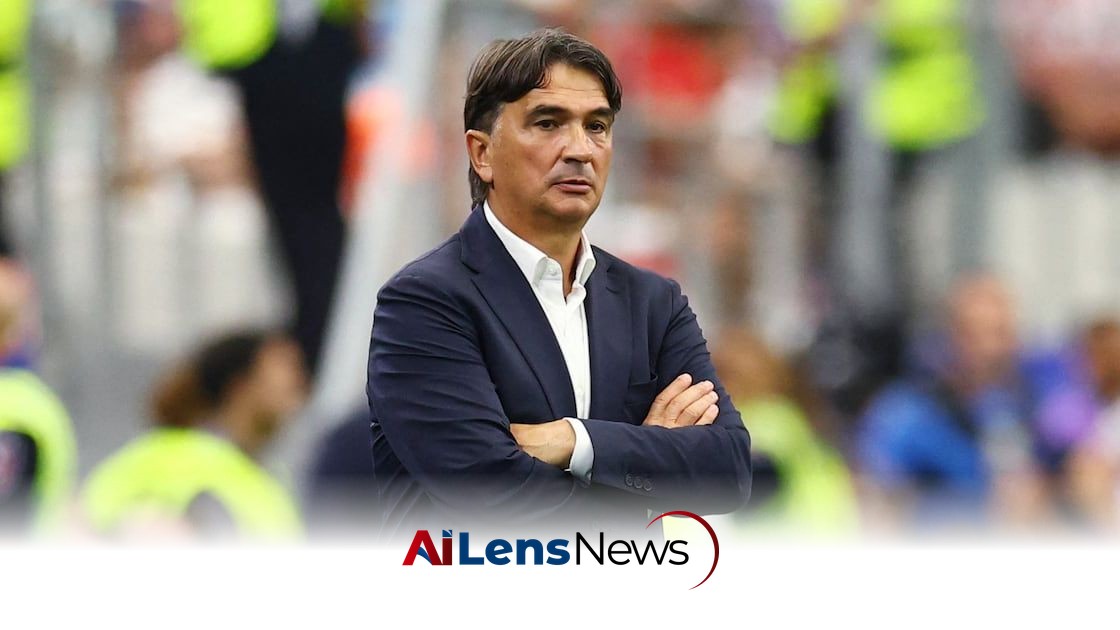


The UAE Football Association has appointed Zlatko Dalic as the new head coach, aiming for success in upcoming tournaments.
Riyadh, Saudi Arabia Aug 13, 2026 ALN: The United Arab Emirates (UAE) Football Association has officially appointed Zlatko Dalic as the new head coach of the national football team. This significant move marks Dalic's return to UAE football, where he previously achieved notable success as the head coach of Al Ain from 2014 to 2017. His tenure at Al Ain was characterized by impressive achievements, including winning the Pro League, the President's Cup, and the Super Cup. Additionally, he guided Al Ain to the final of the prestigious Asian Champions League in 2016, where they faced Jeonbuk Hyundai Motors but ultimately fell short of victory. This history of success within the UAE football landscape positions Dalic as a well-regarded figure, capable of understanding the nuances of the local game.
Reports indicate that Dalic has signed a four-year contract with the UAE Football Association, which is set to last until the conclusion of the qualification cycle for the 2030 FIFA World Cup. However, the UAE FA has not confirmed the specifics of the contract. Dalic, now 59 years old, was available for this role after stepping down as the manager of the Croatian national team following the 2026 World Cup. His departure from the Croatian team came after they were eliminated in the Round of 32 by Portugal, marking Dalic's third experience at a World Cup. Notably, he had previously led Croatia to remarkable achievements, including a runner-up finish in the 2018 World Cup, where they lost to France, and a third-place finish in the 2022 World Cup held in Qatar. This experience at the highest level of international football is expected to be invaluable as he takes the reins of the UAE national team.
In light of his appointment, reports from Croatia suggest that Dalic will bring along an entirely new technical staff to the UAE, further emphasizing his commitment to reshaping the national team. Among the notable appointments is Igor Biscan, a former midfielder for Liverpool, who has been confirmed as the new manager of the UAE U23 team. Biscan previously worked under Dalic as the coach of the Croatia U21 team for four years before taking on managerial roles in clubs such as Al Shabab in Saudi Arabia and Al Ahli in Qatar. His familiarity with Dalic's coaching philosophy could facilitate a smoother transition for the younger players in the national setup.
Additionally, there is speculation regarding the potential inclusion of former Croatian goalkeeper Danijel Subasic as the UAE's goalkeeping coach. Subasic, who was instrumental in Croatia's World Cup run in 2018, could bring valuable experience to the team, particularly in mentoring the current crop of goalkeepers in the UAE. Furthermore, Branko Ivankovic, who has managed teams in China, Oman, and Iran, as well as Al Wahda in the UAE, is rumored to be taking on a role with the UAE FA. Other potential members of Dalic's coaching staff include Drazen Ladic and Vedran Corluka, a former defender for Tottenham Hotspur. The assembling of a strong technical team reflects Dalic's intent to build a robust framework that can support the national team in achieving its goals.
Dalic's appointment comes at a crucial time for the UAE national team, which is looking to regroup after a disappointing World Cup qualification campaign. He replaces Cosmin Olaroiu, who was dismissed following the team's inability to secure a spot in the tournament. Olaroiu had taken over from Paulo Bento midway through the qualification cycle leading to the summer World Cup and has since accepted a managerial position at Pro League side Al Jazira. The instability in coaching has been a concern for the UAE FA, and bringing in a coach with Dalic's credentials may provide the stability needed to foster long-term development.
With the Gulf Cup set to take place from September 23 to October 6, followed by the Asian Cup in January, Dalic faces the immediate challenge of assembling and preparing the national squad for these important competitions. Both tournaments are to be hosted by Saudi Arabia, adding an extra layer of significance and pressure on the UAE team to perform well on a regional stage. The Gulf Cup, often seen as a barometer for regional footballing prowess, will be a critical early test for Dalic's strategies and player selections.
The UAE's primary objective under Dalic's leadership will be to qualify for the 2030 FIFA World Cup, which will be co-hosted by Spain, Portugal, and Morocco. The UAE national team has a limited history in World Cup participation, having qualified only once before, in 1990. This highlights the importance of the upcoming qualification cycle and the need for a strategic approach to improve the team's performance on the international stage. The pressure to qualify will not only be a reflection of the team's capabilities but will also resonate with the aspirations of the UAE football community, which has long sought to establish itself as a competitive force in global football.
In the broader context of Asian football, the UAE has been a competitive team historically, with aspirations to regain its status as a formidable force in the region. The appointment of a coach with Dalic's pedigree and experience could be a significant step toward revitalizing the national team's fortunes. His success with the Croatian national team, particularly in leading them to the World Cup final, serves as a testament to his capabilities as a coach and his understanding of high-stakes international football. The UAE's footballing landscape is evolving, and there is a growing recognition of the need for a strong tactical approach, player development, and a cohesive team identity.
The implications of Dalic's appointment extend beyond immediate results; they also encompass the potential for developing local talent and fostering a winning mentality within the UAE football framework. His previous success in the UAE league, coupled with his experience on the international stage, could provide a valuable blend of insights that may benefit the national team and its future endeavors. Developing local talent is crucial for the sustainability of football in the UAE, and Dalic's focus on integrating youth players into the senior setup could yield long-term benefits for the national program.
As the UAE prepares for the upcoming Gulf Cup and Asian Cup, the football community will be watching closely to see how Dalic implements his vision for the team and whether he can inspire a new generation of players to achieve the nation's footballing aspirations. The hope is that under his guidance, the UAE can build a competitive squad capable of challenging for honors in both regional and international competitions, ultimately paving the way for a successful qualification campaign for the 2030 World Cup. The stakes are high, and the journey ahead promises to be both challenging and rewarding for Dalic and the UAE national team as they embark on this new chapter in their footballing history.
To learn more about the latest developments in Golf, stay updated with our exclusive reports and analyses on AiLensNews.

