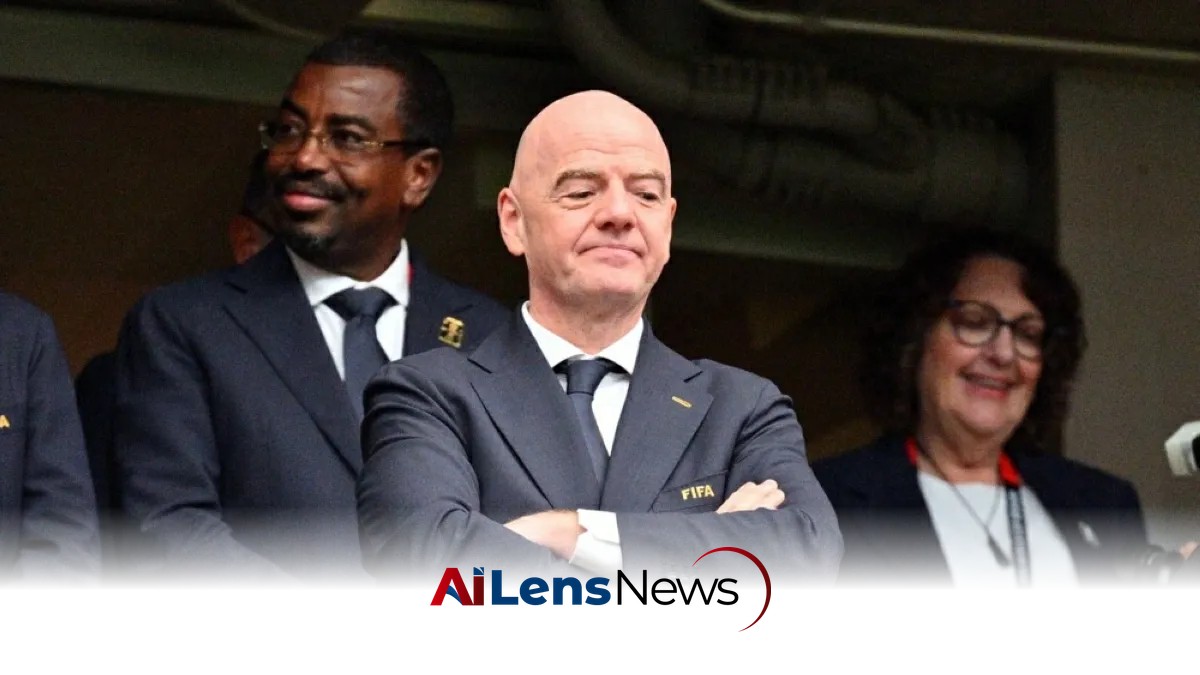


FIFA President Gianni Infantino has scrapped plans to sell a stake in World Cup profits to private equity investors following significant backlash from football federations and officials.
Riyadh, Saudi Arabia Aug 2, 2026 ALN: FIFA President Gianni Infantino has abandoned plans to sell a stake in World Cup profits to private equity investors after facing widespread opposition from football federations and senior officials across the sport. The decision reflects the complexities and sensitivities surrounding the governance of football, particularly regarding the financial management of its most lucrative events.
Infantino announced Saturday that the proposal would not proceed, stating that it had become clear the project had created divisions that outweighed its intended benefits. "Having listened carefully to all the views, it has become clear that the project has created divisions of a nature that, regardless of the level of support, are no longer in the interest of the objective set out in the first place," Infantino said in a statement.
The proposal sought to establish a $20 billion company to manage FIFA's commercial assets, including the men's and women's World Cups and Club World Cups, with private investors holding a 20% stake. The reported anchor investor was a New York investment firm founded by Joshua Kushner, which raised concerns about the influence of private capital in what many view as the heart of the global football community.
The plan faced mounting resistance after its unveiling earlier this week. UEFA's 55 member associations voted to boycott FIFA competitions if the proposal moved forward, while the Asian Football Confederation and North America's CONCACAF also publicly opposed the initiative. The strong reaction from these organizations underscores the deep-seated belief among many football stakeholders that the World Cup and its associated revenues should remain under the control of the sport's governing bodies rather than being subject to the whims of private investors.
"Some things are simply too important to sell," UEFA stated emphatically. "The FIFA World Cup belongs to football. It always will." This sentiment reflects a broader concern within the football community about the potential commercialization of the sport and the risk of prioritizing profit over the values and traditions that underpin it.
Pressure intensified Friday when Carlos Cordeiro, Infantino's senior adviser and FIFA's representative on the White House Task Force for the World Cup, resigned in protest, stating that he could not support selling a stake in the tournament. Cordeiro's resignation highlights the internal dissent within FIFA regarding the direction of the organization under Infantino's leadership. It also raises questions about the decision-making processes within FIFA, particularly how much influence the president has over such significant initiatives.
FIFA Chief Operating Officer Kevin Lamour also criticized the proposal, saying staff had been kept in the dark about the plans and describing it as "the project of one person." This criticism points to a broader issue of transparency and governance within FIFA, which has faced scrutiny in the past over its handling of various controversies, including allegations of corruption and mismanagement.
The failed initiative represents a significant setback for Infantino, who has previously pushed through controversial reforms despite opposition. His tenure as FIFA president has been marked by a series of ambitious projects, including expanding the World Cup format and increasing the number of participating teams. However, the collapse of this latest proposal could weaken his standing ahead of the next presidential election, scheduled for March 2027 in Rabat, Morocco.
The implications of this decision extend beyond just Infantino's political capital within FIFA. It also raises critical questions about the future of football governance, particularly in an era where financial pressures and commercial interests are increasingly influencing the sport. The resistance to the private equity plan suggests a desire among many stakeholders to preserve the integrity of football's most prestigious events and to ensure that revenues generated from these tournaments benefit the sport as a whole rather than a select group of investors.
As the global football landscape continues to evolve, the relationship between governing bodies like FIFA and private capital will likely remain a contentious issue. The pushback against this proposal indicates that many within the sport are wary of the potential for commercialization to erode the core values of football, including community engagement, accessibility, and the spirit of competition.
Moreover, the decision to abandon the private equity plan may also signal a shift in how FIFA approaches its financial strategies moving forward. With the World Cup generating billions in revenue, FIFA has a vested interest in managing its resources effectively while also maintaining the trust and support of its member associations and the broader football community.
This scenario is not unique to FIFA; other sports organizations have grappled with similar dilemmas as they navigate the intersection of traditional values and modern financial realities. For instance, leagues in North America and Europe have seen the introduction of private equity investment, which has often been met with mixed reactions from fans and stakeholders. The balance between financial sustainability and the preservation of the sport's integrity is a delicate one, and FIFA's recent experience serves as a cautionary tale for other organizations.
In the wake of this decision, FIFA may need to engage in a period of reflection and recalibration of its strategies, particularly in how it communicates and collaborates with its member associations. The organization could benefit from establishing clearer channels for dialogue and decision-making that involve a broader range of stakeholders, thus fostering a sense of unity and shared purpose within the football community.
Furthermore, the abandonment of the private equity plan may encourage FIFA to explore alternative avenues for revenue generation that align more closely with the values of the sport. This could involve enhancing partnerships with sponsors, exploring innovative marketing strategies, or investing in grassroots initiatives that promote the sport at all levels. By focusing on sustainable growth that prioritizes the welfare of football as a whole, FIFA can work to rebuild trust and strengthen its position as the governing body of the sport.
In conclusion, while the abandonment of the private equity plan may be seen as a victory for traditionalists within football, it also serves as a reminder of the ongoing challenges facing FIFA and the sport as a whole. The need for a balanced approach that considers both financial sustainability and the preservation of football's integrity will be critical as FIFA navigates its future in an increasingly complex and commercialized environment. The reactions from the global football community indicate a clear desire to protect the essence of the sport while also ensuring that it remains financially viable in the long run. As FIFA moves forward, it will need to carefully consider how to navigate these competing interests to foster a thriving football ecosystem.
To learn more about the latest developments in Golf, stay updated with our exclusive reports and analyses on AiLensNews.

