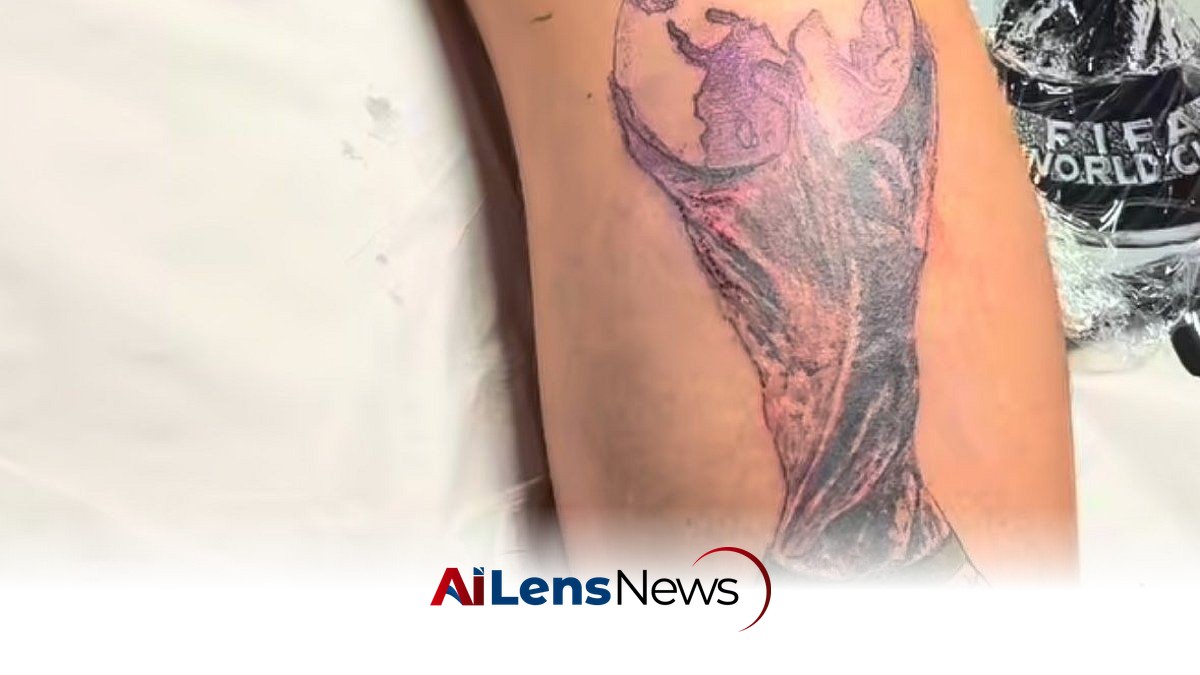


An England fan's impulsive tattoo predicting a World Cup win turns into a humorous tale after Argentina knocks England out in the semi-finals.
Riyadh, Saudi Arabia Jul 16, 2026 ALN: The world of sports is often a realm of passion, excitement, and sometimes, impulsive decisions that can lead to both triumph and regret. The story of Sean Carrington, a 36-year-old England fan from Greater Manchester, epitomizes this phenomenon, particularly in the context of football and the fervor surrounding the FIFA World Cup. Carrington's bold decision to tattoo a prediction of England's success in the 2026 World Cup has become a topic of light-hearted ridicule following the team's unexpected exit from the tournament.
In a world where sports fandom often translates into extreme expressions of loyalty and hope, Carrington's tattoo serves as a striking example. After England's victory over the Democratic Republic of Congo in the Round of 32, Carrington felt emboldened to commemorate his faith in the national team by getting a tattoo of the FIFA World Cup trophy alongside the words "England World Cup Winner 2026." At that moment, the tattoo seemed like a celebration of what many fans believed was a realistic possibility, especially with England's impressive performance in the earlier rounds of the tournament.
However, the unpredictability of football soon took center stage. England faced Argentina in the semi-finals, a match steeped in historical rivalry and emotional intensity. Carrington had confidently predicted a 3-0 victory for England, followed by a narrow 2-1 win against Spain in the final. Unfortunately for Carrington and the legion of England supporters, the match unfolded contrary to expectations. Argentina, after initially falling behind, managed to turn the tide, ultimately winning the match 2-1 and dashing England's hopes of lifting the World Cup trophy.
In the aftermath of the defeat, Carrington's tattoo became a source of humor rather than pride. The £550 tattoo, which he had thought would symbolize a glorious future for England, now stood as a reminder of a painful loss. Yet, in a show of resilience and humor, Carrington decided to embrace the situation. He announced plans to add the phrase "only kidding" beneath the original tattoo, a move aimed at lightening the mood and acknowledging the impulsive nature of his decision.
Reflecting on his decision, Carrington described himself as impulsive, admitting that the longer he contemplated the tattoo, the more he felt compelled to go through with it. This impulsivity was somewhat tempered by the support of his girlfriend, who, rather than discouraging him, found the idea amusing and encouraged him to proceed. Such dynamics within relationships often play a crucial role in how individuals navigate their impulses, particularly when it comes to decisions that carry permanent consequences.
The tattoo was completed at the Holy Trinity Tattoo Studio in Standish, a decision that was met with some skepticism by the studio's manager, Jamie Taylor. Taylor recounted his attempts to dissuade Carrington from the tattoo, emphasizing the permanence of such a choice. Despite his reservations, Taylor ultimately respected Carrington's desire to have fun with the idea, highlighting a common theme in the tattoo culture where self-expression often takes precedence over caution.
This incident also sheds light on the broader cultural significance of tattoos in sports fandom. Tattoos have long been a way for fans to express their loyalty and passion for their teams, often serving as a permanent reminder of pivotal moments in sports history. However, Carrington's experience serves as a cautionary tale about the potential pitfalls of such expressions, particularly when they are based on predictions that are far from guaranteed.
Moreover, Carrington's tattoo has sparked discussions about the emotional investment fans place in their national teams. The World Cup is not just a tournament; it represents national pride, hope, and the collective dreams of millions. When a team performs well, the euphoria can lead to impulsive actions, such as tattoos, that symbolize that joy. Conversely, when the outcome is disappointing, as in Carrington's case, those same symbols can become sources of regret or humor.
As England fans reflect on their team's journey in the World Cup, Carrington's story serves as a reminder of the highs and lows associated with sports fandom. The emotional rollercoaster of supporting a national team can lead to moments of joy, pride, and, at times, embarrassment. Carrington's decision to add the phrase "only kidding" to his tattoo illustrates an important coping mechanism for fans dealing with disappointment: humor. By choosing to laugh at his situation, Carrington not only lightens his own experience but also connects with other fans who have faced similar emotional letdowns.
In the context of England's historical performances in the World Cup, this incident is not isolated. The team has faced its share of challenges in major tournaments, often falling short of expectations. The semi-final defeat to Argentina marks yet another chapter in England's tumultuous World Cup history, characterized by moments of brilliance overshadowed by heartbreak. Such patterns have led to a complex relationship between the team and its supporters, who oscillate between hope and despair with each tournament.
As the football world looks ahead to future competitions, Carrington's tattoo and the accompanying story will likely serve as a humorous anecdote among fans. It highlights the unpredictable nature of sports and the ways in which fans navigate their emotional investments. In the end, while Carrington's tattoo may not have predicted the future accurately, it has certainly provided a narrative that resonates with the collective experience of sports fandom—one filled with passion, impulsivity, and the ability to find humor in disappointment.
This incident also reflects on the broader implications of sports culture, where the intertwining of identity and team allegiance often leads to extreme expressions of loyalty. For many fans, tattoos are not just body art; they are manifestations of identity, community, and belonging. They serve as a form of storytelling, encapsulating personal experiences and collective memories associated with the sport.
Furthermore, the social media landscape has amplified such stories, allowing fans to share their experiences and reactions in real-time. Carrington's tattoo quickly became a talking point online, with many fans chiming in with their own stories of impulsive decisions, illustrating how shared experiences can foster a sense of community among fans. This digital interaction adds another layer to the emotional investment in sports, as fans find solidarity in their shared experiences of joy and disappointment.
In conclusion, while Sean Carrington's tattoo may have been born out of a moment of excitement and hope, it has evolved into a humorous reflection on the nature of sports fandom. It serves as a reminder that in the world of football, as in life, outcomes are unpredictable, and the ability to laugh at oneself can be a powerful tool for coping with disappointment. As England fans continue to rally behind their team, Carrington's story will likely remain a light-hearted reminder of the passionate, sometimes impulsive, nature of being a football supporter.
To learn more about the latest developments in Basketball, stay updated with our exclusive reports and analyses on AiLensNews.

