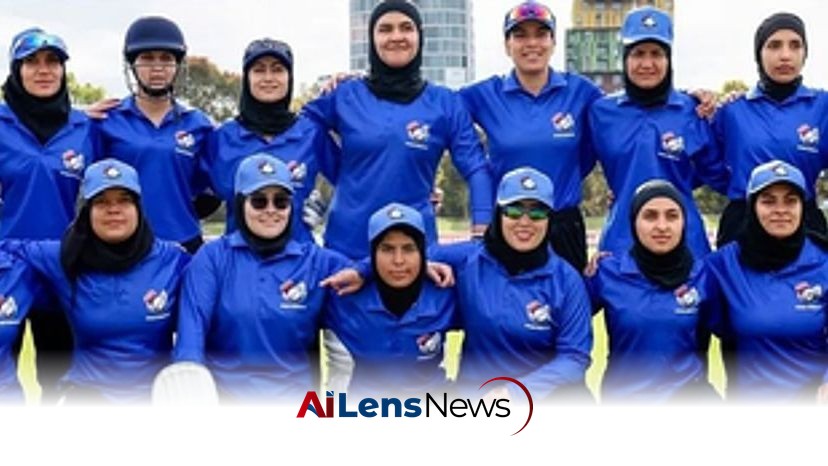


The ICC has launched a five-year plan to support Afghanistan's refugee women cricketers in their journey towards international qualification by 2030.
Riyadh, Saudi Arabia Jul 15, 2026 ALN: Afghanistan’s refugee women cricketers are on the cusp of a significant opportunity to showcase their talents on an international stage, thanks to a newly unveiled five-year roadmap by the International Cricket Council (ICC). This initiative aims to facilitate the team’s journey towards participating in ICC qualification events by 2030, marking a pivotal moment for Afghan women in sports.
The plan was ratified during the ICC Annual Conference held in Edinburgh, where the governing body also took steps to reconstitute its Special Task Force (STF). This task force is crucial as it will oversee the long-term development of the refugee team, ensuring that the players receive the guidance and resources necessary to thrive in competitive cricket.
This initiative is particularly noteworthy as it represents the first time the ICC has established a structured timeline for the refugee team to advance towards international qualification tournaments. However, it is important to note that the players will not compete under the Afghanistan name due to the absence of support from the Afghanistan Cricket Board (ACB). This situation highlights the complexities surrounding the governance of cricket in Afghanistan, especially in the wake of the Taliban's return to power in 2021, which has significantly impacted sports, particularly women's sports.
The expanded Task Force now includes influential figures such as ICC Independent Director Ros Rivaz and Sarah Keane, a member of the ICC Chief Executives’ Committee. Additionally, representatives from major cricketing nations, including the Board of Control for Cricket in India (BCCI), Cricket Australia, and the England and Wales Cricket Board (ECB), are part of this initiative. Their involvement is expected to provide a wealth of experience and expertise, which will be invaluable as the team embarks on this ambitious journey.
Ros Rivaz articulated the Task Force's mission, stating, "The Task Force has been entrusted with developing a clear and sustainable roadmap that supports the continued development of Afghan refugee women cricketers through structured coaching, meaningful competitive opportunities, and appropriate high-performance pathways." This commitment indicates a long-term vision for the team, aiming not only for immediate participation in competitions but also for sustained growth and development in women's cricket.
The announcement of this roadmap follows a series of significant events aimed at enhancing the skills and exposure of the Afghanistan Refugee Women’s Team. Notably, the England and Wales Cricket Board (ECB) hosted the team in England for a tour that included T20 matches and high-performance training sessions. This initiative was made possible through a partnership with the Marylebone Cricket Club (MCC) and the MCC Foundation, which has been instrumental in providing resources and training facilities.
Earlier, in January 2025, the team had the opportunity to compete against a Cricket Without Borders XI at Melbourne’s Junction Oval, coinciding with the Women’s Ashes Test. This match was streamed by Cricket Australia, showcasing the team’s progress and providing them with a platform to reach a broader audience. Such exposure is critical, not only for the players' development but also for raising awareness about their unique circumstances and the challenges they face.
One of the players, Firooza Afghan, expressed optimism regarding the roadmap, noting that it has provided the squad with a clear objective to pursue. She stated, "Over the past year, the opportunities to come together as a group and tour India and England have provided us with some of the most memorable experiences of our lives. The support to train in our home locations with quality coaches has played a big role in our progress." This sentiment reflects the collective aspirations of the team as they strive to achieve recognition and success amidst adversity.
Firooza’s perspective is echoed by former Australian cricketer Mel Jones, who has played a crucial role in facilitating the relocation of many players to Australia. Jones welcomed the ICC's recent commitment, stating, "The continued support for these remarkable women, alongside a clear roadmap towards ICC qualification pathways by 2030, represents an important commitment to their future. It sends a powerful message that talent and determination deserve opportunity." Her endorsement underscores the significance of this initiative in empowering women in sports, particularly in contexts where they face systemic barriers.
Jones further emphasized the inspirational role these players hold, stating, "These players are role models, inspiring women and girls around the world, and it’s exciting to see a long-term pathway that balances development with meaningful competition while recognising their unique journey. The progress they’ve made over the past year has been extraordinary, and I can’t wait to see what this team achieves by 2030." This acknowledgment not only highlights the potential of the players but also reinforces the importance of providing opportunities for women in sports, particularly in regions where cultural and societal challenges persist.
The implications of this roadmap extend beyond the cricketing realm. It signifies a broader commitment to women's empowerment and gender equality in sports, especially within the context of Afghanistan, where women's rights have been severely curtailed. The international cricket community's support for the refugee women's team can serve as a beacon of hope, illustrating that talent and determination can transcend borders and adversity.
As the team moves forward, the focus will not only be on competitive success but also on fostering an inclusive environment that encourages participation from women in cricket across different backgrounds. The roadmap's emphasis on structured coaching and high-performance training is expected to yield positive results, creating a pipeline of talent that can contribute to the growth of women's cricket in the region.
In conclusion, the ICC's five-year roadmap for Afghanistan's refugee women cricketers represents a significant step towards inclusivity and empowerment in sports. It provides a structured approach to developing talent while acknowledging the unique challenges faced by these athletes. As they work towards their goal of participating in ICC qualification events by 2030, the support from the international cricket community will be crucial in shaping their future and inspiring the next generation of female cricketers.
To learn more about the latest developments in Cricket, stay updated with our exclusive reports and analyses on AiLensNews.

