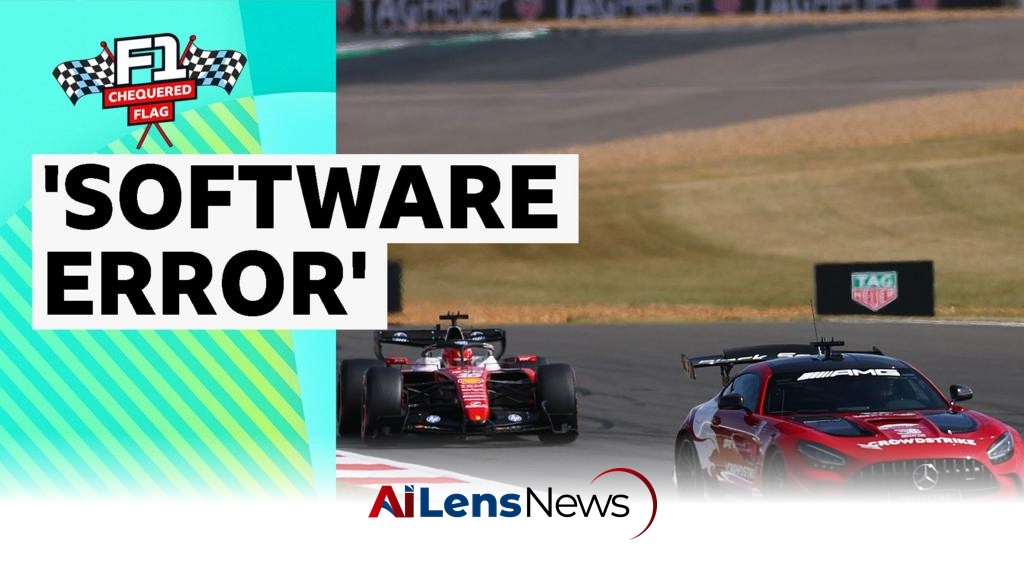


A software error during the British Grand Prix led to confusion about a final lap, prompting discussions among commentators about the implications.
New Delhi, India Jul 6, 2026 ALN: During the recent British Grand Prix, a significant software error caused confusion among fans and commentators alike, leading many to believe there would be one final lap of racing after a late safety car was deployed. This incident has sparked discussions about the reliability of technology in 1, a that has increasingly integrated advanced systems into its operations over the years. The implications of such a software failure extend beyond just the race results; they touch upon the very fabric of safety, communication, and the use of technology in high-stakes environments.
Rosanna Tenant, Harry Benjamin, and former world champion Damon Hill expressed their frustrations regarding the situation. They noted that the software error not only affected the race's conclusion but also raised concerns about the overall integrity of the racing experience. The confusion stemmed from the miscommunication regarding the deployment of the safety car, which is a critical component in ensuring driver safety during incidents on the track. When the safety car is deployed, drivers must follow specific protocols, and any miscommunication can lead to chaotic situations on the track.
Damon Hill, who has a keen understanding of the pressures and nuances of racing, emphasized the importance of clarity and accuracy in communication during critical moments of a race. The incident highlighted how even minor technical glitches can have significant repercussions in a where every second counts. The reliance on technology to relay crucial information to drivers and teams means that any error can lead to misunderstanding and potentially dangerous situations.
Moreover, the incident raised questions about the robustness of the software systems that govern race operations. In recent years, 1 has embraced a wide range of technological innovations, from data analytics to advanced telemetry systems. While these advancements have improved the 's competitiveness and safety, they have also introduced new layers of complexity. The software that manages the safety car protocols is designed to ensure that all drivers are informed of critical changes on the track. However, the recent failure suggests that there may be vulnerabilities that need to be addressed.
The incident has prompted a broader conversation about the role of technology in 1. As teams increasingly rely on sophisticated software systems for race management, the potential for errors raises questions about how such issues can be mitigated in the future. 1 has always been at the forefront of technological advancement in motor, utilizing cutting-edge engineering and software to enhance performance and safety. However, with these advancements come challenges, particularly in ensuring that the systems are foolproof.
One of the key considerations is the training and preparedness of race officials and teams to handle software-related issues. The British Grand Prix incident serves as a reminder that while technology can enhance the racing experience, it can also introduce vulnerabilities. As teams and governing bodies seek to improve their systems, they must also prioritize comprehensive training and contingency plans to address potential failures.
Moreover, the incident raises questions about the protocols in place for communicating crucial information to drivers during a race. The clarity of communication between race control, teams, and drivers is paramount, and any breakdown in this chain can lead to confusion and misjudgment on the track. This incident may prompt a reevaluation of these processes to ensure that all parties are aligned and informed, particularly during high-stakes moments.
In addition to communication protocols, the incident has sparked discussions about the potential need for backup systems or manual overrides in case of software failures. While technology can greatly enhance efficiency and safety, it is essential to have contingency plans in place to manage unexpected issues. The integration of fail-safes could prevent similar incidents from occurring in the future and maintain the integrity of race operations.
Fans are encouraged to engage with the topic by listening to the Chequered Flag podcast on BBC Sounds, where experts delve deeper into the implications of the software error and its impact on the race. The podcast serves as a platform for fans to not only gain insights from experts but also to participate in discussions surrounding the future of technology in 1. Engaging with the community allows fans to voice their opinions and concerns, fostering a dialogue that can lead to improvements in the .
Additionally, social media platforms have become a vital avenue for fans to express their thoughts and feelings about the race incidents. The immediacy of social media allows for real-time reactions and discussions that can influence how governing bodies respond to such issues. This engagement can also serve as a feedback mechanism, helping teams and regulators understand the perspectives of fans and stakeholders.
The software error during the British Grand Prix serves as a reminder of the challenges faced in modern motor. As technology continues to evolve, ensuring its reliability will be crucial for maintaining the excitement and integrity of 1 racing. The incident underscores the need for continuous improvement in both technology and communication protocols within the . Moving forward, it will be essential for 1 to learn from such incidents to enhance the safety and experience for drivers and fans alike.
In conclusion, while technology plays an integral role in the advancement of 1, the recent software error has highlighted the importance of vigilance and preparedness in the face of potential challenges. As the continues to navigate the complexities of modern racing, it must balance innovation with reliability to ensure that it remains a thrilling and safe spectacle for all involved. The ongoing dialogue about technology's role in racing will likely shape the future of 1, making it imperative for all stakeholders to remain engaged and proactive in addressing these critical issues.
To learn more about the latest developments in Formula 1 & Motorsports, stay updated with our exclusive reports and analyses on AiLensNews.

