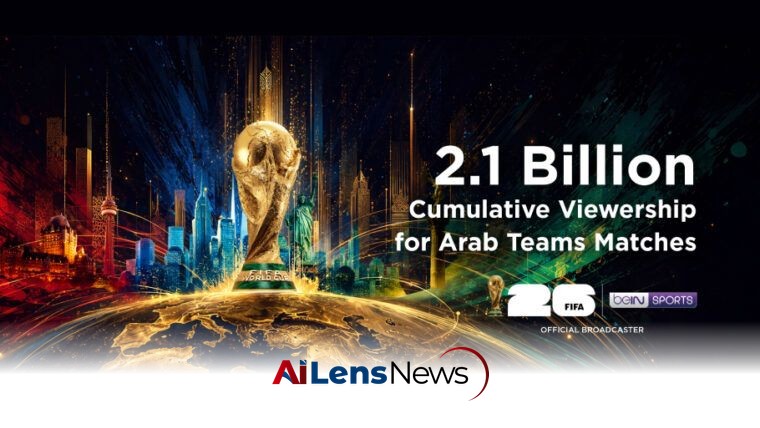


Over 2.1 billion viewers tuned in to watch as a record eight Arab nations made history at the FIFA World Cup 2026, breaking MENA viewership records.
Doha, Qatar Jul 21, 2026 ALN: The FIFA World Cup 2026 has marked a significant milestone in the history of Arab football, showcasing the region's growing prominence on the global stage. This tournament has been unprecedented not only in terms of the number of Arab teams participating but also in the record-breaking viewership that has accompanied their performances. With a total of eight Arab teams competing in the expanded 48-team format, the excitement and engagement from fans across the Middle East and North Africa (MENA) have reached new heights. The tournament has seen historic achievements, such as Egypt's first-ever advancement to the Round of 16 and Morocco's continuation as a strong contender, following their semi-final run in the previous World Cup.
The significance of these accomplishments cannot be overstated. Traditionally, the FIFA World Cup has been a platform where nations vie for glory, but for Arab nations, this tournament has been particularly special. Egypt's historic match against Argentina, where they led 2-0 before narrowly losing 3-2, has become a defining moment for the team and its fans. The match attracted an astonishing 192.6 million viewers, making it the most-watched game of the tournament involving Arab teams. This level of viewership underscores the deep-rooted passion for football in the region, where the sport is not just a game but a source of national pride and identity.
The role of beIN SPORTS as the leading sports broadcaster in the MENA region has been pivotal in facilitating this engagement. With exclusive broadcasting rights covering 24 markets, beIN SPORTS has ensured that fans can experience every match live, regardless of the time zone differences posed by the tournament being held across Canada, Mexico, and the United States. The matches, often scheduled during unconventional hours for the region, have seen remarkable turnout, with pre-dawn audiences exceeding 100 million. This phenomenon highlights the unwavering support that Arab teams receive from their fans.
In addition to Egypt, teams like Algeria, Iraq, Jordan, Morocco, Qatar, Saudi Arabia, and Tunisia have also made their mark in this tournament. Algeria's journey included a historic progression to the knockout rounds, while Jordan, despite being debutants, managed to score in all their group matches, demonstrating the competitive spirit of Arab football. The performances of these teams have contributed to a collective sense of achievement for the entire region.
Morocco's success story is particularly noteworthy as they have become the first African and Arab team to reach the quarter-finals in consecutive World Cups. Their matches have consistently drawn large audiences, with their quarter-final clash against France attracting 151.6 million viewers. This match was watched by an impressive 97% of Morocco's adult population, further illustrating the unifying effect of football in the region. The Atlas Lions’ ability to perform on such a grand stage has inspired many young athletes in Morocco and beyond, fostering a new generation of football talent.
The group stage of the tournament set a strong precedent for viewership, with Egypt's 1-1 draw against Iran being the most-watched match of the first phase. This match alone garnered over 107 million viewers, indicating the high level of interest in Arab teams. Other notable matches included Egypt's draw with Belgium and Morocco's tie with Brazil, both of which attracted substantial audiences. The cumulative viewership for all 29 matches involving Arab teams exceeded 2.1 billion, with the knockout rounds seeing even higher engagement. The six matches in the knockout phase collectively drew 854 million viewers, averaging over 142 million per match, a testament to the growing popularity of football in the Arab world.
Mohammed Al-Bader, Managing Director of beIN Channels – MENA, expressed pride in the historic nature of this World Cup for Arab football. He emphasized the connection that fans have with their national teams, stating that the record audiences reflect the passion and dedication of supporters across the region. The success of Arab teams in this tournament serves not only as a source of pride but also as a catalyst for inspiring future generations to pursue football as a sport.
beIN SPORTS has been the exclusive broadcaster of the FIFA World Cup in the MENA region since 2014, solidifying its position as the go-to platform for football fans. The network has provided extensive coverage in multiple languages, ensuring accessibility and engagement for a diverse audience. As the tournament progresses, the excitement surrounding Arab teams continues to build, and their performances will likely have lasting implications for the future of football in the region.
The implications of this World Cup extend beyond just immediate viewership numbers. The success and visibility of Arab teams can lead to increased investment in local football infrastructures, youth academies, and training programs. National federations may be inspired to enhance their development programs, aiming to cultivate homegrown talent that can compete on the international stage. Furthermore, the unity and pride experienced during the tournament can have a positive impact on social cohesion within the region, as fans come together to support their teams.
As the tournament progresses, it is essential to recognize the broader context of these achievements. The World Cup serves as a platform for cultural exchange and representation, allowing Arab nations to showcase their talent and passion for football on a global stage. The historical significance of this tournament for Arab teams is not just about the matches played but also about the narratives that emerge from them, shaping the future of football in the region for years to come.
In conclusion, the FIFA World Cup 2026 has been a watershed moment for Arab football. With record viewership numbers and historic achievements, the tournament has captured the hearts of millions across the MENA region. As fans continue to rally behind their teams, the legacy of this World Cup will undoubtedly inspire future generations of footballers and fans alike, fostering a deeper connection to the sport and to one another.
As the tournament unfolds, it will be interesting to see how the performances of these teams will influence the trajectory of football in the Arab world. The combination of passion, talent, and support from fans could lead to a new era for Arab football, with the potential for even greater achievements in future international competitions.
To learn more about the latest developments in Golf, stay updated with our exclusive reports and analyses on AiLensNews.

