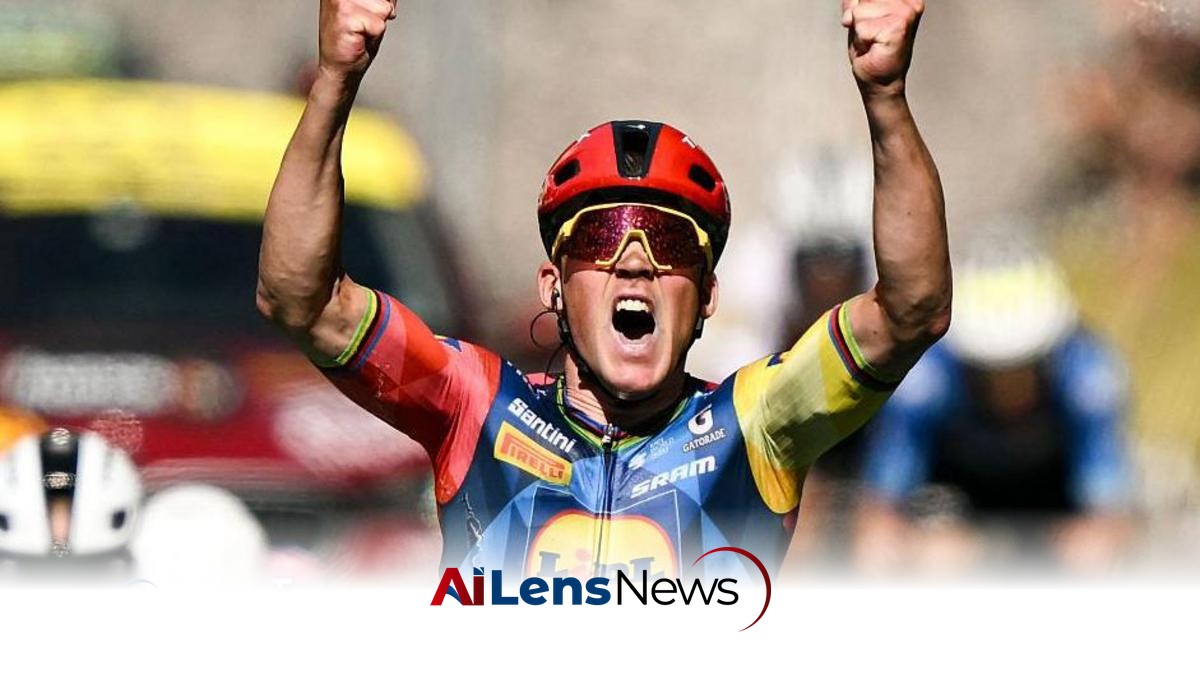


Mads Pedersen sprints clear to win the fourth stage of the Tour de France, while Tadej Pogacar slips to fourth place.
New Delhi, India Jul 7, 2026 ALN: Mads Pedersen sprinted clear from a breakaway to win the fourth stage of the Tour de France as defending champion Tadej Pogacar lost the yellow jersey and slipped to fourth.
Dane Pedersen timed his run for the line at the end of the 181.9km stage to perfection as temperatures reached 40C in southern France. This extreme heat has been a significant factor in the race, affecting not only the performance of the cyclists but also the strategies employed by their teams. Riders have had to adapt quickly to the challenging conditions, which have been exacerbated by a heatwave affecting much of southern Europe. The impact of such weather conditions on is profound, as athletes are required to maintain high levels of performance while managing their body temperature and hydration, which can be particularly taxing in extreme climates.
As the race unfolded, the effects of the heat were evident. Riders put blocks of ice down their tops as they battled the severe conditions, a tactic that has become increasingly common when faced with high temperatures. This practice not only helps to cool the body but also serves as a psychological boost, as riders feel more comfortable and capable of pushing their limits. The pack was allowed to carry bags of ice and water instead of individual bottles as an experiment, highlighting the need for innovative solutions to ensure rider safety and performance during extreme weather. Such adaptations are crucial, as the physical toll of racing in extreme heat can lead to dehydration, heat exhaustion, or even heat stroke, all of which can severely impact a rider's performance and overall health.
Uno-X Mobility rider Torstein Traeen emerged as the new race leader after finishing eighth in the stage—almost 13 minutes ahead of the peloton. Traeen's ascension to the yellow jersey is noteworthy; he is the third Norwegian to wear the iconic jersey in the history of the Tour de France. His victory is particularly poignant, as he was treated for cancer in 2022, making this achievement all the more significant for him personally and for his supporters. The journey of an athlete overcoming personal adversity resonates deeply within the s community, serving as an inspiration not only to fellow competitors but also to fans and individuals facing their own challenges.
Despite not being considered a major contender for the overall Tour title, Traeen expressed his emotions on the podium. "It's quite hard for me to understand how big this is, but you can see from the faces of my old coach how special it is," he said. This statement reflects the deep emotional connection many athletes have with their accomplishments, especially when overcoming personal challenges. The Tour de France is not just a test of physical endurance but also a showcase of human resilience and determination. The emotional weight of such achievements can often be a driving force for athletes, pushing them to strive for greatness against all odds.
Pedersen's Lidl-Trek team-mate Quinn Simmons was second on the road, as the route took the riders from Carcassonne to Foix, with Movistar's Raul Garcia Pierna finishing third. The dynamics of the race were influenced by the heat, with teams needing to work closely together to manage hydration and cooling strategies effectively. Pedersen acknowledged the collective effort of his team in dealing with the extreme conditions, stating, "We just have to live with the heat and do what you can to cool down. Luckily, the cars in the breakaway are closer to us than in the bunch, and that makes things easier." This statement underscores the importance of teamwork in , particularly in a grueling event like the Tour de France. Each member of a team plays a crucial role, from the riders to the support staff, in ensuring that the athletes can perform at their best, especially under challenging circumstances.
As for Tadej Pogacar, the four-time champion lost the yellow jersey after just one day for the third year in a row, finishing the stage in 33rd place and trailing the new leader by seven minutes and 53 seconds. This performance raises questions about Pogacar's form and strategy as the race progresses. The Tour de France is known for its unpredictable nature, and while Pogacar has proven to be a formidable competitor in previous years, this stage may signal a shift in the competitive landscape of the race. The loss of the yellow jersey can be a significant psychological blow for a defending champion, potentially affecting their confidence and approach in subsequent stages.
Stage five on Wednesday is set to be a mostly flat route that will suit sprinters, providing another opportunity for riders like Pedersen to showcase their speed and endurance. However, the race will soon hit the high Pyrenees mountains on Thursday, where the terrain will dramatically change, presenting new challenges for all competitors. The mountainous stages are often where the overall standings are reshaped, as climbers and general classification contenders typically excel in these conditions. The transition from flat to mountainous terrain is a crucial juncture in the Tour, as riders must adapt their strategies and energy management to cope with the steep gradients and the increased physical demands of climbing.
1. Mads Pedersen (Den/Lidl-Trek) 4hrs 10mins 45secs
2. Quinn Simmons (US/Lidl-Trek)
3. Raul Garcia (Spa/Movistar)
4. Marco Frigo (Ita/NSN)
5. Ramses de Bruyne (Bel/Alpecin-Premier Tech)
6. Kevin Vauquelin (Fra/Ineos)
7. Sean Quinn (US/Easypost)
8. Torstein Traeen (Nor/Uno-X Mobility)
9. Pablo Castrillo (Spa/Movistar)
10. Mathias Vacek (Cze/Lidl-Trek)
(all same time)
1. Torstein Traeen (Nor/Uno-X Mobility) 13hrs 2mins 46seconds
2. Sean Quinn (US/Easypost) +28secs
3. Mathias Vacek (Cze/Lidl-Trek) +3mins 50secs
4. Tadej Pogacar (Slo/UAE Team Emirates-XRG) +7mins 53secs
5. Jonas Vingegaard (Den/Visma-Lease a Bike) +7mins 53secs
6. Ramses de Bruyne (Bel/Alpecin-Premier Tech) +8mins 6secs
7. Remco Evenepoel (Bel/Red Bull-Bora-Hansgrohe) +8mins 16secs
8. Isaac del Toro (Mex/UAE Team Emirates-XRG) +8mins 17secs
9. Juan Ayuso (Spa/Lidl-Trek) +8mins 20secs
10. Paul Seixas (Fra/Decathlon-CMA CGM) +8mins 41secs
The implications of this stage are significant, as the Tour de France continues to unfold. The heat has clearly played a role in shaping the race thus far, and with the mountainous stages approaching, the dynamics of the competition will likely shift once again. Teams will need to remain vigilant, adapting their strategies to the changing conditions as they seek to secure their positions in the general classification. The upcoming stages will be critical in determining who will emerge as the overall contender for the coveted yellow jersey, with each rider's performance becoming increasingly crucial as the race progresses. The interplay between team strategy, individual performance, and environmental factors will continue to be a defining characteristic of this year's Tour de France, as athletes push themselves to their limits in pursuit of glory.
To learn more about the latest developments in Global Tournaments & Olympics, stay updated with our exclusive reports and analyses on AiLensNews.

