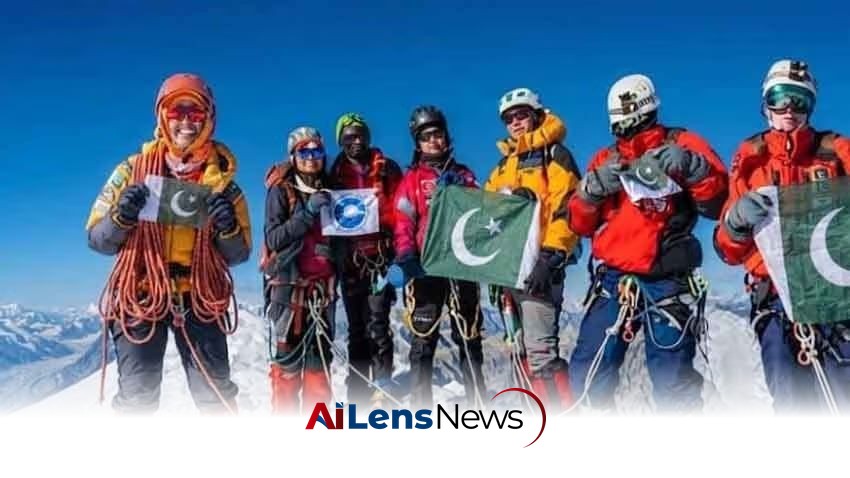


Eight Pakistani women mountaineers have successfully summited the 6,040-metre Khosar Gang Peak, marking a significant milestone in female participation in mountaineering.
Islamabad, Pakistan Jul 21, 2026 ALN: Eight Pakistani women mountaineers achieved a historic milestone by successfully summiting the 6,040-metre Khosar Gang Peak. This remarkable achievement took place during the second Women’s Khosar Gang Expedition organized by the Alpine Club of Pakistan. The successful ascent not only showcases the individual capabilities of these women but also highlights the growing participation of females in the traditionally male-dominated field of mountaineering.
The team reached the summit on the morning of July 17 after completing the challenging expedition, which required not just physical stamina but also mental resilience and teamwork. The climbers hailed from various regions of Pakistan, including Gilgit-Baltistan, Punjab, Khyber Pakhtunkhwa, Balochistan, and the capital city of Islamabad. This diverse representation underscores the unifying power of sports, particularly adventure sports, in a country often characterized by its regional divides.
Leading the expedition was Bibi Afzon, who played a pivotal role in guiding the team throughout the climb. Her leadership skills were instrumental in navigating the complexities of high-altitude climbing and ensuring that each member of the team felt supported and motivated. In addition to Afzon, the team was backed by experienced high-altitude guides Ali Muhammad Sadpara, Sadiq Hussain Sadpara, and Ilyas Hushay, whose expertise provided crucial technical support. The presence of such seasoned guides helped ensure a safe and successful ascent, reflecting the importance of mentorship in extreme sports.
The expedition also involved extensive route preparation and rope-fixing work, which was led by Quaid Shigri. His technical skills and experience in high-altitude climbing were invaluable, allowing the team to complete the challenging route with strong coordination and efficiency. This aspect of the expedition highlights a critical but often overlooked component of mountaineering, which is the meticulous planning and preparation that precedes any successful climb.
Upon the successful completion of the expedition, Alpine Club of Pakistan Secretary General Ayaz Shigri congratulated the climbers and hailed their achievement as a landmark moment in the realm of adventure sports in Pakistan. He praised their courage, determination, teamwork, and professionalism, stating that such successes would encourage more women to participate in adventure sports. This sentiment reflects a broader societal shift towards recognizing and celebrating women's achievements in fields that have historically marginalized them.
The Alpine Club of Pakistan has reaffirmed its commitment to promoting women's involvement in mountaineering. The organization has expressed its intention to continue creating opportunities for female climbers at both national and international levels. This initiative aims not only to develop future generations of Pakistani mountaineers but also to foster an environment where women can pursue their passions without societal constraints. The club's efforts are part of a larger movement to empower women in various sectors across Pakistan, encouraging them to break barriers and pursue their ambitions.
The successful Khosar Gang expedition represents a significant achievement for Pakistan’s adventure sports community. It serves as a beacon of inspiration for aspiring female climbers in the country, demonstrating that with determination and support, they can achieve their dreams. The accomplishment is expected to inspire more women to pursue high-altitude climbing and represent Pakistan on global peaks, thereby contributing positively to the nation's image internationally.
Mountaineering, particularly in a country like Pakistan which is home to some of the world's highest peaks, including K2 and Nanga Parbat, has long been associated with adventure, danger, and extreme physical challenge. However, the narratives surrounding mountaineering have often focused on male climbers, overshadowing the contributions and successes of women in the field. The Khosar Gang expedition is thus not only a personal victory for the climbers involved but also a crucial step in rewriting the narrative of women's roles in adventure sports.
As the global conversation around gender equality continues to evolve, the successful ascent of Khosar Gang Peak by these eight women aligns with the broader goals of empowering women in all spheres of life. Their achievement is a testament to the fact that women can excel in challenging environments and that their successes deserve recognition and celebration.
Moreover, the implications of this expedition extend beyond the immediate achievement of reaching the summit. It signifies a cultural shift towards greater acceptance and encouragement of women’s participation in sports, particularly those that require physical endurance and risk-taking. This can lead to increased visibility for female athletes and may inspire policy changes that further support women's sports initiatives.
The expedition also serves as a reminder of the importance of community and collaboration in achieving common goals. The climbers’ success was not solely the result of their individual efforts but rather a collective endeavor that involved teamwork, planning, and mutual support. Such collaborative spirit is essential not only in sports but also in various aspects of life, including education, workplace environments, and community development.
In conclusion, the successful summit of Khosar Gang Peak by eight Pakistani women is a landmark achievement that holds significance on multiple levels. It highlights the growing involvement of women in mountaineering, promotes gender equality in sports, and serves as an inspiration for future generations. As more women take to the mountains, they not only challenge societal norms but also pave the way for a more inclusive and equitable sporting landscape in Pakistan and beyond.
This expedition is indicative of a larger trend in Pakistan, where women are increasingly taking on roles in various fields that were once considered male-dominated. The rise of female participation in sports, particularly in extreme sports like mountaineering, reflects changing attitudes towards gender roles in society. This shift is crucial in a country where traditional views often limit women's opportunities.
The success of the Khosar Gang expedition also highlights the importance of supportive networks for women in sports. The camaraderie among the climbers and their guides exemplifies how mentorship and shared experiences can empower women to push beyond their limits. As more women engage in such networks, the potential for collective success increases, fostering an environment where women can thrive.
Furthermore, this achievement can catalyze further investment in women's sports infrastructure in Pakistan. As public interest grows, there may be opportunities for sponsorships, funding for training programs, and the establishment of women-centric sports organizations. Such developments would not only benefit aspiring female climbers but could also enhance the overall sports culture in Pakistan.
In the context of global mountaineering, the successful ascent of Khosar Gang Peak by these eight women places Pakistan on the map as a country that supports and celebrates female climbers. Their achievement can serve as a model for other nations, especially in regions where women face significant barriers to participation in sports. By showcasing the capabilities of women in mountaineering, this expedition challenges stereotypes and encourages a more inclusive approach to adventure sports worldwide.
In summary, the historic summit achieved by the eight Pakistani women on Khosar Gang Peak is more than just a personal triumph; it is a significant milestone in the ongoing journey toward gender equality in sports. It embodies the spirit of resilience, teamwork, and empowerment, inspiring future generations to pursue their passions and break through societal barriers. As the narrative of women in mountaineering continues to evolve, the legacy of this expedition will undoubtedly encourage more women to take to the mountains, redefine their limits, and inspire others along the way.
To learn more about the latest developments in Cricket, stay updated with our exclusive reports and analyses on AiLensNews.

