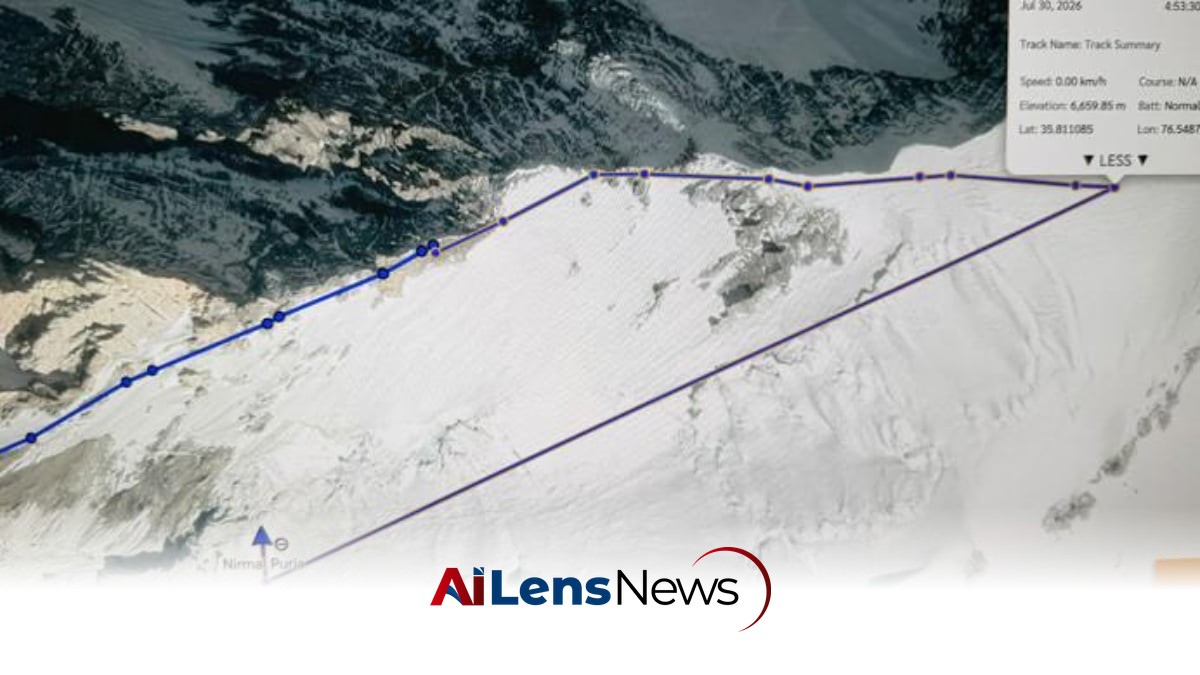


Nims Dai and nine other climbers are missing following an avalanche on Broad Peak in Pakistan's Karakoram range, prompting urgent rescue efforts.
Islamabad, Pakistan Jul 31, 2026 ALN: Approximately ten climbers—including well-known Nepali mountaineer Nims Dai and Pakistani climber Sohail Sakhi from Hunza—have been reported missing after an avalanche hit their expedition on Broad Peak (8,047 meters) in Pakistan’s Karakoram mountain range on Thursday.
The Alpine Club of Pakistan (ACP) first learned that the avalanche struck the group at noon, after which communication with all expedition members was lost. This incident has raised alarm not only among the climbing community but also among the families and friends of the climbers, who are anxiously awaiting updates. The emotional toll of such incidents can be profound, with families often facing uncertainty and fear during the waiting period.
The team consists of five Nepali climbers, including Nims Dai, alongside Pakistani climber Sohail Sakhi, Omani mountaineer Nadhira, American climber Mallory Geis, Chinese climber Mr. Wang, and one additional international climber. Nims Dai, known for his impressive feats in high-altitude climbing, has garnered international recognition for his speed and skill in summiting some of the world’s highest peaks. His presence in this expedition has drawn significant attention due to his reputation and previous accomplishments, including his remarkable speed records on several of the world's highest mountains.
The ACP reported receiving extremely disturbing accounts of the incident and confirmed that contact with all team members appears to have been lost following the avalanche. The situation is particularly precarious, as avalanches in high-altitude environments can lead to severe injuries or fatalities, and the likelihood of survival diminishes rapidly without timely rescue efforts. The unpredictability of weather patterns in mountainous regions adds another layer of complexity to rescue operations, emphasizing the urgent need for effective response strategies.
According to the club, its president, Major General Irfan Arshad, and senior leadership are in continuous communication with government authorities and relevant agencies to facilitate a prompt search and rescue operation. The coordination between the ACP and government bodies is crucial in these situations, as they work to mobilize resources and personnel to assist in the search efforts. This collaboration is essential, given the remote location of Broad Peak and the potential challenges posed by the rugged terrain and harsh weather conditions.
“Every possible effort is being made to ensure that helicopter support and all available rescue resources are mobilized at the earliest opportunity, subject to weather and operational conditions,” the ACP statement read. Weather conditions in the Karakoram range can be unpredictable and harsh, which complicates rescue operations. High winds, low temperatures, and heavy snowfall can all hinder efforts to locate and extract climbers in distress. As the situation develops, rescuers must navigate not only the physical challenges of the environment but also the emotional weight of the families and friends awaiting news.
After communication with the climbers remained cut off for several hours, sources at the Broad Peak base camp also called for an immediate helicopter rescue operation. The urgency of this request underscores the critical nature of the situation, as time is of the essence in search and rescue missions at high altitudes. The longer the delay in rescue efforts, the more challenging it becomes to locate and assist climbers who may be trapped or injured.
Situated in the Karakoram range of northern Pakistan, Broad Peak—the 12th-highest mountain in the world at 8,047 meters—is considered one of the country’s most challenging peaks for high-altitude adventures. Its steep ascents and technical routes require climbers to possess exceptional skills and experience. The mountain is often frequented by climbers from around the world, drawn by the allure of its majestic heights and the thrill of high-altitude climbing. However, the risks associated with climbing Broad Peak cannot be overstated, as it has a history of accidents and fatalities due to avalanches, severe weather, and other hazards.
The ACP stated that it is closely monitoring the situation in coordination with all relevant parties and that further updates will be released as information becomes available. The ongoing developments have sparked conversations around the risks associated with high-altitude climbing, particularly in regions known for their challenging conditions. The climbing community, known for its solidarity, is rallying together to support those affected by this tragic event, emphasizing the shared bonds among climbers and their families in times of crisis.
In the broader context, this incident highlights the inherent dangers of mountaineering, particularly in remote and rugged terrains like the Karakoram range. Avalanches are a well-documented risk for climbers, and despite advancements in safety equipment and techniques, the unpredictability of nature remains a significant challenge. Climbers often undergo extensive training and preparation, yet the unpredictable elements of weather and terrain can lead to unforeseen circumstances. This incident serves as a somber reminder of the risks that climbers willingly take in pursuit of their passion, as well as the need for ongoing discussions about safety protocols and emergency preparedness.
As the search and rescue efforts unfold, the incident at Broad Peak raises questions about the adequacy of safety measures in place for expeditions in high-risk areas. Discussions surrounding climber safety protocols, emergency response capabilities, and the responsibilities of expedition organizers are likely to emerge as this situation develops. The global climbing community will be watching closely as updates are released, with many hoping for a positive outcome for Nims Dai and his fellow climbers.
The response from local authorities, the ACP, and international climbing organizations will be scrutinized, as they strive to balance the thrill of adventure with the imperative of safety. As the situation continues to evolve, the hopes of many rest on the successful rescue of Nims Dai and his fellow climbers, who have become emblematic of the spirit of exploration and adventure that defines high-altitude mountaineering. The coming days will be critical, not only for the climbers involved but also for the future of high-altitude expeditions in the region, as lessons learned from this incident may shape safety protocols and rescue strategies for years to come.
To learn more about the latest developments in Cricket, stay updated with our exclusive reports and analyses on AiLensNews.

