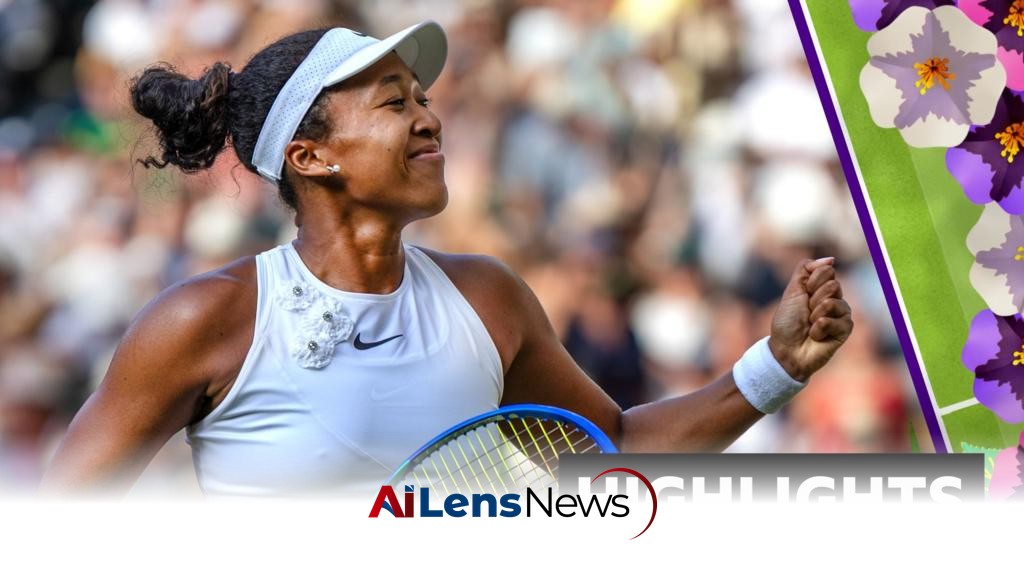


Naomi Osaka secures a brilliant straight sets win over world number one Aryna Sabalenka to reach the quarter-finals of Wimbledon 2026.
New Delhi, India Jul 6, 2026 ALN: Naomi Osaka has achieved a remarkable feat by defeating world number one Aryna Sabalenka in a straight sets victory, securing her place in the quarter-finals of Wimbledon 2026. This victory is not just a testament to her skill on the court, but also a significant moment in her career, as Osaka has faced various challenges in recent years, including injuries and mental health struggles. The win against Sabalenka is particularly noteworthy given the Belarusian player's stature in the , and it underscores Osaka's resilience and determination to return to the top of women's .
This match showcased Osaka's exceptional skills and determination on the court. From the outset, she demonstrated a commanding presence, utilizing her powerful serve and strategic shot placement to keep Sabalenka on the defensive. The match was a display of Osaka's ability to adapt her game to counter Sabalenka's aggressive style, which has earned the Belarusian player her top ranking in the world. Sabalenka is known for her fierce baseline game and powerful groundstrokes, making Osaka's victory a significant achievement in the context of their contrasting styles.
Osaka's performance was characterized by her ability to maintain composure under pressure, particularly during crucial points in the match. Her agility and quick reflexes allowed her to respond effectively to Sabalenka's aggressive play. This resilience is particularly noteworthy given Osaka's previous struggles with maintaining focus during high-stakes matches, which have been well-documented in recent years. The psychological aspect of is often as critical as the physical, and Osaka's ability to navigate this successfully speaks volumes about her growth as a player.
The first set saw Osaka take an early lead, capitalizing on Sabalenka's unforced errors. Sabalenka, known for her powerful groundstrokes and relentless baseline play, struggled to find her rhythm against Osaka's well-placed serves and strategic shot selection. As the set progressed, Osaka continued to build momentum, ultimately winning it with a score of 6-3. This early lead was crucial, as it allowed Osaka to dictate the pace of the match and put pressure on Sabalenka to respond. Winning the first set not only boosted Osaka's confidence but also set a tone for the remainder of the match.
In the second set, Sabalenka attempted to regroup and mount a comeback. She is renowned for her ability to bounce back from setbacks, and many fans expected her to leverage her experience as the world number one to challenge Osaka. However, Osaka remained steadfast, showcasing her resilience and tactical prowess. She broke Sabalenka's serve multiple times, sealing the match with a final score of 6-4. This final score reflects Osaka's dominance throughout the match and her ability to capitalize on key moments. The match statistics would likely reveal a stark contrast in the number of winners and unforced errors, highlighting Osaka's efficiency and effectiveness on the court.
This victory not only highlights Osaka's return to form but also sets the stage for an exciting quarter-final showdown. Fans and analysts alike are eager to see how she will perform against her next opponent. Osaka's journey through the tournament has been closely watched, especially given her past successes at Grand Slam events, including her triumphs at the US Open and Australian Open. Her ability to perform at such a high level again raises questions about her potential to reclaim her status among the elite in women's . The narrative surrounding her comeback is one that resonates with many, given the pressures and expectations placed on athletes at the highest level.
As Osaka advances in the tournament, her journey continues to inspire many, proving that with hard work and dedication, remarkable achievements are possible. Her success is particularly significant in the context of the ongoing discussions about mental health in s. Osaka has been an advocate for mental health awareness, openly discussing her own struggles and the importance of prioritizing well-being in the competitive s environment. This advocacy has contributed to a broader conversation about the mental health challenges faced by athletes, especially in high-pressure situations like Grand Slam tournaments.
In conclusion, Naomi Osaka's stunning win over Aryna Sabalenka marks a significant milestone in her career, reaffirming her status as one of the top competitors in women's . This match serves as a reminder of her immense talent and determination, as well as her ability to overcome adversity. As she prepares for the quarter-finals, the community will be watching closely, eager to see if she can continue her impressive run and perhaps add another Grand Slam title to her already illustrious career. The excitement surrounding her potential return to form is palpable, and it adds an intriguing layer to the tournament's narrative.
The implications of this victory extend beyond just Osaka's personal achievements. It highlights the competitive nature of women's , where rankings can change rapidly and any match can produce surprising outcomes. The depth of talent in the women's game has been increasingly recognized, with several players capable of performing at the highest level. Osaka's win over Sabalenka is a clear indication that the competition is fierce and that every match is an opportunity for an upset. The unpredictability of the women's draw at Wimbledon is one of the factors that makes the tournament so compelling for fans and analysts alike.
Furthermore, this match could have ramifications for Sabalenka as she reflects on her performance. As the reigning world number one, expectations are high, and a loss at this stage could prompt her to reassess her strategies and approach to matches moving forward. The pressure of maintaining a top ranking can be daunting, and how Sabalenka responds to this defeat will be crucial for her future performances. It is not uncommon for top players to experience a dip in form, and how they navigate these challenges can define their careers.
In the broader context of the tournament, Osaka's victory contributes to the narrative of resilience and comeback stories that often define Wimbledon. The grass courts of Wimbledon present unique challenges and opportunities for players, and those who can adapt their games to the surface often find success. Osaka's ability to navigate these challenges successfully speaks volumes about her skills and preparation. Grass courts require a specific style of play, and Osaka's adaptability is a testament to her training and strategic mindset.
As the quarter-finals approach, the excitement surrounding the tournament will undoubtedly grow. Fans are eager to see if Osaka can maintain her momentum and continue to defy expectations. Her journey through Wimbledon 2026 is not just about winning matches; it is about reclaiming her place in the world and inspiring a new generation of players. With each match, Osaka is not only competing for titles but also for the hearts of fans who admire her tenacity and spirit. The narrative of her comeback is one that many are rooting for, as it represents hope and resilience in the face of adversity.
To learn more about the latest developments in Tennis, stay updated with our exclusive reports and analyses on AiLensNews.

