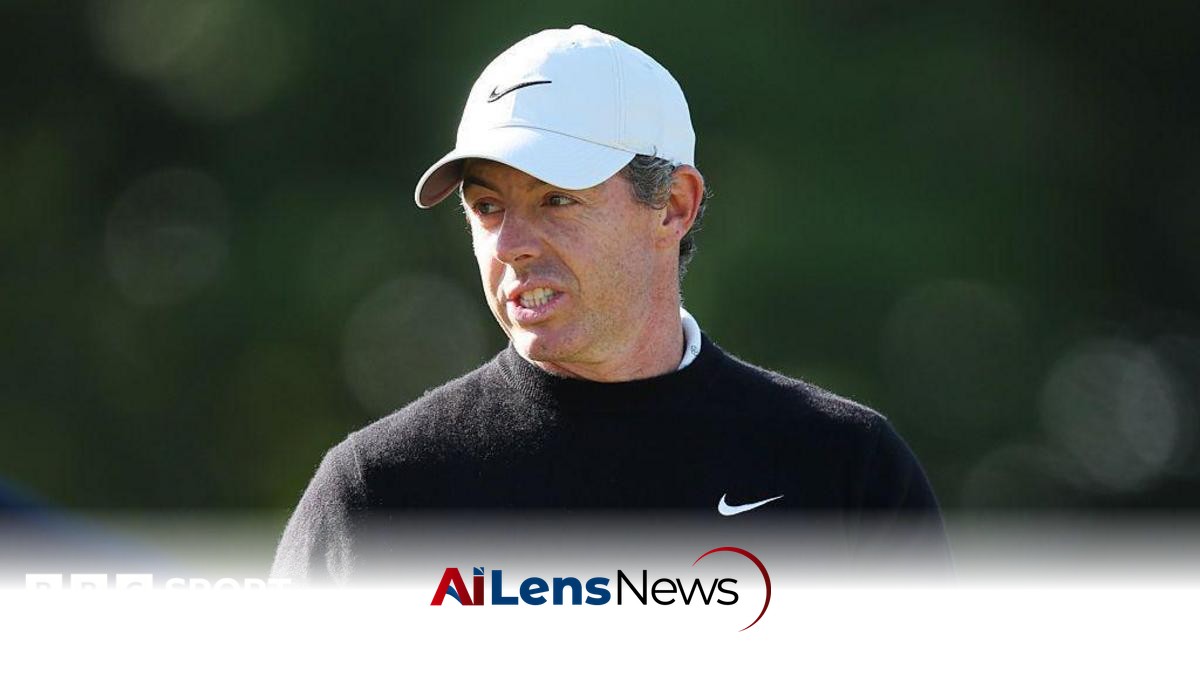


Rory McIlroy has expressed concerns regarding the future of the Scottish Open as the PGA Tour plans to implement a two-tier format in 2028.
New Delhi, India Jul 8, 2026 ALN: Rory McIlroy has urged the PGA Tour to "be careful" with the future of the Scottish Open when it introduces its two-tier format in 2028.
Under the new system, the schedules for the Championship - which will contain the PGA Tour's leading players - and the second-tier Challenger series will run concurrently. This significant restructuring is part of a broader strategy aimed at enhancing the competitive landscape of professional , particularly in the wake of challenges posed by rival tours and the evolving interests of players and sponsors alike.
The Championship tier is designed to showcase the top talent in the , with players competing for substantial prize funds, while the Challenger series aims to provide a platform for emerging talents to gain experience and potentially ascend to the higher tier. However, this new format raises concerns about the future of established tournaments, particularly national opens like the Scottish Open, which has a rich history and tradition in the .
Championship players will not be able to feature in Challenger events and vice versa, although anyone who wins two Challenger events in the same season will gain immediate promotion to the Championship. This rule is intended to create a clear distinction between the two tiers and ensure that the top players are consistently competing at the highest level. However, it creates a potential disconnect for tournaments that have traditionally attracted a mix of both established stars and rising competitors.
The Scottish Open would not qualify for Championship status, meaning that while 14 of the world's top 20 are competing at this week's tournament at Renaissance Club, many of those big-name players could be ineligible to play in the tournament from 2028 under the new rules. This situation has raised alarms among players and fans alike, as the absence of top competitors could diminish the appeal and competitive integrity of the event.
Bob MacIntyre, Scotland's leading player, called for "exceptions" to be made for his home Open when the new schedule is implemented. His plea underscores the importance of the Scottish Open not only as a key event in the ing calendar but also as a celebration of Scottish ing heritage. MacIntyre's perspective reflects a broader sentiment among players who value the historical significance and cultural relevance of national opens.
"We've got to be careful with that because then these national opens lose the fabric of what they are," said McIlroy, the two-time Masters champion. His comments highlight a crucial point: the essence of national opens is often tied to their inclusivity and the ability to showcase local talent alongside global stars. "You can't call yourself a national open anymore if it's a closed-off tournament and there's a certain number of guys," he added, emphasizing the need for a balanced approach that respects tradition while adapting to modern demands.
McIlroy's concerns are echoed by many in the ing community who fear that the new format could lead to a homogenization of events, where only a select few tournaments gain prominence at the expense of others. "These events need to be treated differently than the Travelers Championship or RBC Heritage or whatever else is going to be in the Championship series," he stated, advocating for a differentiated approach that recognizes the unique characteristics of each event.
The Scottish Open has been co-sanctioned by the PGA and DP World Tours since 2022, allowing it to draw a diverse field of competitors from both tours. This arrangement has enhanced the tournament's prestige and has contributed to its status as a key event leading up to The Open Championship. It offers players a valuable opportunity to familiarize themselves with links , which is markedly different from the typical courses they encounter on the PGA Tour.
PGA Tour CEO Brian Rolapp's approved plan is for the Championship tier to feature fields of about 120 players competing for prize funds of at least $20m (£15m). This ambitious financial target reflects the Tour's commitment to elevating the profile of its top events and attracting the best players in the world. However, it also raises questions about the sustainability of such prize funds in markets outside the United States, particularly in Europe where economic conditions may differ significantly.
The Scottish Open purse is currently £6.7m, a figure that, while substantial, pales in comparison to the proposed Championship events. MacIntyre expressed skepticism about the feasibility of transforming the Scottish Open into a $20m event, stating, "I personally think the Scottish Open is going to be totally fine. I don't see it being a $20m event. I see it being a Rolex Series/European Tour event. It would be a bit mad to put a $20m event in Scotland given the world we live in today. It's not the same as America." His comments highlight the economic and cultural context in which the tournament operates, suggesting that while financial growth is desirable, it must be tempered by practical considerations.
Many leading Americans are pleased to play in the Scottish Open to hone their games on a seaside links before The Open the following week. This tradition underscores the importance of the tournament as a key preparatory event for one of 's most prestigious championships. Players like Scottie Scheffler, the world number one and reigning Open champion, have expressed their commitment to maintaining the tournament's relevance within the new schedule. "It needs to work within the new schedule," he said, emphasizing the need for the Scottish Open to retain its place as a critical stop for players preparing for The Open.
Scheffler's perspective reflects a broader consensus among players who recognize the unique challenges posed by links and the value of competing in such conditions before facing the rigors of The Open. He added, "It's an important one that we keep it in the Championship Series just because you get so many guys that come over here and play the week before [The Open]." His comments underscore the interconnectedness of the ing calendar and the importance of strategic scheduling to ensure that players have the opportunity to compete in venues that will prepare them for major championships.
However, Scheffler also acknowledged the complexities of the new format, stating that it is "hard to tell" whether the field should also include DP World Tour players under the new set-up. The integration of players from different tours presents logistical challenges, particularly in terms of ranking and eligibility. "It is so difficult to rank players when they are not playing together all the time," said the 30-year-old American, highlighting the need for a cohesive approach to scheduling that allows for meaningful competition across different tours.
"Having similar guys playing against each other on great courses week in and week out is the best way to set up our schedule," he added, advocating for a system that fosters competitive balance and ensures that players are adequately prepared for the demands of major championships. "To have this tournament fit into that mould would be really nice," he concluded, reflecting a desire for continuity and integrity in the ing landscape.
Thursday
08:06: Xander Schauffele, Kristoffer Reitan, Adam Scott
08:17: Shane Lowry, JJ Spaun, Aaron Rai
08:28: Rory McIlroy, Robert MacIntyre, Chris Gotterup
13:43: Scottie Scheffler, Matt Fitzpatrick, Tommy Fleetwood
13:54: Justin Thomas, Ludvig Aberg, Patrick Reed
14:05: Jon Rahm, Alex Fitzpatrick, Rasmus Hojgaard
All times BST
To learn more about the latest developments in Basketball, stay updated with our exclusive reports and analyses on AiLensNews.

