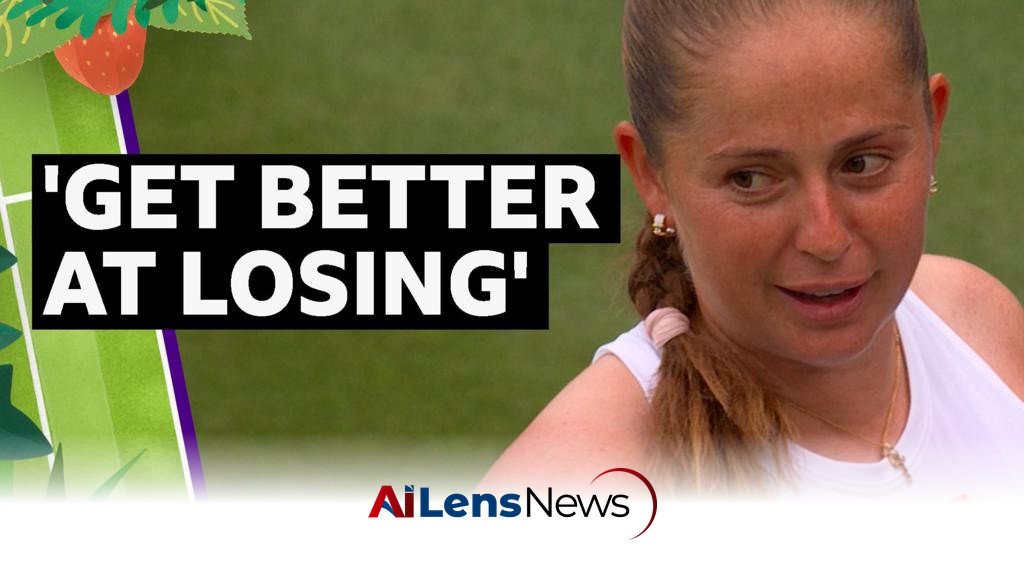


Jelena Ostapenko and Marcelo Arevalo advance to the Wimbledon mixed doubles semi-finals, but a post-match argument overshadows their victory.
New Delhi, India Jul 7, 2026 ALN: Jelena Ostapenko and Marcelo Arevalo have successfully advanced to the Wimbledon mixed doubles semi-finals after a straight-sets victory. However, the match was overshadowed by a heated post-match argument that erupted on the court, illustrating the intense emotions that often accompany high-stakes competitions. This incident not only highlights the competitive nature of professional but also serves as a reminder of the psychological pressures athletes face during major tournaments.
The tension began when a late time violation penalty was issued against Laura Siegemund, a seasoned player known for her strategic gameplay and resilience on the court. Siegemund has a reputation for her tactical approach to matches, often taking her time to set up her shots and analyze her opponent's weaknesses. This decision prompted Siegemund to storm off the court in frustration, visibly upset with the ruling. The situation escalated as her partner, Edouard Roger-Vasselin, confronted Ostapenko, accusing her of persistent slow play throughout the match. Roger-Vasselin’s accusations were not merely a reaction to the penalty but were rooted in the competitive nature of the match, where every second counts and any delay can be seen as a tactical disadvantage.
Such disputes are not uncommon in high-stakes tournaments like Wimbledon, where emotions often run high. Players are under immense pressure to perform, and any perceived unfairness can lead to explosive reactions. The rules of are strict, and time violations can significantly impact a player’s rhythm and focus. In this instance, Siegemund felt that the timing of the penalty was unjust, especially in a match where every point is critical. The emotional investment players have in their performance can lead to heightened tensions, making confrontations more likely. The atmosphere at Wimbledon, with its storied history and tradition, adds an extra layer of pressure, as players are not only competing for a title but also for their place in the annals of history.
Ostapenko, known for her fiery temperament and passionate style of play, responded to the accusations with her own set of complaints, further fueling the argument. The exchange highlighted the intense competitive spirit that defines professional , especially in a prestigious event like Wimbledon. Ostapenko's history of on-court outbursts is well-documented; her emotional responses often reflect the stakes involved in her matches. This incident serves as a reminder that while players may be competing against each other, they are also battling their own emotions and the pressures of the tournament. The psychology of s plays a crucial role here, as athletes must learn to manage their feelings to maintain peak performance.
Despite the controversy, Ostapenko and Arevalo managed to maintain their focus and secure their place in the semi-finals. Their performance showcased their skills and determination, even as the post-match drama unfolded. The ability to compartmentalize emotions and stay focused on the game is a hallmark of successful athletes, and Ostapenko and Arevalo demonstrated this quality under pressure. Their victory not only advances them in the tournament but also highlights their capability to perform amidst distractions. In high-pressure environments, the mental aspect of the game can often be just as important as the physical skills demonstrated on the court.
The Wimbledon mixed doubles competition continues to attract attention, not only for the athletic prowess displayed but also for the interpersonal dynamics that can emerge on the court. The mixed doubles format, which features teams of one male and one female player, adds an additional layer of complexity to the competition. Players must not only work together but also navigate the intricacies of their partners' playing styles and temperaments. This dynamic can lead to both synergy and tension, as seen in the recent match. Fans and commentators alike will be watching closely as the tournament progresses, eager to see how the emotional landscape evolves and how it may affect the outcomes of future matches.
As the semi-finals approach, both teams will need to put aside any lingering tensions and focus on their game. The ability to handle pressure and maintain composure will be crucial for success in the upcoming matches. Teams that can effectively communicate and support each other on the court often find greater success, and this aspect will be tested as they prepare for their next challenges. The ability to work through conflicts and maintain a united front is essential in a where teamwork can be the deciding factor in a match's outcome.
In conclusion, while Ostapenko and Arevalo's victory was significant, the fiery exchange post-match serves as a reminder of the emotional rollercoaster that is professional . The demands of the not only require physical skill but also mental fortitude, as players must navigate the highs and lows of competition. As players navigate both the physical and psychological challenges of the tournament, the lessons learned from such experiences will undoubtedly shape their future performances. This incident at Wimbledon exemplifies the broader narrative of smanship, competition, and the emotional stakes involved in professional athletics.
Wimbledon, one of the four Grand Slam tournaments, has a rich history and is often referred to as the most prestigious event in the world. The tournament is known for its traditions, such as the strict dress code and the iconic grass courts. As players compete for one of the most coveted titles in , the pressures of performance are magnified, leading to moments of both brilliance and tension. The mixed doubles category, while sometimes overshadowed by the men's and women's singles events, showcases unique partnerships and strategies, further enriching the tournament's narrative.
In the context of s psychology, the incident between Ostapenko and Siegemund illustrates the challenges athletes face in managing their emotions during competition. The ability to remain composed under pressure is often what separates the best players from the rest. As the tournament progresses, it will be interesting to observe how these dynamics play out, particularly in high-stakes matches where the margin for error is razor-thin. The ongoing narrative of interpersonal relationships among competitors adds an intriguing layer to the competition, reminding fans that is not only a test of skill but also of character. As we look forward to the upcoming matches, the focus will be on how players manage their emotions and interactions as they strive for success on one of the biggest stages in s.
To learn more about the latest developments in Tennis, stay updated with our exclusive reports and analyses on AiLensNews.

