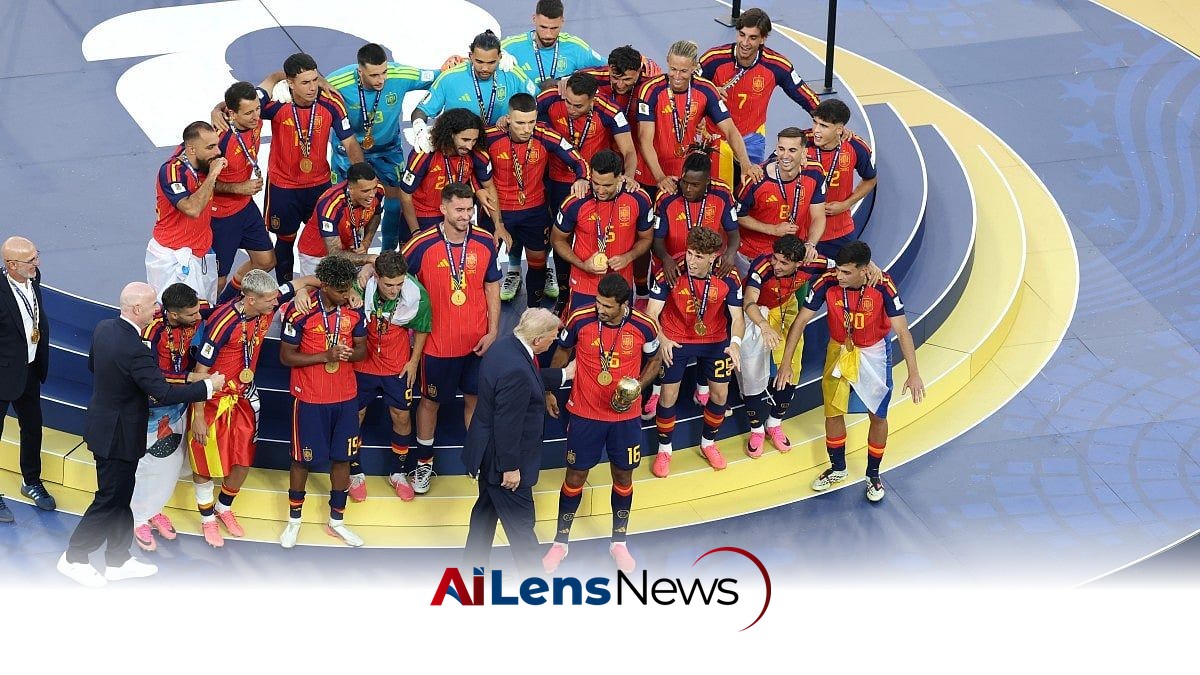


Spain's men's football team receives a heroes' welcome after winning their second FIFA World Cup, joining the women's team in a historic achievement.
Kuwait City, Kuwait Jul 20, 2026 ALN: Spain returned home on Monday, a day after lifting their second men’s FIFA World Cup title in the United States, marking a significant achievement in the nation’s rich football history. This victory not only rekindles the pride of Spanish football fans but also solidifies Spain's position as a powerhouse in the global football arena.
Captain Rodri carried the trophy down the aircraft steps, symbolizing the leadership and unity of the team throughout the tournament. The squad paused briefly to pose for photographs in front of the plane, capturing the moment of triumph before embarking on a day filled with celebrations that would resonate throughout the country. Their schedule included a reception with King Felipe VI at the Royal Palace, a gesture that underscores the importance of football in Spanish culture and its ability to unite the nation.
Following the royal reception, the players were set to meet Prime Minister Pedro Sánchez, who has been a vocal supporter of the national teams. The Prime Minister's presence at such events highlights the intersection of sports and politics in Spain, where football is often seen as a unifying force that transcends regional and political divisions.
The celebrations were set to culminate in an open-top bus parade through the streets of Madrid, ending at the iconic Cibeles Square, a historic site where Spain’s national teams traditionally celebrate their major triumphs. This location is not only a symbol of victory but also a gathering point for fans, reflecting the deep connection between the team and its supporters. Hundreds of thousands of fans were expected to line the streets, eager to share in the joy of their team’s success. Defender Marc Cucurella expressed the players' enthusiasm for this communal celebration, stating, “We are really looking forward to returning to Spain. Many people couldn’t be here, and we want to celebrate with everyone. I think we deserve a good celebration.”
Spain secured their second men’s FIFA World Cup title on Sunday with Ferran Torres scoring the extra-time winner in a tightly contested match against Argentina. This victory was particularly sweet for Spain, as it came after a long wait since their first title in 2010. The match showcased the tactical prowess and resilience of the Spanish team, attributes that have been hallmarks of their playing style over the years. The triumph over Argentina also served as a narrative of redemption, given Argentina's strong footballing history and their recent success in international tournaments.
King Felipe VI and members of the Spanish royal family were present at MetLife Stadium in New Jersey to witness this historic triumph, further emphasizing the importance of football in Spanish society. The royal family's attendance is a testament to the cultural significance of the World Cup and the pride it brings to the nation. Prime Minister Sánchez also celebrated the victory on social media, writing: “WE ARE WORLD CHAMPIONS. Our national team is tremendous. Thanks, Team.” This message resonated with fans across the country, reflecting a collective sense of pride and accomplishment.
The success capped a remarkable era for Spanish football, a period characterized by a commitment to developing talent and fostering a competitive spirit within the national teams. With the women’s team also reigning world champions, Spain became the first nation to simultaneously hold both the men’s and women’s FIFA World Cup titles. This achievement not only highlights the depth of talent in Spanish football but also serves as an inspiration for future generations of players, particularly young girls aspiring to make their mark in the sport.
While celebrations erupted across the country, reports also emerged of a tragic incident that cast a shadow over the festivities. According to local media, a 13-year-old boy died in the town of Rodrigo after a stone pillar from a fountain collapsed under the weight of several people celebrating on it. This unfortunate event serves as a reminder of the potential dangers associated with large public gatherings, especially during moments of heightened emotion and excitement. Two others were reportedly injured when the pillar fell into the fountain, prompting local authorities to announce a three-day period of mourning. This tragedy highlights the need for safety measures during public celebrations, ensuring that joy does not turn into sorrow.
The dual triumph of the men’s and women’s teams has ignited a renewed interest in football across Spain, with young players inspired by the success of their national teams. Grassroots programs are likely to see an uptick in participation, as children and teenagers aspire to emulate their heroes on the pitch. Furthermore, this success could lead to increased investment in youth academies and training facilities, fostering a new generation of talent that can continue to compete at the highest levels.
In the broader context, Spain’s achievement in the World Cup could have implications for the country’s economy as well. The tourism sector may experience a boost as fans from around the world flock to Spain to witness the celebrations and partake in the football culture. Merchandise sales, including jerseys and memorabilia, are expected to surge, contributing positively to the economy. Moreover, the victory could enhance Spain’s reputation as a host for future international sporting events, which could further stimulate economic growth.
As the celebrations continue and the nation revels in this historic achievement, it is clear that the impact of Spain’s World Cup victory extends beyond the confines of the football pitch. It serves as a reminder of the power of sport to unite people, inspire future generations, and foster a sense of national pride that transcends individual differences. The legacy of this triumph will undoubtedly be felt in the years to come, as Spain continues to build on its footballing heritage and strive for excellence on the global stage.
To learn more about the latest developments in Golf, stay updated with our exclusive reports and analyses on AiLensNews.

