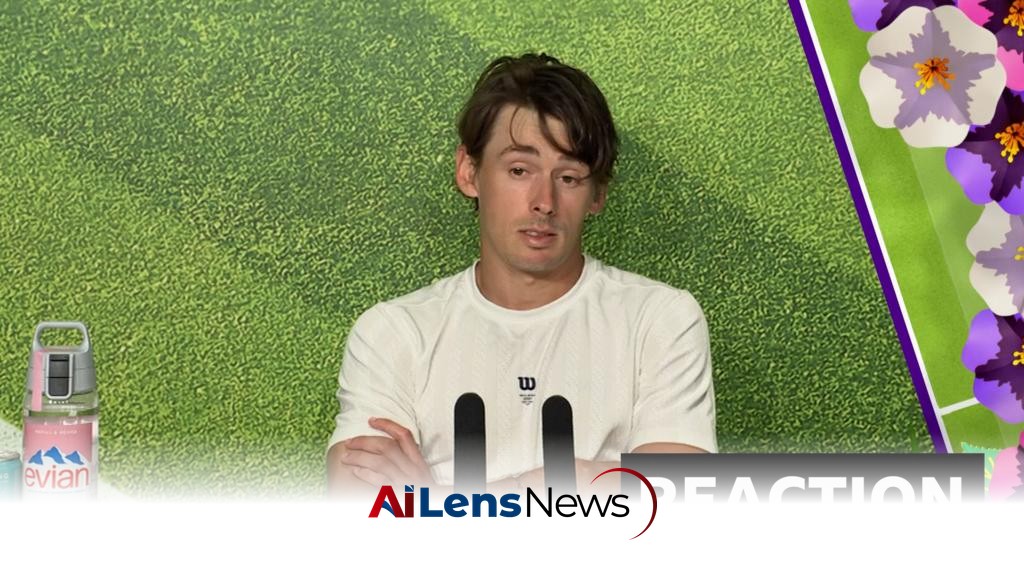


Alex de Minaur expressed deep disappointment after his loss to Flavio Cobolli in the Wimbledon round of 16, citing mental struggles.
New Delhi, India Jul 7, 2026 ALN: Australia's Alex de Minaur faced a heart-wrenching exit from Wimbledon, losing to Italy's Flavio Cobolli in the round of 16 with a score of 7-5, 7-6 (4), 6-3. Following the match, de Minaur held an emotional news conference where he candidly addressed his mental state during the competition. This defeat not only marks a significant moment in his career but also highlights the increasing importance of mental health in professional s.
De Minaur, known for his tenacity on the court, has built a reputation as a fighter, often coming back from seemingly insurmountable challenges. However, in this particular match, he admitted that he "was not good enough mentally" to overcome the challenges presented by Cobolli. This admission is particularly poignant, as it brings to light the pressures athletes face at high-stakes tournaments like Wimbledon, where expectations are immense and the competition is fierce. The psychological component of is often overshadowed by the physical demands, but de Minaur's experience serves as a reminder that mental resilience is just as crucial.
The emotional toll of competitive s is a topic that has garnered more attention in recent years. Athletes are often seen as paragons of physical strength and resilience, but the mental strain they endure can be just as significant. De Minaur's candid remarks resonate with fans and fellow players alike, who recognize that the psychological aspect of the game is crucial to performance. His statement, "It breaks me inside," encapsulates the deep emotional investment that athletes make in their careers and the vulnerability that comes with it. This vulnerability is often masked by the competitive facade athletes present, making it all the more impactful when they choose to share their struggles.
As he reflected on his performance, de Minaur acknowledged the weight of his expectations. Having made a name for himself on the ATP Tour, he entered Wimbledon with aspirations of progressing further than he ever had before. The tournament, known for its rich history and prestige, is often seen as a pinnacle of achievement in the world of . For players like de Minaur, who are determined to establish themselves among the elite, a loss at such a stage can feel devastating. The pressure to perform can be overwhelming, and the disappointment of falling short can linger long after the match has ended.
Despite the disappointment of this loss, it is essential to recognize the broader context of de Minaur's career. He has demonstrated remarkable resilience in the past, bouncing back from injuries and tough defeats. His journey in professional has been marked by a steady rise through the ranks, and he has become a role model for many aspiring athletes. This experience, while painful, may serve as a pivotal moment for his growth both on and off the court. Athletes often learn the most from their defeats, and de Minaur's introspection following this match may lead to valuable insights that enhance his future performances.
The implications of this loss extend beyond de Minaur himself. The conversation surrounding mental health in s continues to evolve, with more athletes speaking out about their struggles. The stigma that once surrounded mental health issues is gradually diminishing, allowing for a more open dialogue. De Minaur's vulnerability may encourage other athletes to share their experiences, fostering a culture of support and understanding within the s community. This shift is particularly important in a like , where players often compete in isolation, facing both physical and mental challenges alone.
As de Minaur navigates this setback, his focus will likely shift to recovery and preparation for future tournaments. The ATP calendar is packed with opportunities, and players must quickly adapt to the demands of the tour. For de Minaur, this means analyzing his performance, identifying areas for improvement, and regaining his mental fortitude. The ability to bounce back from defeat is a hallmark of successful athletes, and many will be watching closely to see how he responds. His approach to recovery could serve as a case study for other players facing similar challenges, emphasizing the importance of mental health practices in training regimens.
Looking ahead, de Minaur's journey in is far from over. His dedication to the and his commitment to improving his game will be crucial as he moves forward. Fans and analysts alike will be keen to observe his next steps, particularly in upcoming tournaments where he will have the chance to showcase his skills and resilience. The season is long, and with numerous competitions on the horizon, he has ample opportunity to demonstrate his growth and adaptability.
In conclusion, while the disappointment of this loss lingers, it also presents an opportunity for reflection and growth. Alex de Minaur's experience at Wimbledon serves as a reminder of the emotional complexities athletes face and the importance of mental health in achieving peak performance. As he continues his career, the lessons learned from this moment may ultimately shape him into a stronger competitor and advocate for mental well-being in s. The ongoing dialogue about mental health in athletics is vital, as it not only helps individual players like de Minaur but also contributes to a healthier environment in competitive s as a whole.
To learn more about the latest developments in Tennis, stay updated with our exclusive reports and analyses on AiLensNews.

