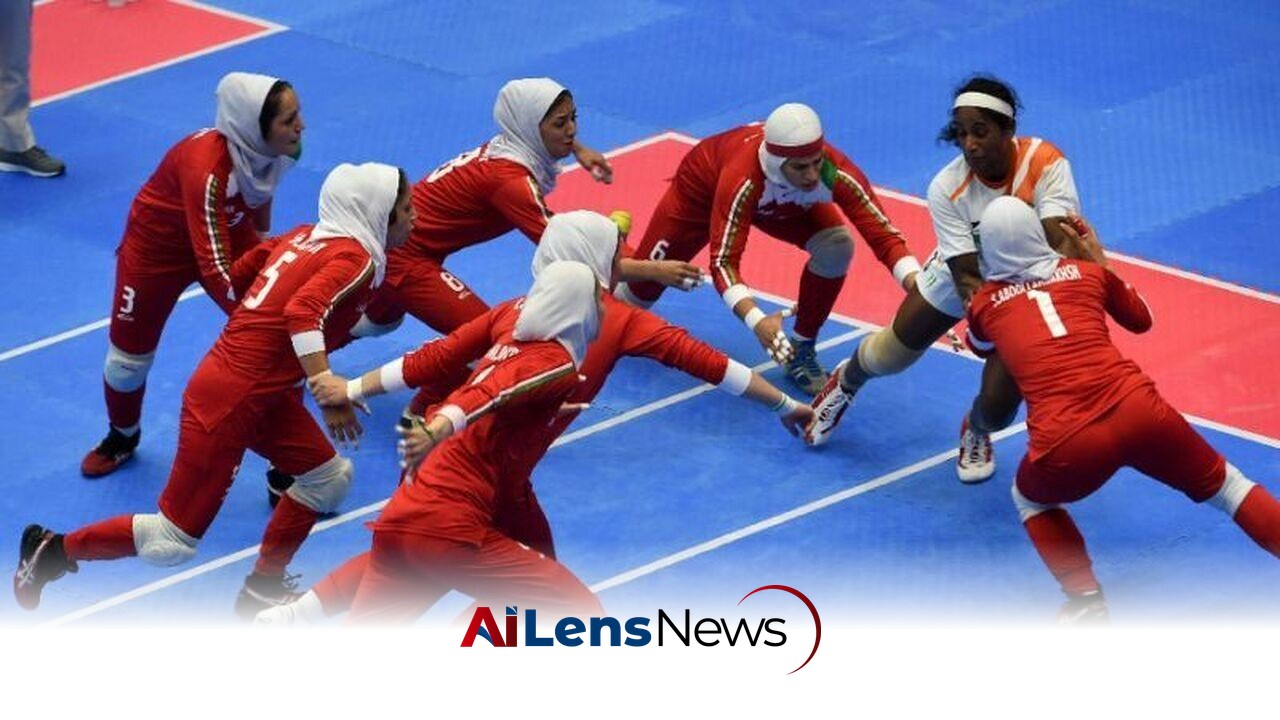


Iran's women’s and men’s kabaddi teams have learned their group-stage opponents for the 2026 Asian Games, with the men's team in a favorable group and the women's team facing a challenging path.
Tehran, Iran Jul 25, 2026 ALN: Iran’s women’s and men’s kabaddi teams know their group-stage opponents at the 2026 Asian Games, which are set to take place in Nagoya, Japan. This event is a significant milestone in the Asian sports calendar, showcasing a variety of disciplines and bringing together athletes from across the continent. The Asian Games, held every four years, serve not only as a platform for competition but also as a celebration of cultural exchange and unity among the diverse nations of Asia.
The men's kabaddi team has landed in a relatively favorable group, which could provide them with a pathway to advance further in the tournament. They have been placed in Group B alongside Nepal, Thailand, Pakistan, and Malaysia. This grouping presents a mix of challenges, but Iran's historical performance in kabaddi positions them as a formidable contender. The men's team has seen a steady rise in their performance levels over the years, backed by a solid domestic structure and a growing interest in the sport within the country.
In contrast, the women's kabaddi team faces a much tougher path in their quest for glory. They have been placed in Group A, which includes the hosts Japan, Bangladesh, and the defending champions India. This group is packed with title contenders, making it a daunting challenge for the Iranian women’s squad. The women's kabaddi scene has been rapidly evolving, with countries like India setting a high bar through their consistent performances, making it imperative for other nations, including Iran, to step up their game.
The men's group features teams with varying levels of experience in international kabaddi. Pakistan remains the biggest threat in Group B, given their strong historical rivalry with Iran in the sport. Matches between these two nations have historically been intense, characterized by high stakes and passionate displays of athleticism. The Iranian men's team will need to leverage their tactical skills and physical prowess to navigate through the group stage successfully. Meanwhile, India, the traditional powerhouse of kabaddi, looms large in Group A, and should Iran advance, they will likely face a significant challenge in the knockout rounds. India’s dominance in kabaddi is well-documented, making any encounter between the two teams a highly anticipated event.
For the women's team, every match in Group A carries immense pressure. India is widely recognized as the benchmark in women's kabaddi, having consistently dominated the sport in Asia and beyond. Their experience and skill level set a high standard, and they will be a formidable opponent for Iran. Additionally, Japan, as hosts, will have strong crowd support, which can create a challenging atmosphere for visiting teams. The Iranian women's squad will need to be at their sharpest from match one to advance, as the competition in their group is fierce. The psychological aspect of competing in front of a home crowd can significantly impact performance, adding another layer of complexity to their matches.
The 20th Asian Games in Nagoya, Japan, will take place from September 19 to October 4, 2026, with over 12,000 athletes from 45 nations competing for medals across a variety of sports. This large-scale event not only showcases athletic talent but also promotes cultural exchange and unity among participating countries. Iran will send a delegation of 282 athletes across 39 sports, indicating a strong commitment to competing at a high level across multiple disciplines. The Asian Games have historically provided a platform for athletes to gain international experience and exposure, which is crucial for their development.
Kabaddi, a sport that has its roots in ancient India, has grown in popularity across Asia, especially in countries like Iran, India, and Pakistan. The game's fast-paced nature and emphasis on strategy make it an exciting sport to watch and play. Iran has made significant strides in kabaddi over the past few decades, establishing itself as one of Asia's top kabaddi nations. The country has invested in developing its kabaddi infrastructure and talent, leading to improved performances on the international stage. The establishment of kabaddi academies and training programs has been instrumental in nurturing young talent, ensuring a bright future for the sport in Iran.
The Asian Games serve as a critical platform for kabaddi, allowing teams to showcase their skills and compete for regional supremacy. The competition not only fosters sportsmanship but also encourages the growth of kabaddi as a sport, inspiring younger generations to take up the game. With the stakes high, both the men's and women's teams will be looking to make their mark in Nagoya. The potential for success at the Asian Games could have far-reaching implications for the sport within Iran, potentially leading to increased support and investment in kabaddi.
The implications of the group draws are significant for both teams. For the men's team, a strong performance in Group B could set the stage for a deeper run in the tournament, potentially leading to a medal contention. This could bolster the profile of kabaddi in Iran and encourage more youth participation in the sport. Conversely, the women's team must navigate a challenging group with great care, as their path to the knockout stages is fraught with obstacles. Success for the women’s team would not only elevate their status in the sport but also inspire future athletes in Iran. A strong showing could also promote gender equality in sports, showcasing the capabilities of female athletes on an international stage.
As the Asian Games approach, both teams will likely ramp up their training regimens, focusing on strategy, teamwork, and physical conditioning. The coaching staff will play a crucial role in preparing the teams for the unique challenges posed by their respective groups. Mental preparation will also be key, especially for the women's team, who will need to manage the pressure of competing against such formidable opponents. The psychological aspect of sports cannot be underestimated, and having a robust mental strategy will be essential for both teams.
In conclusion, the 2026 Asian Games represent a pivotal moment for Iran's kabaddi teams. With the men's team positioned in a favorable group, they have the potential to make a significant impact. Meanwhile, the women's team faces a daunting challenge but has the opportunity to prove their mettle against some of the best teams in Asia. As the tournament approaches, the hopes of a nation will rest on the shoulders of these athletes, who represent not just their teams but the spirit of Iranian sportsmanship on a grand stage. The outcomes of these matches will not only impact the athletes involved but could also influence the future of kabaddi in Iran, potentially leading to increased support, sponsorship, and development of the sport at all levels.
To learn more about the latest developments in Golf, stay updated with our exclusive reports and analyses on AiLensNews.

