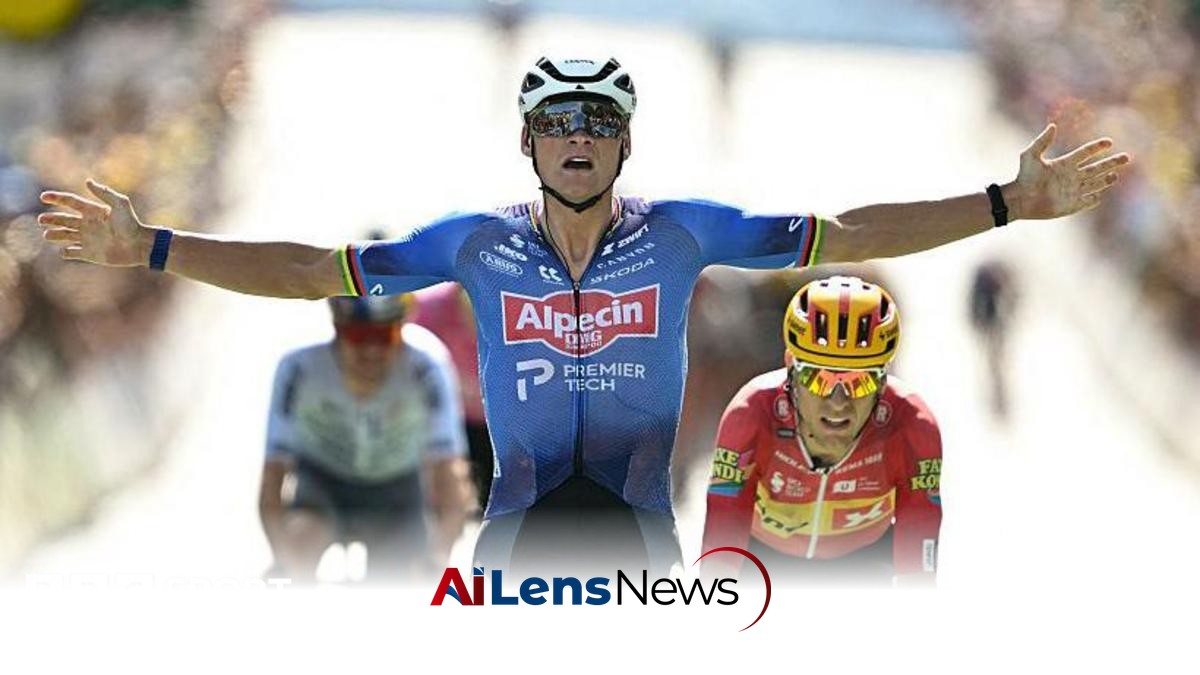


In extreme heat, Mathieu van der Poel clinches victory in the ninth stage of the Tour de France, which was shortened due to safety concerns.
New Delhi, India Jul 12, 2026 ALN: Mathieu van der Poel won his third career Tour de France stage in a sprint finish on stage nine, which was shortened due to temperatures approaching 40C.
The 31-year-old Dutchman finished ahead of Denmark's Tobias Johannessen and Great Britain's Tom Pidcock in a breakaway pack. This victory marks a significant achievement in van der Poel's career, showcasing his resilience and sprinting prowess in challenging conditions. The Tour de France is known for its grueling stages and demanding terrain, and this year’s edition has already tested the limits of many riders.
Pidcock was going for a second Tour stage win of his career but faced a setback due to a mechanical problem with his chain cassette or derailleur. Mechanical issues are a common concern in competitive , where every second counts and a malfunction can derail a rider's chances of success. Pidcock's experience highlights the unpredictable nature of the , where even the most prepared athletes can encounter unforeseen challenges.
Sunday's ninth stage from Malemort to Ussel was around 30km shorter than planned because of a "red alert" from the French authorities regarding the extreme heat. The decision to shorten the stage underscores the growing concern for athlete safety in the face of climate change and extreme weather events. The Tour de France has a long history, and while weather conditions have always played a role, the increasing frequency of heatwaves presents new challenges for organizers and participants alike.
Defending champion Tadej Pogacar finished in the chasing peloton six seconds behind the winner to keep the leader's yellow jersey heading into Monday's first rest day. Pogacar's ability to maintain his position at the top of the general classification reflects his exceptional skill and endurance as a cyclist. The yellow jersey is a coveted symbol of leadership in the Tour, and Pogacar's performance reinforces his status as a formidable competitor.
Van der Poel remarked that it was a "super-hard day" but noted that the heat was "for sure" better than during the first few days of the Tour. His comments reflect the physical and mental toll that extreme weather can take on athletes. The early stages of the Tour are often marked by intense competition as riders jostle for position, and the added challenge of heat can significantly affect performance.
"I was struggling and finding it difficult to recover, even from the easier [stages]," he told TNT s. "The past few days I've felt a bit better and today I finally had some legs to go for it." This statement highlights the importance of recovery in , where fatigue can accumulate over several days of racing. Van der Poel's ability to adapt to the conditions and find his rhythm is a testament to his training and experience.
Van der Poel had previously won stages in 2021 and 2025 and is a three-time winner of both the Tour of Flanders and Paris-Roubaix. His versatility as a rider allows him to excel in various race formats, making him a threat in both flat and mountainous stages. Winning prestigious races like the Tour of Flanders and Paris-Roubaix further cements his reputation as one of the top cyclists in the world.
A mechanical issue which surfaced at around 25km from the end of the stage held back Pidcock, who was left unable to change gear. This incident is a reminder of the technical aspects of that can influence race outcomes. Riders must rely on their equipment to perform optimally, and any malfunction can be detrimental, especially in the final stretches of a race.
He kept up with the breakaway pack but could not match Van der Poel when he sprinted for the line. "My shifter stopped working," said Pidcock. "I couldn't change gear. My bike was perfect the whole race and then today when the win was there, it doesn't work. Anyway, Mathieu is a difficult one to beat in a sprint situation like that. It would be difficult anyway, so I'm happy for a good day's racing. It's a nice day going into the rest day." Pidcock's smanship in congratulating van der Poel despite his misfortune reflects the camaraderie that often exists among competitors in , where mutual respect is a key component of the .
It took until the halfway stage for an initial eight-man breakaway to form, finally moving clear of the rest of the riders during the tricky 3.8km-long Suc au May climb. Breakaways are a strategic element of races, where a group of riders attempts to escape the peloton to gain an advantage. The formation of a breakaway can significantly affect the dynamics of the race, as the remaining riders must decide whether to chase or conserve energy for later stages.
The group never led by more than a minute and a half but just four were left as the race neared its conclusion, with Frenchman Alex Baudin joining Johannessen and Pidcock. The ability of the breakaway to maintain their lead is often a test of endurance and teamwork, as riders must work together to fend off the peloton while managing their own energy levels.
This is the second stage of this year's Tour to have been affected by weather, with fans told not to attend the final 40km of stage three near the Spanish-French border because of wildfires in the area. The impact of climate change on ing events is becoming increasingly evident, and the Tour de France is no exception. The decision to shorten stages and alter race routes reflects a growing awareness of the need to prioritize the safety of athletes and spectators alike.
On Sunday, more than a third of the country was placed under France's national weather service's highest level of alert. Such alerts are indicative of the severe weather patterns that have become more common in recent years, raising questions about the sustainability of hosting major ing events during peak summer months.
The heat led the CPA, the association which represents professional cyclists, to say that race start times must "evolve" to "protect athletes' health" given the increasing frequency of extreme heatwaves. The proposal to adjust start times is a proactive measure aimed at safeguarding the well-being of competitors. As temperatures rise, it becomes imperative for race organizers to consider the health implications of extreme heat on athletes who are already pushing their physical limits.
Some riders have urged the Tour de France organizers to consider bringing forward start times to allow the hottest times of the day to be avoided. This suggestion reflects a growing concern among cyclists about the impact of heat on performance and safety. Riders are increasingly vocal about their experiences, and their feedback could lead to changes in how races are scheduled in the future.
Before the stage began, 35-year-old Australian Luke Durbridge, who is riding for the 12th time this year, said it was "pretty insanely hot". His perspective as a seasoned rider adds weight to the discussion surrounding race conditions and athlete safety. Durbridge's comments highlight the personal experiences of cyclists who must navigate not only the physical demands of racing but also the environmental factors that can influence their performance.
"It does make a difference, we appreciate the change," Durbridge told AFP. "Going forward, if the way global warming is going, we probably need to start changing these start times." His remarks underscore the urgency of addressing climate-related challenges in s, as athletes adapt to a rapidly changing environment.
But Tour leader Pogacar had a more drastic solution, saying changing the start times would not help riders avoid the extreme heat. "It's a big topic to discuss, but if I could have the power to change it all, I would change all the calendars, and I would not race in July and August in the hot places, and do a completely different calendar," he said. Pogacar's suggestion reflects a broader conversation about the future of and how the can adapt to the realities of climate change.
To learn more about the latest developments in Basketball, stay updated with our exclusive reports and analyses on AiLensNews.

