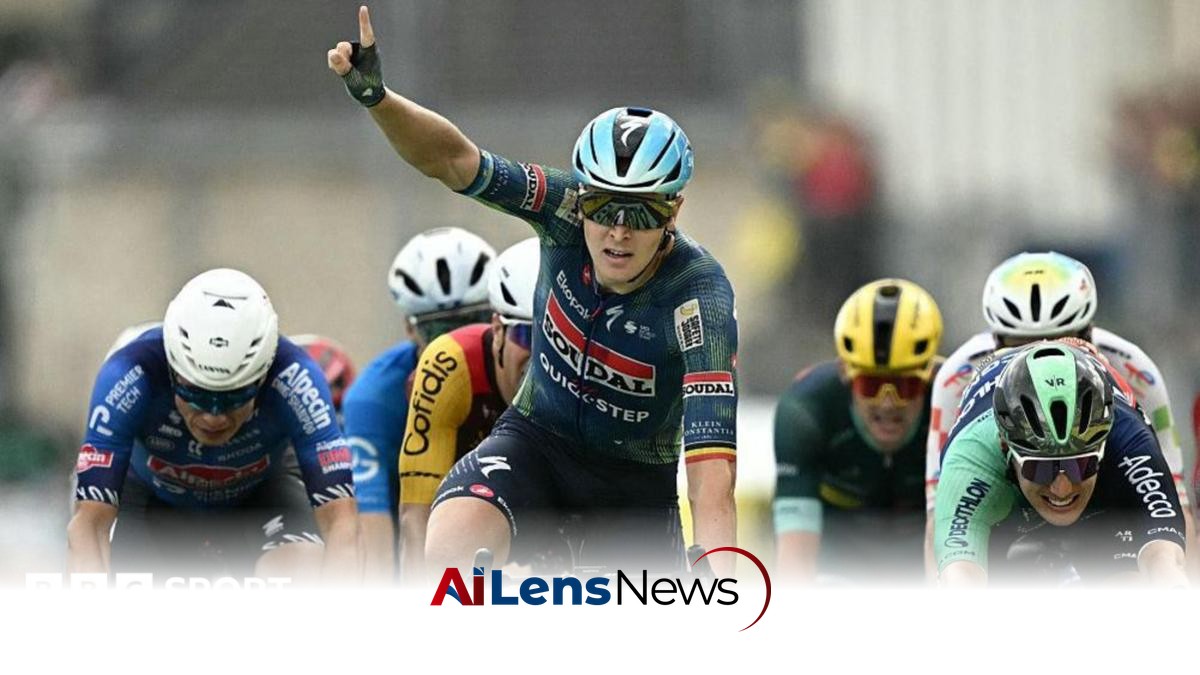


In a thrilling sprint finish, Tim Merlier secures his third stage win at the Tour de France, overcoming a chaotic race and a late crash.
New Delhi, India Jul 16, 2026 ALN: Belgium's Tim Merlier came out on top in a chaotic sprint finish to clinch stage 12 and claim his third win at this year's Tour de France.
Merlier came from behind to beat countryman Jasper Philipsen and was able to avoid being caught up in a late crash after Colombia's Fernando Gaviria hit the deck, which brought down several other riders including stage 11 winner Soren Waerenskjold.
Philipsen, who finished third, had looked in a good position going into the final couple of kilometres on a day where many teams had attempted attacks without being able to make any stick. This stage was characterized by a flurry of activity, with numerous teams trying to break away and establish a lead, but the flat terrain and the strong wind made it challenging for any group to maintain a significant advantage.
The stage victory comes after Merlier won stages seven and eight earlier in this year's race, taking his overall tally to six. His consistent performance throughout the Tour demonstrates not only his speed but also his tactical acumen, allowing him to seize opportunities when they arise.
"Today I was really focused on the guys who were boxed in yesterday," Merlier said. "I found some space and I launched." This statement reflects the intense mental focus required in sprint finishes, where positioning and timing are crucial. Merlier's ability to navigate through the tight confines of the sprint finish showcases his experience and skill as a sprinter.
He added that winning was "special" given his wife and young son were watching, adding that he is "still young but maybe he's going to remember this one." The emotional aspect of competing at such a high level, especially with family present, adds another layer of significance to his victory. For many athletes, the support of loved ones can provide motivation and a sense of purpose during the grueling demands of a multi-stage race like the Tour de France.
Thursday's route from Circuit Nevers Magny-Cours to Chalon-sur-Saone proved to be unpredictable and often frantic, while heavy rain and changing winds disrupted plans in the middle of the race. Weather conditions have always played a significant role in , often dictating the strategies teams employ during a stage. The unpredictable nature of the weather can lead to surprises, as teams must adapt to changing circumstances, which can sometimes lead to crashes or missed opportunities.
Tadej Pogacar remains comfortably in front in contention for the yellow jersey, still ahead of Jonas Vingegaard by 3 minutes and 36 seconds. Pogacar's commanding lead demonstrates his strong form this year, and he is widely regarded as one of the favorites to win the overall classification. The battle for the yellow jersey is a central narrative of the Tour de France, with riders and teams strategizing not only for stage wins but also for overall positioning.
The green jersey remains an unlikely target for Merlier as he is fourth in the rankings. Mads Pedersen's lead was reduced, but he is still ahead of Eritrean Biniam Girmay by 40 points. The competition for the green jersey, awarded to the best sprinter in the Tour, adds another layer of complexity to the race. While Merlier has been successful in winning stages, the points system means that consistency and participation in various stages play a significant role in the overall standings.
Thursday's stage represented one of the final clear opportunities for the Tour's sprinters before the race heads back into more demanding terrain. The upcoming stages are expected to present significant challenges, particularly for sprinters who thrive on flat terrain. The next three days include a hilly stage to Belfort followed by two mountain finishes, while Tuesday features an individual time trial that will offer no opportunities for the fast riders. This shift in terrain means that sprinters must capitalize on the remaining flat stages to secure victories, as they may not have another chance until stage 17.
The next potential chance for the sprinters could come in stage 17, but the testing opening of that stage could allow a breakaway to form. Breakaways are a common tactic in , where a small group of riders attempts to distance themselves from the peloton. If successful, these riders can contest for stage wins while the main field focuses on the overall classification. The unpredictability of breakaways adds an exciting dynamic to the race, as teams must balance their efforts between chasing down escapees and conserving energy for their own sprinters.
The final stage is also no longer the haven for sprinters which it used to be, so stage 12 may well be the last we have seen from them. The evolution of the Tour de France route has led to a greater emphasis on climbing and time trials, which can diminish the opportunities for sprinters to shine. As a result, sprinters like Merlier must be strategic in their approach, ensuring they take full advantage of any flat stages that come their way.
Merlier has made the most of his opportunities and has cemented himself as one of the fastest sprinters at this year's Tour. His three stage victories place him in a strong position among his peers, and he has proven to be a formidable competitor in the sprint finishes. In contrast, Olav Kooij and Waerenskjold have won one each this year, illustrating the competitive nature of sprinting in the Tour de France.
His success is in sharp contrast with Philipsen and Girmay, who have 13 Tour stage wins between them but are still waiting for their first victories of this year's race. This highlights the unpredictable nature of , where even the most accomplished riders can face challenges in securing wins. The fierce competition among sprinters adds to the excitement of the Tour, as fans eagerly anticipate each stage's outcome.
To learn more about the latest developments in Basketball, stay updated with our exclusive reports and analyses on AiLensNews.

