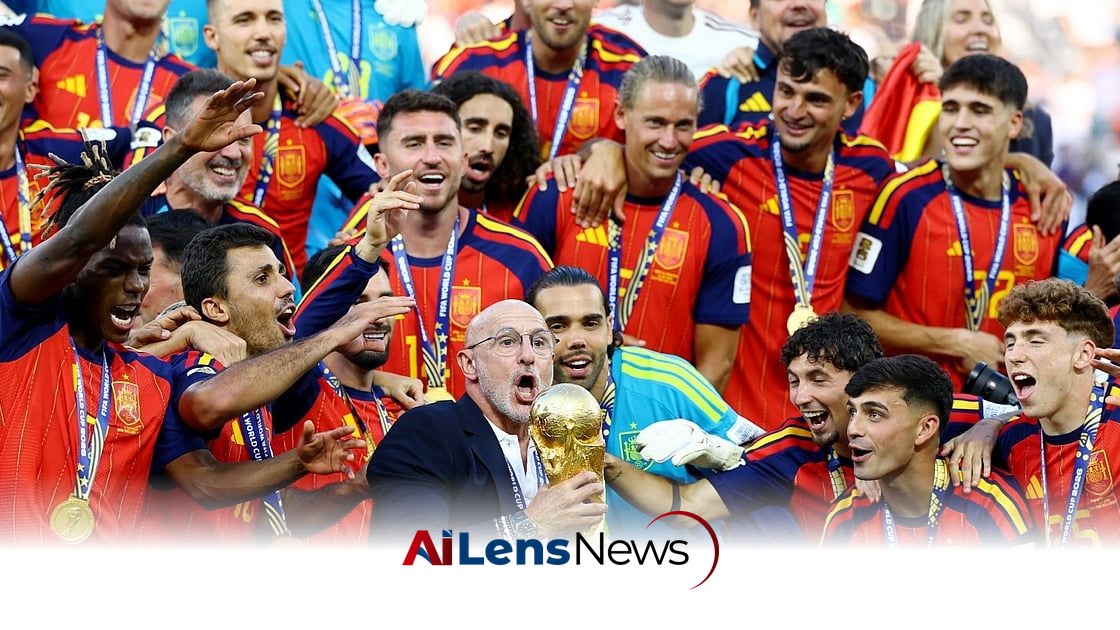


Exploring the striking parallels between Spain's World Cup victories in 2010 and 2026, from initial setbacks to ultimate glory.
New Delhi, India Jul 20, 2026 ALN: They say history doesn’t repeat itself. Then, how do you explain the eerie similarities between Spain lifting its title in 2010 and the 2026 campaign? The narrative of Spain's footballing journey is rich with historical significance, and the parallels between these two World Cups invite a deeper exploration of the factors that contribute to success on the global stage.
Spain entered the 2010 World Cup as the holders of the European Championship, a title they had claimed in 2008. This victory marked a turning point for Spanish football, which had long been considered underachievers on the international stage. The 2010 World Cup was held in South Africa, marking the first time the tournament was hosted on the African continent. This unique setting added an extra layer of excitement and unpredictability to the tournament, as it introduced a diverse cultural backdrop and a variety of playing conditions that impacted teams differently.
The Spanish national team, known for its possession-based style of play, often referred to as 'tiki-taka,' faced a rocky start in the tournament. They began their campaign with a shocking 0-1 loss against Switzerland, a match that left fans and analysts questioning the team's ability to perform under pressure. Historically, the opening match of a World Cup can set the tone for a team's performance, and Spain's early setback raised doubts about their chances of advancing far into the tournament. The loss was particularly disheartening given Spain's high expectations following their European Championship victory.
However, the resilience of the Spanish squad became evident as they regrouped and adapted. Following the loss to Switzerland, Spain bounced back decisively, winning their next matches against Honduras and Chile with scorelines of 2-0 and 2-1, respectively. Their defensive solidity and attacking flair began to shine through, culminating in a series of narrow victories: 1-0 against Portugal, 1-0 against Paraguay, and 1-0 against Germany in the semifinals. Each match showcased the team's tactical discipline and ability to perform under pressure, traits that would ultimately define their World Cup success. The team's journey through the knockout stages was marked by a blend of strategic adjustments and individual brilliance, particularly from players like Andrés Iniesta and Xavi Hernández, who orchestrated play from the midfield.
In the final, Spain faced the Netherlands in a match that would become iconic. After a tense 90 minutes, the match remained goalless, with both teams showcasing their defensive capabilities. It was Andrés Iniesta who broke the deadlock in extra time, scoring the only goal of the match and securing Spain's first-ever World Cup title. The tournament's top scorer, Thomas Müller of Germany, netted five goals, while Iniesta, a midfielder, contributed two crucial goals, including the one that sealed Spain's victory. This moment defined not only the match but also a generation of Spanish footballers who had worked tirelessly to achieve international success.
Fast forward to the 2026 World Cup, and Spain entered the competition again as the European champions, having won the UEFA Euro 2024. The tournament was held in North America, a joint hosting arrangement between the United States, Canada, and Mexico, which added a new dynamic to the event. The anticipation was palpable as fans expected Spain to replicate their previous success, drawing on the momentum of their recent triumphs and the depth of talent within their squad.
However, Spain began the tournament with a disappointing 0-0 draw against Cape Verde, a result that shocked many and reignited doubts about the team's capabilities. Just like in 2010, the early performance led to skepticism regarding their potential to advance in the tournament. The pressure was on, and history seemed to be repeating itself in a way that was both eerie and compelling. Analysts and fans alike began to draw parallels between the two tournaments, questioning whether Spain could once again overcome early adversity to achieve their ultimate goal.
Yet, as the tournament progressed, Spain found its rhythm. The team demonstrated a remarkable ability to adapt and improve, showcasing their attacking prowess as they advanced through the knockout stages. A notable match came against Portugal, where Spain secured a 1-0 victory, mirroring their previous encounter in 2010. This victory not only highlighted Spain's tactical evolution but also reignited the belief among fans and players alike that they could achieve greatness once more. The resurgence of key players, along with the emergence of new talents, played a crucial role in this transformation, as the team blended experience with youthful energy.
The final match of the 2026 World Cup echoed the narrative of 2010, as Spain faced Argentina, a team known for its aggressive and high-pressing style of play. The match was characterized by intense moments and a battle for midfield dominance. Just like in the previous final, the scoreline was a narrow 1-0, with Spain once again emerging victorious. This victory solidified Spain's status as a dominant force in international football and marked another chapter in their storied history. The ability to secure a win against a formidable opponent like Argentina further emphasized Spain's tactical maturity and mental fortitude, as they navigated through the pressures of a World Cup final.
In terms of individual performances, the tournament saw Unai Simon emerge as Spain's standout goalkeeper, drawing comparisons to Iker Casillas, who was instrumental in Spain's 2010 success. Both goalkeepers embodied the essence of Spanish football during their respective tournaments, showcasing not only technical skill but also leadership and composure under pressure. Their performances were pivotal in securing crucial victories and ultimately lifting the trophy. Simon's ability to make critical saves at key moments mirrored Casillas's heroics from 2010, reinforcing the importance of having a reliable presence in goal during high-stakes matches.
The implications of these parallels are significant, as they highlight the cyclical nature of sports and the narratives that emerge from them. The similarities between the two tournaments invite discussions about the factors that contribute to a team's success, including player development, tactical evolution, and the psychological aspects of competing at the highest level. Spain's journey serves as a reminder that while history may not repeat itself exactly, it often provides valuable lessons and insights for future generations. The evolution of their playing style, influenced by both historical successes and failures, reflects a broader trend in football where teams must continually adapt to remain competitive on the global stage.
As Spain celebrates its triumph in the 2026 World Cup, the footballing world reflects on the legacy of their past achievements and the potential for future success. The eerie coincidences between the two tournaments remind fans and players alike that the spirit of competition is ever-present, and that the beautiful game continues to weave stories that resonate across time and borders. The narrative of Spain's victories serves as an inspiration for aspiring footballers and a testament to the enduring appeal of the World Cup, where dreams are realized and history is made on the grandest stage of all.
To learn more about the latest developments in Golf, stay updated with our exclusive reports and analyses on AiLensNews.

