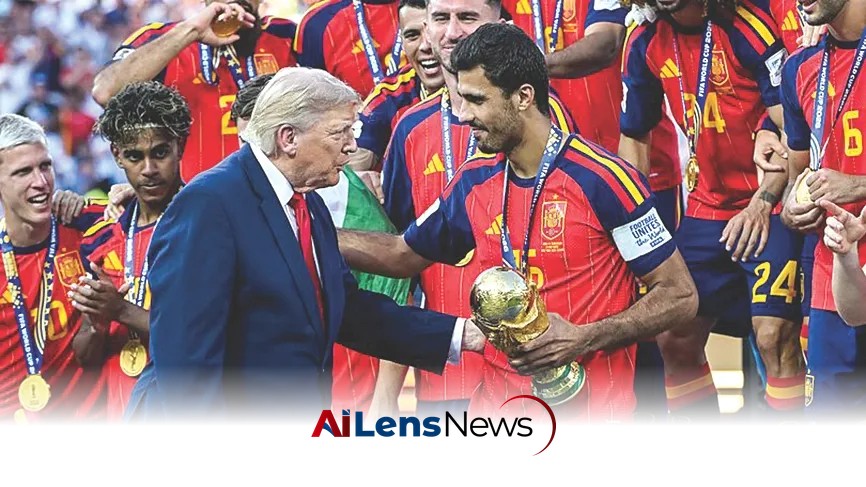


The FIFA World Cup 2026 final saw Spain claim victory over Argentina, but the match was marred by controversies, including red cards and a chaotic trophy presentation.
New Delhi, India Jul 21, 2026 ALN: NEW JERSEY, JUL 20 (AGENCIES): The FIFA World Cup 2026 final between Spain and Argentina in New York will be remembered not only for Spain’s historic triumph but also for the dramatic controversies that unfolded around the match. While Spain lifted the coveted trophy, Argentina’s campaign ended in chaos, with disciplinary issues, emotional farewells, and post-match disputes overshadowing the closing ceremony. From red cards and heated confrontations to Lionel Messi’s last World Cup appearance ending in turmoil, the final produced a series of side stories that dominated headlines and sparked global debate.
Enzo Fernández sent off in final
Argentina’s midfielder Enzo Fernández was shown a red card during the second half of the FIFA World Cup 2026 final against Spain. The dismissal came after a reckless challenge that left Argentina playing with ten men in a crucial stage of the match. The decision sparked heated protests from Argentine players and coaching staff, adding tension to an already high-stakes encounter. This incident highlighted the pressure players face during such pivotal moments in their careers and raised questions about the consistency and clarity of officiating in high-profile matches. Red cards in World Cup finals are rare, making Fernández's ejection particularly significant in the context of the match.
Messi’s last World Cup ends in controversy
The final marked Lionel Messi’s last FIFA World Cup appearance, but instead of a celebratory farewell, his exit was overshadowed by controversy. Messi was visibly frustrated with refereeing decisions and the overall conduct of the match. His final moments on the world stage ended in disappointment, with Argentina unable to secure the trophy and the legendary forward leaving amidst chaos and debate over officiating standards. Messi's legacy as one of football's greatest players was already cemented, but the manner of his exit from the tournament raised questions about the fairness of the officiating and the emotional toll such a loss can take on athletes, especially in their final appearances.
Leandro Paredes punch sparks chaos
After the final whistle, Argentina’s Leandro Paredes was involved in a shocking incident, throwing a punch at a Spanish player during post-match confrontations. The altercation escalated tensions between both teams, forcing officials and security personnel to intervene quickly. This incident not only highlighted the intense emotions that players experience in such high-stakes situations but also the potential for violence that can emerge in the aftermath of a heated competition. FIFA is expected to review the incident, with disciplinary action likely against Paredes for violent conduct, which could set a precedent for how similar incidents are handled in future tournaments.
Coaching staff joins the fracas and attacks players
The ugly scenes weren’t limited to the players, as members of the Argentine backroom staff actively joined the physical altercations. According to reports from The Independent, video footage captured Argentina’s assistant coach Roberto Ayala striking Spanish midfielder Dani Olmo and grabbing Eric García around the neck. This involvement from coaching staff raises serious questions about the conduct of those entrusted with guiding and mentoring athletes. It reflects the high emotional stakes of the tournament and the intense pressure that coaches face to support their players, even to the point of crossing professional boundaries.
Donald Trump and Gianni Infantino heavily booed
Political tension spilled into the stadium during the official trophy presentation. U.S. President Donald Trump and FIFA President Gianni Infantino were loudly booed by the crowd at MetLife Stadium as they walked onto the pitch to hand out medals. This reaction from the audience underscores the intersection of sports and politics, particularly in a charged atmosphere where fans express their opinions on leadership and governance. Reports from DW News noted that tournament hero Rodri even appeared to subtly usher Trump away from the center stage so the team could celebrate independently, highlighting the players’ desire to reclaim the spotlight amidst the political undertones of the event.
Argentina walks out of prize ceremony
In an unprecedented move, the Argentina team walked out before the completion of the prize distribution ceremony, refusing to stay for Spain’s trophy presentation. The walkout was seen as a protest against refereeing decisions and the handling of post-match incidents. This gesture drew sharp criticism from FIFA officials, who emphasized the importance of sportsmanship and respect for the tournament’s traditions. Such actions can have lasting implications for a team’s reputation and may influence future disciplinary measures imposed by FIFA, as the governing body seeks to maintain the integrity of the sport.
Spain’s hero Torres played FIFA U-17 World Cup in Assam
Spain’s FIFA World Cup-winning player Ferran Torres, whose decisive goal against Argentina secured his country’s triumph in the 2026 FIFA World Cup final, has a little-known connection with Assam. Long before emerging as Spain’s World Cup hero on football’s biggest stage, Torres had showcased his talent at the Indira Gandhi Athletic Stadium in Sarusajai in Guwahati during the FIFA U-17 World Cup hosted by India in 2017. At the time, Torres was regarded as one of Spain’s brightest emerging prospects. Few could have predicted that the teenager who thrilled spectators in Guwahati would, nearly a decade later, score the goal that would hand Spain the coveted FIFA World Cup trophy. His rise from a promising youth international to a World Cup-winning star has also rekindled memories of the 2017 FIFA U-17 World Cup in Assam, an event widely regarded as a landmark moment for football in the state. With Torres now joining the elite list of World Cup final match-winners, football lovers in Assam can proudly recall that the Spanish forward’s journey on the global stage had once passed through Guwahati, years before he delivered the goal that crowned Spain world champions.
Full list of FIFA World Cup 2026 award winners
Golden Ball: Rodri (Spain)
Silver Ball: Lionel Messi (Argentina)
Bronze Ball: Kylian Mbappe (France)
Golden Boot: Kylian Mbappe (France)
Silver Boot: Lionel Messi (Argentina)
Bronze Boot: Jude Bellingham (England)
Golden Glove: Unai Simon (Spain)
FIFA Young Player Award: Pau Cubarsi (Spain)
FIFA Fair Play Trophy: The Netherlands
The culmination of the FIFA World Cup 2026 has left fans and analysts reflecting on the implications of the match and its aftermath. The events surrounding the final have reignited discussions about sportsmanship, the role of officiating in high-stakes games, and the emotional weight carried by players and coaches alike. As the footballing world moves forward, the lessons learned from this final may influence future tournaments, particularly in terms of how FIFA addresses player conduct and the broader cultural implications of such a high-profile event.
To learn more about the latest developments in Golf, stay updated with our exclusive reports and analyses on AiLensNews.

