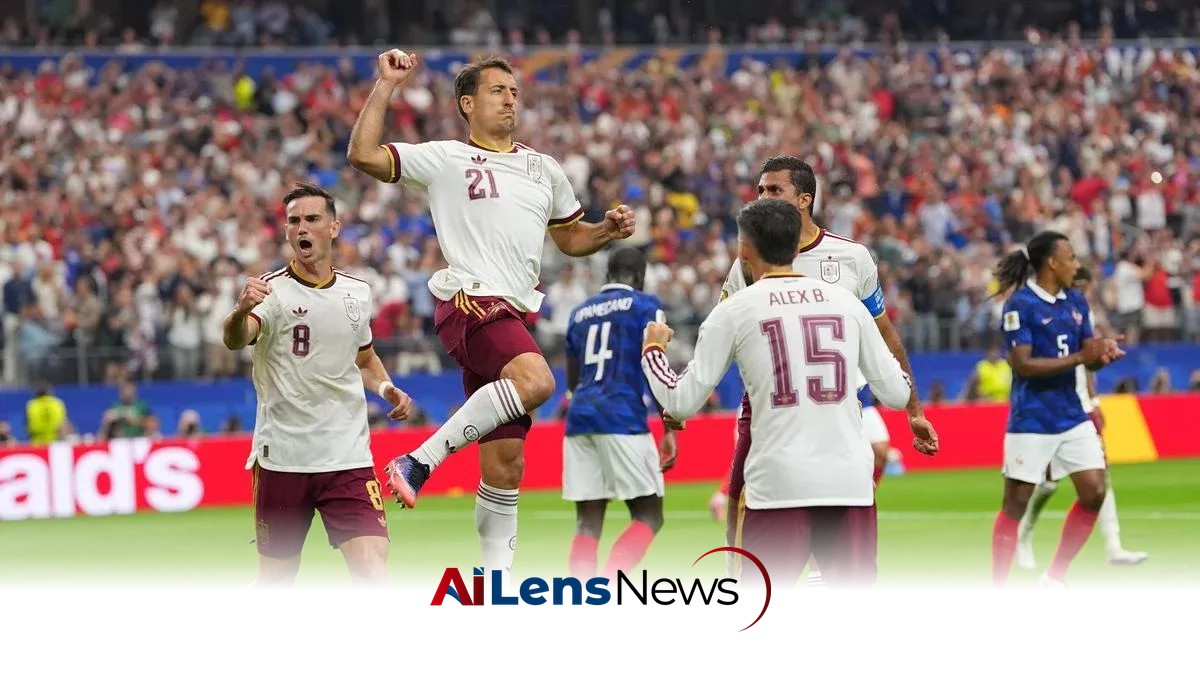


Spain advances to its first World Cup final since 2010, defeating France 2-0, with goals from Mikel Oyarzabal and Pedro Porro.
New Delhi, India Jul 16, 2026 ALN: ARLINGTON (TEXAS), JUL 15: Spain has made a triumphant return to the World Cup final, defeating France 2-0 in a thrilling semifinal match. Mikel Oyarzabal opened the scoring with a penalty kick, and Pedro Porro sealed the victory with a second goal, marking Spain's first final appearance since their 2010 triumph. This victory not only underscores Spain's resurgence in international football but also highlights the changing dynamics of the sport on a global scale.
The match was highlighted by the impressive performance of 19-year-old Lamine Yamal, who played a pivotal role in Spain's victory. After being denied a goal due to a close offside call, Yamal's skillful play led to Oyarzabal's penalty in the 22nd minute. He was fouled by French defender Lucas Digne, who misjudged a clearance attempt, allowing Yamal to challenge for the ball. Yamal's ability to create opportunities under pressure exemplifies the new generation of talent emerging in Spanish football, showcasing the depth and potential of their youth system.
Oyarzabal's penalty kick was his fifth goal of the tournament and marked a significant moment as it was the first time either team had trailed in their seven games during the competition. This statistic is particularly noteworthy as it reflects the dominance both teams had exhibited leading up to the semifinal. The young star's contribution did not end there; he also assisted Porro's goal in the 58th minute, showcasing Spain's attacking prowess and the effectiveness of their tactical setup. Spain's ability to adapt and exploit defensive weaknesses in high-stakes matches speaks volumes about their preparation and strategy.
Spain will now face either defending champions Argentina or England in the final, set to take place on Sunday in East Rutherford, New Jersey. The two teams will battle it out on Wednesday in Atlanta to determine who will meet Spain. The anticipation surrounding the final is palpable, as fans and analysts alike speculate on the potential matchups and the implications for both teams. A win for Spain would not only solidify their place in football history but also serve as a testament to their rebuilding efforts since their last World Cup victory.
France, ranked first in FIFA, was aiming to become the third team to reach three consecutive World Cup finals. Instead, they will compete in the third-place match against the loser of the Argentina-England clash in Miami Gardens, Florida, on Saturday. This unexpected turn of events has raised questions about the French team's ability to maintain their status as a dominant force in international football. The loss against Spain will likely prompt a thorough analysis of their tactics and player performances throughout the tournament.
This victory marks Spain's third consecutive win over France in tournament semifinals, following their 2-1 victory in the 2024 European Championship and a 5-4 win in the Nations League last year. These results indicate a significant psychological edge that Spain has developed over France in crucial matches. Yamal had previously scored in the European Championship semifinal just days before his 17th birthday, further establishing himself as a rising star in international football. His rapid ascent is a reminder of how quickly young talent can rise to prominence on the world stage, and it raises expectations for his future contributions to the national team.
Spain's goalkeeper, Unai Simón, has been a key player in the tournament, achieving six shutouts while allowing only one goal in seven matches. His performance has been instrumental in Spain's success, providing a solid foundation for the team's defensive strategy. The team's unbeaten streak in regular time has now extended to 37 matches, breaking their previous record of 35 matches from 2007-09. This remarkable achievement speaks to the consistency and resilience of the squad, fostering a culture of winning that is essential for any team aspiring to compete at the highest level.
Despite the loss, France had a strong tournament, winning six consecutive matches prior to this semifinal. However, the defeat ended their record-matching streak, which had been accomplished in both the 2018 and 2022 tournaments. This setback could serve as a crucial learning experience for the French squad, as they look to regroup and refocus for their final match in the tournament. The pressure will be on them to deliver a strong performance in the third-place match, both for pride and to maintain their reputation in international football.
As the excitement builds for the final, Spain's fans are hopeful for another World Cup victory, while France will look to regroup for their final match in the tournament. The implications of this semifinal extend beyond just the match itself; they reflect broader trends in international football, including the rise of new footballing nations and the shifting power dynamics within the sport. As teams like Spain and France continue to evolve, the landscape of international competition will undoubtedly change, setting the stage for thrilling encounters in the future.
In recent years, Spain has undergone a significant transformation in their footballing philosophy. Following a period of dominance from 2008 to 2012, during which they won two European Championships and a World Cup, the team faced challenges in maintaining that success. The transition saw a mix of experienced players and emerging talents, leading to a renewed focus on youth development. The La Fábrica academy, which has produced stars like Xavi, Iniesta, and more recently, Pedri and Yamal, has been pivotal in this resurgence. The emphasis on technical skill, tactical intelligence, and team cohesion has been evident in Spain's playing style, which prioritizes possession and fluid attacking play.
On the other hand, France's journey has been marked by a blend of seasoned veterans and promising youngsters. The French national team, often referred to as Les Bleus, has consistently been a powerhouse in international football, boasting a deep talent pool. However, their recent performances have raised questions about their tactical approach and the ability to adapt in crucial moments. The loss to Spain may lead to a reevaluation of their strategies, particularly in high-pressure situations, as they look to maintain their status as a top contender in future tournaments.
The upcoming final is not just a match for the players on the field; it also represents a clash of footballing philosophies. Spain's emphasis on possession and intricate passing against Argentina or England's more direct approaches will be a focal point for analysts and fans alike. The tactical battle will be as crucial as the individual performances, with managers needing to adapt their strategies based on the flow of the game and the strengths of their opponents.
Moreover, the implications of this semifinal victory extend into the broader context of international football. The rise of teams like Spain signifies a shift in the traditional power dynamics, where nations that have historically dominated the sport are now facing increased competition from emerging footballing nations. With the global game evolving, the importance of youth development and tactical innovation cannot be overstated. The success of Spain and similar teams highlights the necessity for established footballing nations to continually adapt and evolve to maintain their competitive edge.
As the world turns its attention to the final, the narratives surrounding the match will be multifaceted, encompassing themes of redemption, legacy, and the future of football. For Spain, a victory would not only crown them champions once again but also affirm their position as a leading force in the sport's evolving landscape. For France, the opportunity to regroup and showcase their resilience in the third-place match will be equally crucial, as they seek to reaffirm their status and learn from the lessons of this tournament.
In conclusion, the semifinal clash between Spain and France has set the stage for an exciting World Cup final and a compelling third-place match. The outcomes of these encounters will resonate far beyond the tournament, influencing the trajectories of both teams and the broader footballing world. As fans eagerly await the final showdown, the anticipation is palpable, with the promise of thrilling football and unforgettable moments on the horizon.
To learn more about the latest developments in Football (Soccer), stay updated with our exclusive reports and analyses on AiLensNews.

