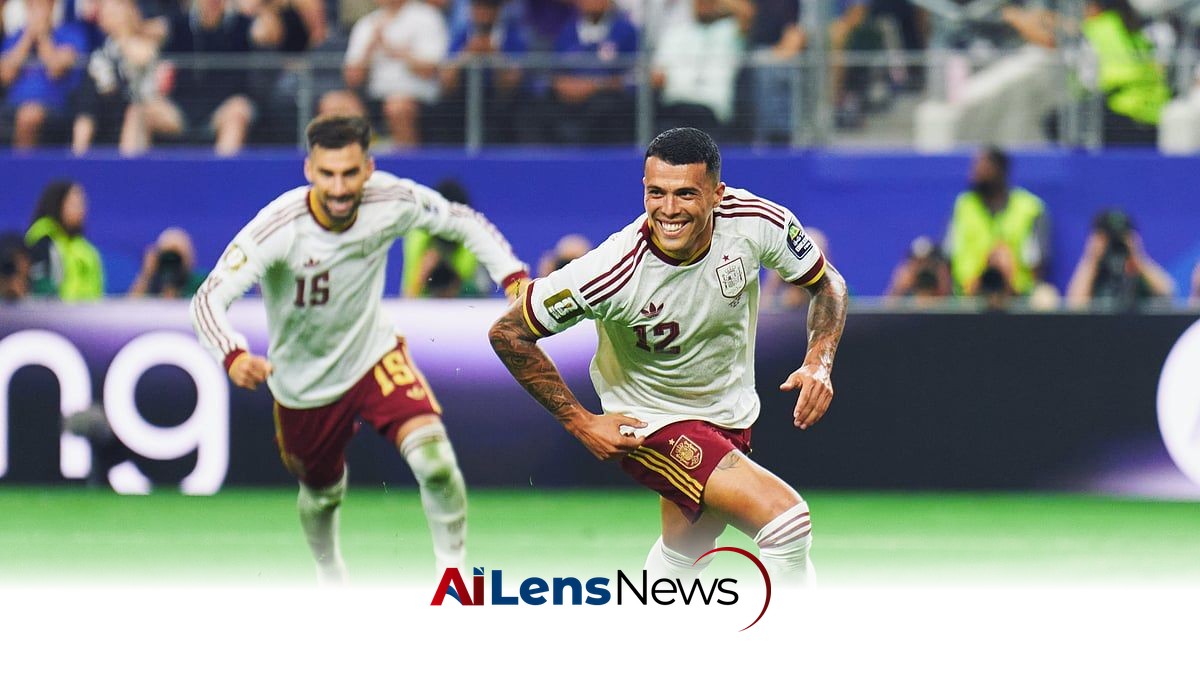


Spain secured their spot in the FIFA World Cup 2026 final with a 2-0 win over France, showcasing disciplined defense and clinical finishing.
New Delhi, India Jul 15, 2026 ALN: Spain's recent victory over France in the semi-finals of the FIFA World Cup 2026 has not only secured their place in the final but has also reignited discussions about the evolution of Spanish football and its resurgence on the world stage. The match, held at the Dallas Stadium, showcased Spain's tactical discipline and attacking prowess, leading to a 2-0 triumph over the reigning champions, France. This victory is significant not only for the immediate outcome but also for the broader implications it holds for both teams and international football as a whole.
Historically, Spain has been a powerhouse in international football, particularly noted for their success in the late 2000s and early 2010s. Their triumph at the 2010 FIFA World Cup in South Africa marked a pinnacle moment, as they played a brand of football characterized by possession and intricate passing, often referred to as 'tiki-taka.' This style, which emphasized short passes, movement off the ball, and maintaining possession, was instrumental in their success, leading to not only the World Cup win but also a European Championship victory in 2008 and again in 2012. However, following their World Cup victory, Spain faced challenges in maintaining their dominance, experiencing a period of transition that saw them struggle in subsequent tournaments, including an early exit in the 2014 World Cup and a disappointing performance in the 2016 UEFA Euro Championship.
The current squad, under the management of Luis de la Fuente, has been praised for its blend of youth and experience, combining established stars with emerging talents. This approach has proven effective, as evidenced by their performance against France, which was marked by a disciplined defensive setup and effective counter-attacking play. The match began with Spain taking the initiative, creating early opportunities that set the tone for the rest of the encounter. The players demonstrated an understanding of their roles and responsibilities, which has been a hallmark of de la Fuente's management style, focusing on tactical awareness and teamwork.
Spain's first goal came from a penalty awarded after Lamine Yamal was fouled inside the box. Mikel Oyarzabal, known for his calm demeanor under pressure, converted the penalty with precision, placing Spain ahead early in the match. This early goal not only boosted the confidence of the Spanish players but also placed France in a position where they had to chase the game, altering their tactical approach. The psychological impact of conceding first can be significant in high-stakes matches like this, often forcing teams to abandon their initial game plan in favor of a more aggressive strategy.
Following the penalty, Spain's second goal was a testament to their attacking fluidity. The combination play between Pedro Porro and Dani Olmo highlighted Spain's ability to execute well-coordinated team moves, culminating in Porro's clinical finish. This goal not only doubled Spain's lead but also reflected their philosophy of teamwork and collective effort, which has been a hallmark of Spanish football. The ability to score from open play, especially after establishing a lead, is crucial in tournament football, as it can demoralize opponents and shift momentum decisively.
France, entering the match as slight favorites, boasted a squad filled with attacking talent, including the likes of Kylian Mbappe, who has been one of the standout players of the tournament. Mbappe's speed, skill, and goal-scoring ability have made him a key figure for France, and expectations were high for him to deliver in this crucial match. However, despite their attacking threats, Spain's defense, marshaled by the impressive Unai Simon as a sweeper-keeper, effectively neutralized France's offensive capabilities. Simon's ability to read the game and contribute to defensive actions was crucial in maintaining Spain's clean sheet. His performance is indicative of a growing trend in modern football, where the role of the goalkeeper has evolved to include more involvement in build-up play and defensive organization.
As the match progressed, Didier Deschamps, the French manager, made tactical changes by bringing on Desire Doue and Rayan Cherki to inject fresh energy into the attack. These substitutions aimed to bolster France's offensive efforts in search of a comeback. Nonetheless, Spain's organization and resilience proved too much for France, who struggled to find clear scoring opportunities. The inability of France to convert possession into tangible scoring chances highlighted some of the tactical deficiencies that have emerged in their play during this tournament. It also raised questions about their adaptability in high-pressure situations, especially against a well-drilled opponent like Spain.
The culmination of the match saw jubilant celebrations from the Spanish players and their supporters, marking a significant achievement in their quest for a second World Cup title. The victory not only underscores Spain's tactical evolution but also highlights their determination to reclaim their status among the elite in international football. For a nation that has experienced both the heights of glory and the depths of disappointment in recent years, this victory serves as a powerful reminder of their potential and resilience.
Looking ahead, Spain's next challenge will be the final match against the winner of the semi-final between England and Argentina. This upcoming fixture represents a chance for Spain to add to their illustrious football history and further solidify their legacy in the sport. The final will not only be a test of skill and strategy but also a showcase of the evolution of football styles, as Spain faces either a traditional powerhouse in England or a talented Argentine side known for its attacking flair. Meanwhile, France faces the task of regrouping quickly for the third-place playoff, where they will aim to salvage some pride and allow players like Mbappe to continue their pursuit of individual accolades, such as the adidas Golden Boot for the tournament's top scorer.
The implications of this match extend beyond just the immediate results. It raises questions about the future trajectory of both teams. For Spain, a win in the final would not only affirm their resurgence but also signal a successful transition to a new generation of players who have embraced the values and style of Spanish football. This transition is critical as the national team aims to build a sustainable model for future success, integrating youth development and strategic planning into their long-term vision. For France, the challenge will be to analyze their performance, address the shortcomings displayed in the semi-final, and prepare for future competitions, including the upcoming UEFA Euro 2024. The pressure will be on Deschamps to refine his tactics and ensure that the team can rebound effectively.
In conclusion, Spain's victory over France in the FIFA World Cup 2026 semi-final is a significant milestone in their footballing journey, reflecting a blend of tactical discipline, youthful exuberance, and the enduring spirit of a nation passionate about the beautiful game. As they prepare for the final, the footballing world watches with anticipation, eager to see if Spain can replicate the glory of 2010 and add another chapter to their storied history. The outcome of the final will not only impact the teams involved but also shape the narrative of international football as it moves forward into a new era, where emerging talents and established stars converge on the grandest stages.
To learn more about the latest developments in Basketball, stay updated with our exclusive reports and analyses on AiLensNews.

