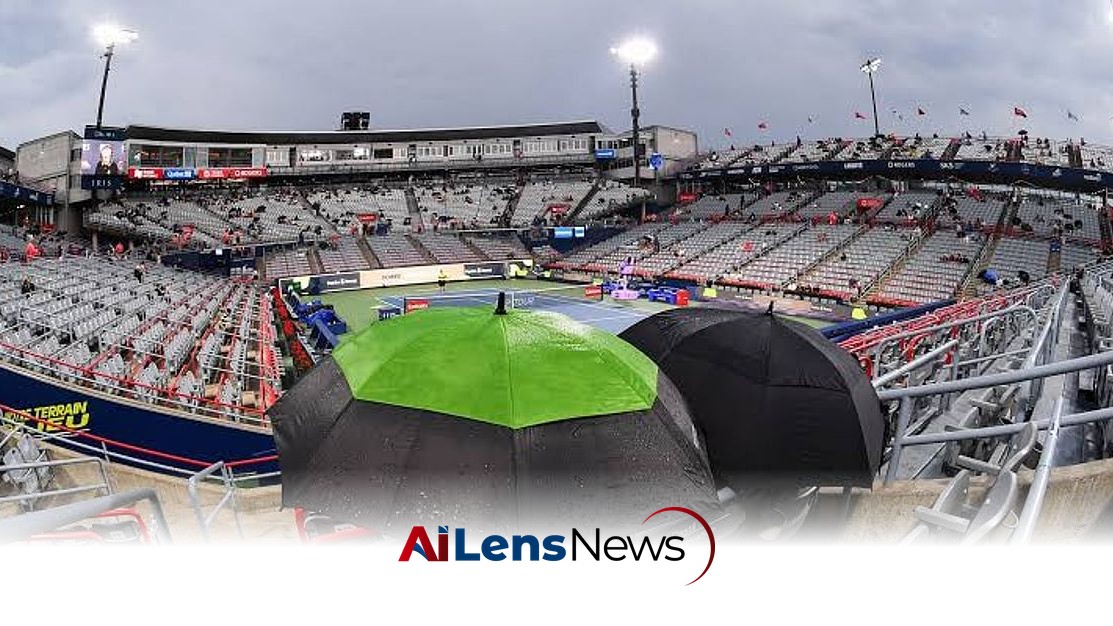


Persistent rain and severe thunderstorm warnings have disrupted the Montreal Masters, forcing a rescheduling of the quarter-finals to Tuesday.
Gangtok, India Aug 12, 2026 ALN: Montreal: The weather has forced a major reshuffle at the Montreal Masters, with persistent rain and severe thunderstorm warnings bringing Monday’s singles programme to a premature halt and pushing all four remaining quarter-finals into Tuesday. This unexpected turn of events highlights the challenges faced by outdoor sports events, particularly in regions where weather patterns can be unpredictable.
The Montreal Masters, officially known as the Coupe Rogers, is one of the most prestigious tournaments in the ATP and WTA tours. Established in 1881, it is one of the oldest tennis tournaments in the world and has evolved into a key event in the professional tennis calendar. The tournament attracts top talent from around the globe and serves as a crucial preparatory event in the lead-up to the US Open, which is set to take place later this summer. The tournament typically draws significant crowds, contributing to the local economy and providing a platform for emerging players to showcase their talents alongside established stars.
Weather disruptions are not uncommon in outdoor sports, and tennis is particularly susceptible due to its reliance on clear skies for both player safety and optimal playing conditions. Rain can lead to slippery courts and visibility issues, which can pose risks to players' health and performance. In Montreal, the summer months can bring sudden thunderstorms, and this year’s event has been no exception. Tournament organizers must be prepared for such contingencies, often having to implement backup plans that include rescheduling matches and adjusting the tournament format. The ability to adapt quickly to changing weather conditions is critical, as it can impact not only the matches but also the overall experience for players and fans alike.
The disruption means Rafael Jodar’s clash with Arthur Fils and the meeting between Luciano Darderi and Brandon Nakashima, both originally scheduled for Monday, will now open Tuesday’s singles action from 12:30 p.m. ET. The decision to reschedule matches is made to ensure that players have adequate rest and preparation time, as playing multiple matches in one day can lead to fatigue and increase the risk of injury. This is particularly important in a high-stakes tournament like the Montreal Masters, where players are not only competing for titles but also for ranking points that can affect their standings in the professional circuit.
Players participating in the tournament often express their frustration with weather-related delays, as these can disrupt their rhythm and momentum. For instance, Jodar, Fils, Darderi, and Nakashima will now have to adjust their mental preparation and strategies for the revised schedule. This can be particularly challenging for younger players who may lack experience in handling such situations. The mental aspect of tennis is crucial, and unexpected delays can lead to increased anxiety and pressure as players recalibrate their focus and strategies.
In addition to the impact on players, weather disruptions can also affect fans and spectators who attend the event. Many fans plan their trips around specific match times, and changes to the schedule can lead to disappointment or logistical challenges. Tournament organizers typically communicate updates through various channels to keep fans informed, but it can still be a source of frustration for those who have made arrangements to attend specific matches. The experience of attending live sports is often enhanced by the anticipation of watching favorite players compete, and delays can diminish that excitement.
Furthermore, the rain delay has implications for the tournament's overall timeline. With quarter-finals now scheduled for Tuesday, this could affect the scheduling of semi-finals and finals, potentially compressing the schedule for later rounds. Tournament organizers must carefully balance the need to complete matches in a timely manner while ensuring that players are not overburdened with back-to-back matches. This juggling act requires careful planning and coordination, as the scheduling of matches can also affect broadcast rights and viewership, which are crucial for the tournament’s financial viability.
In addition to the tennis action, the Montreal Masters serves as a focal point for various promotional activities and sponsorships. Companies often leverage the tournament to engage with fans and promote their brands, and weather delays can impact these plans. Sponsors may have specific events or promotions tied to match schedules, and any changes can complicate marketing strategies. The financial implications of such disruptions can be significant, as sponsors invest heavily in visibility and engagement during high-profile events like the Montreal Masters.
In a broader context, the Montreal Masters is part of a larger trend in sports where climate change and extreme weather events are becoming more frequent. As global temperatures rise, many outdoor sports venues are facing challenges related to unpredictable weather patterns. This has prompted discussions about the future of outdoor sporting events and how organizers can adapt to ensure the safety and enjoyment of both players and fans. The increasing frequency of weather-related interruptions raises questions about the sustainability of outdoor sports, and whether new technologies or infrastructures need to be developed to mitigate these challenges.
Looking forward, the Montreal Masters will need to continue evaluating its contingency plans for weather-related disruptions. This may include investing in better drainage systems for the courts, developing more flexible scheduling options, or even considering the feasibility of indoor venues for certain matches. The ability to adapt to changing weather conditions will be crucial for the tournament's success in the years to come. As the sports world grapples with the realities of climate change, the Montreal Masters may serve as a case study for how to effectively manage outdoor events in an era of increasing unpredictability.
In unrelated news, Sevilla has signed Scottish forward Robbie Ure from IK Sirius to strengthen their squad. This move comes as part of Sevilla's strategy to bolster their roster ahead of the upcoming season. Ure's addition is expected to enhance the team's attacking options, and fans will be eager to see how he integrates into the squad. As the football season approaches, transfer news continues to dominate headlines, illustrating the ongoing excitement and unpredictability of sports across different disciplines.
To learn more about the latest developments in Tennis, stay updated with our exclusive reports and analyses on AiLensNews.

