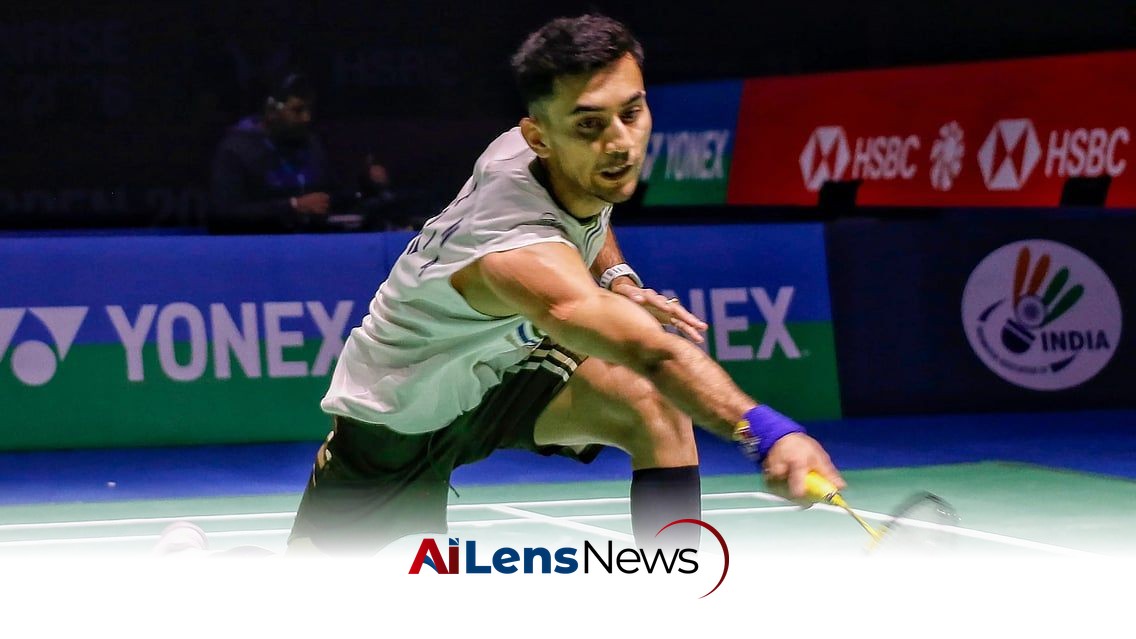


India's hopes in the men's singles draw at the Japan Open 2026 ended as Lakshya Sen and Ayush Shetty were eliminated in their opening matches.
Gangtok, India Jul 16, 2026 ALN: Tokyo: India’s hopes in the men’s singles draw at the Japan Open 2026 came to an abrupt end on Wednesday after Lakshya Sen and Ayush Shetty were both eliminated in their opening-round matches at the BWF Super 750 tournament, while Unnati Hooda also exited the women’s singles competition.
Lakshya, seeded among the tournament’s leading contenders by virtue of his world No. 14 ranking, was unable to counter home favourite Koki Watanabe, who secured a comfortable 21-16, 21-14 victory in front of the Japanese crowd at the Tokyo Metropolitan Gymnasium. This tournament is part of the prestigious BWF World Tour, which is essential for players aiming to qualify for major events such as the Olympics and World Championships. The Japan Open is particularly significant as it attracts top-tier talent from around the globe, making it a critical battleground for players looking to improve their rankings and gain valuable experience.
The Indian found himself chasing the contest from the outset as Watanabe established commanding leads at the mid-game intervals in both sets. Despite attempting to claw his way back, Lakshya failed to shift the momentum and the Japanese shuttler wrapped up the match in just 38 minutes. The defeat also handed Watanabe his third victory in seven meetings against the Indian, highlighting a competitive rivalry that has developed between the two players. This match not only reflects the pressures faced by athletes in high-stakes environments but also emphasizes the growing strength of badminton in Japan, a nation that has been investing heavily in the sport.
Ayush Shetty came significantly closer to extending his stay in the tournament but eventually fell short against world No. 2 Kunlavut Vitidsarn in a three-game battle. The match showcased the intensity and skill level present in the tournament, as both players demonstrated remarkable resilience and tactical acumen. The Thai star edged a tightly contested opening game 21-19 after holding a slender advantage for much of the set. Ayush responded impressively in the second game, recovering from four match points before prevailing 25-23 in a tense finish to force the decider. However, the momentum proved short-lived as Kunlavut regained control in the third game, closing out a 21-15 victory to improve his head-to-head record against Ayush to 2-1. This match was a testament to the unpredictability of badminton, where shifts in momentum can occur rapidly, and players must remain mentally strong to navigate the challenges presented during matches.
India’s challenge also suffered another setback in the women’s singles draw, where Unnati Hooda was beaten by Chinese Taipei’s Huang Yu-Hsun despite taking the second game. After dropping the opener 21-16, Unnati fought back to level the contest with a 21-16 win before Huang sealed the deciding game 21-15 to advance. This match highlighted the competitiveness of the women’s singles event, where emerging talents like Unnati are facing seasoned players. The experience gained from participating in such high-caliber tournaments is invaluable for young athletes, as it helps them develop their skills and mental fortitude.
With the latest exits, India’s campaign in the singles events has narrowed considerably. Two-time Olympic medallist PV Sindhu remains the country’s only surviving singles player in Tokyo, while mixed doubles pair Tanisha Crasto and Dhruv Kapila are also still in contention. Sindhu's continued presence in the tournament is crucial, as she has been a trailblazer for Indian badminton, inspiring a new generation of players. Her experience and success on the international stage provide a beacon of hope for Indian fans as they look to her to advance further in the tournament.
India had already lost both of its men’s doubles combinations on Tuesday after Satwiksairaj Rankireddy and Chirag Shetty, along with MR Arjun and Hariharan Amsakarunan, bowed out in the opening round, with the former pair sustaining another injury. The early exits of these doubles teams highlight the challenges faced by Indian badminton players, where competition is fierce, and injuries can significantly impact performance. The men's doubles event has seen a rise in competitive standards globally, with pairs from various countries consistently pushing the boundaries of the sport.
The Japan Open is not just a standalone event; it plays a critical role in the overall badminton calendar. For many players, it serves as a platform to gain points for the BWF rankings, which are essential for seeding in future tournaments, including the World Championships and the Olympics. As players aim to qualify for the Paris 2024 Olympics, every match counts, making the stakes incredibly high.
The implications of these early exits for Indian badminton are multifaceted. On one hand, it underscores the need for players to gain more experience in high-pressure environments, while on the other hand, it raises questions about the current state of training and preparation methods employed by the athletes and their coaches. The Indian badminton fraternity may need to reassess strategies to ensure that players are equipped not only with technical skills but also with the mental resilience required to compete at the highest levels.
As the tournament progresses, all eyes will be on PV Sindhu and the mixed doubles pair of Tanisha Crasto and Dhruv Kapila. Their performances will be pivotal in determining the overall success of the Indian contingent at the Japan Open 2026. Fans and analysts alike will be keenly observing how these athletes navigate the challenges ahead, as they represent not only their individual aspirations but also the hopes of a nation that has embraced badminton as a sport with immense potential.
In conclusion, while the early exits in men’s singles and women’s singles have been disappointing for Indian fans, the journey of Indian badminton continues. The experiences gained from these matches will be instrumental in shaping the future of the players, and the lessons learned will hopefully translate into better performances in upcoming tournaments. As the Japan Open unfolds, the narrative of resilience, determination, and the pursuit of excellence remains at the forefront of Indian badminton.
To learn more about the latest developments in Badminton, stay updated with our exclusive reports and analyses on AiLensNews.

