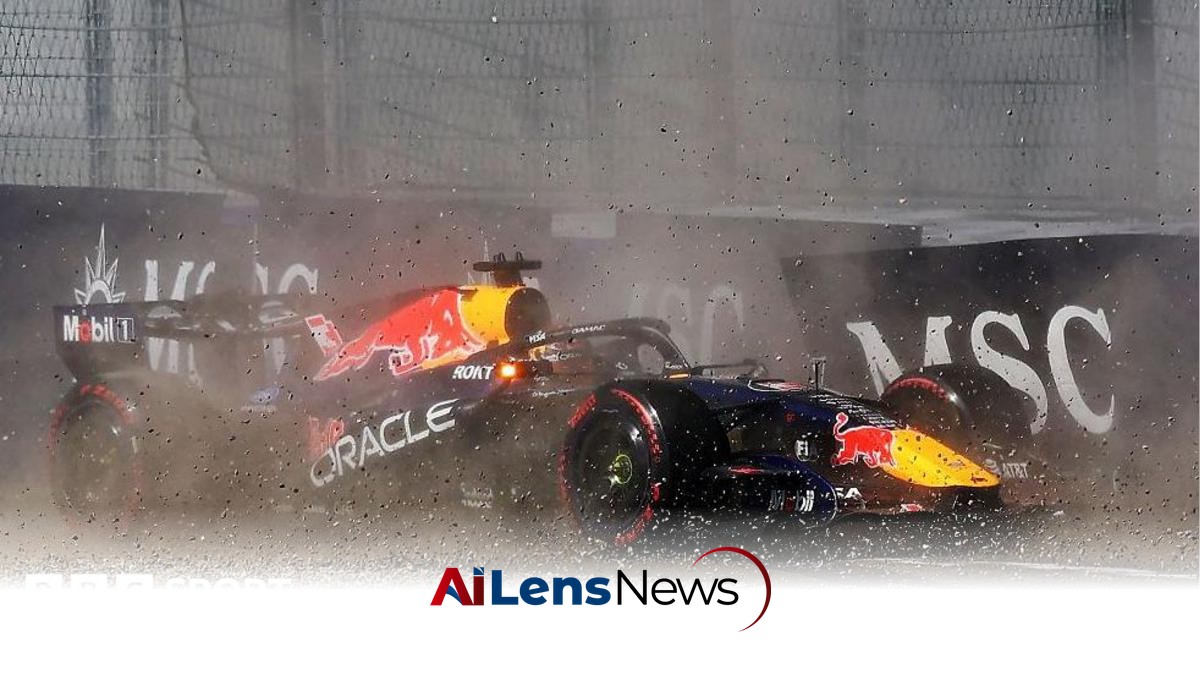


Following two high-speed crashes involving Max Verstappen, Red Bull will switch to a traditional rear wing design for the upcoming Belgian Grand Prix.
New Delhi, India Jul 16, 2026 ALN: Red Bull Racing has made a strategic decision to revert to a conventional rear wing design for the upcoming Belgian Grand Prix, a move prompted by a series of high-speed crashes involving their star driver, Max Verstappen, in the previous two races.
This decision was confirmed by Red Bull's team principal, Laurent Mekies, who indicated that the team had identified a significant issue with their innovative rear wing design during testing conducted after the recent race at Silverstone. The conventional rear wing will operate in a more traditional manner, allowing it to open for straight-line mode in a standard fashion, which contrasts with the more complex design that had been previously implemented.
In the current season, Red Bull and their primary competitor, Ferrari, had introduced a groundbreaking rear wing design that features a unique mechanism. This mechanism enables the top flap of the wing to rotate more than 180 degrees, facilitating a more pronounced drag reduction. The primary advantage of this design is that it allows for increased straight-line speed, which can be a critical factor in a where every millisecond counts.
However, this innovative approach has not been without its pitfalls. Verstappen's crashes during the British Grand Prix and qualifying in Austria were directly linked to the way the new wing design transitioned from straight-line mode back to cornering mode. As the wing closed during high-speed corner entries, it appeared to cause significant aerodynamic disruptions. Verstappen himself described the situation as "super-dangerous," highlighting the potential risks associated with the wing's performance under certain conditions.
While Mekies refrained from providing detailed explanations regarding the specific causes of the issues, it is believed that the problem may stem from the airflow not reattaching to the wing quickly enough when it transitions back to its cornering configuration. This delay in airflow reattachment could lead to a sudden loss of rear downforce, which would explain the spins and loss of control that Verstappen experienced during those critical moments on the track.
The decision to revert to a conventional rear wing comes after Red Bull conducted a short 'filming day' test at Silverstone, where they were able to gather data and insights that informed their choice. The Belgian Grand Prix, scheduled for July 17-19, represents a crucial opportunity for Red Bull to enhance both their performance and safety on the track, especially in light of the recent incidents.
This change is not just a technical adjustment; it reflects broader themes in the world of 1 where teams are constantly pushing the boundaries of aerodynamics and engineering in pursuit of speed and performance. The challenge lies in balancing innovation with safety, a principle that is paramount in a that has seen its share of accidents and tragedies over the years.
The implications of this decision extend beyond the immediate safety concerns for Verstappen and the Red Bull team. It also raises questions about the competitive landscape of the season. Red Bull has enjoyed a strong performance throughout the year, often competing at the front of the pack. However, the introduction of new technologies and designs can sometimes lead to unforeseen consequences, as seen in this instance.
As the team prepares for the Belgian Grand Prix, they will be keenly aware of how this change impacts their overall performance. The conventional rear wing may provide a more stable and predictable driving experience for Verstappen, which could translate into better lap times and improved results on the track. Additionally, it may also allow the team to regain confidence in their car setup, which is crucial for achieving optimal performance during a race weekend.
The Belgian Grand Prix is held at the iconic Circuit de Spa-Francorchamps, known for its challenging layout and unpredictable weather conditions. The track features a mix of high-speed straights and technical corners, making it a true test of both driver skill and car performance. As Red Bull reintroduces the conventional rear wing, the team will be closely monitoring how it performs in this demanding environment.
Furthermore, this situation highlights the ongoing arms race in 1, where teams are under constant pressure to innovate while also ensuring the safety of their drivers. The balance between pushing technological boundaries and adhering to safety standards is a delicate one, and Red Bull's decision may set a precedent for other teams as they assess their own aerodynamic designs.
In conclusion, Red Bull's reversion to a conventional rear wing for the Belgian Grand Prix underscores the complexities and challenges of modern 1 racing. As the team navigates the implications of this change, they will be looking to not only improve their competitive edge but also prioritize the safety and well-being of their drivers. The upcoming race will serve as a critical test for the team, as they aim to strike the right balance between innovation and performance in one of the most revered circuits in the .
In the context of 1, the pursuit of speed through aerodynamic advancements has always been a double-edged sword. While teams like Red Bull and Ferrari continually innovate, they must also contend with the ramifications of these changes on driver safety and car stability. The complexity of modern F1 cars, with their intricate designs and advanced materials, can lead to unexpected behaviors, especially when new technologies are introduced.
The Belgian Grand Prix at Spa-Francorchamps is particularly notorious for its unpredictable weather, which can change rapidly and impact race conditions significantly. The circuit's elevation changes and combination of high-speed straights and tight corners demand not only a powerful car but also a driver who can adapt quickly to varying grip levels and conditions. Red Bull's decision to revert to a more conventional rear wing design could provide Verstappen with the stability he needs to navigate this challenging track effectively.
Moreover, the implications of this decision may ripple through the entire paddock. Other teams will undoubtedly observe Red Bull's performance with the conventional rear wing closely, as they evaluate their own aerodynamic strategies. If Red Bull performs well without the innovative design, it could lead to a reassessment of the benefits versus risks of pushing the technological envelope in the future.
In the grand scheme of the championship, every race is critical, and the points awarded can significantly impact the standings. Red Bull currently holds a strong position in the Constructors' Championship, but any misstep could allow competitors like Ferrari and Mercedes to close the gap. The Belgian Grand Prix thus represents not just a test of the new rear wing but a pivotal moment in the championship race.
As the team heads into the Belgian Grand Prix weekend, the focus will not only be on performance but also on ensuring that Verstappen feels confident and safe in his car. The psychological aspect of racing cannot be understated, especially after experiencing crashes that could shake a driver's confidence. A successful race could bolster Verstappen's morale and reinforce the team's commitment to driver safety while still pursuing performance excellence.
In summary, Red Bull Racing's decision to revert to a conventional rear wing design for the Belgian Grand Prix illustrates the intricate balance between innovation and safety in 1. As the team prepares for one of the most challenging circuits on the calendar, they will be closely monitoring the performance of their car and the implications of this change on their competitive standing. The upcoming race will not only test their engineering decisions but also their ability to adapt and thrive in the fast-paced world of 1 racing.
To learn more about the latest developments in Formula 1 & Motorsports, stay updated with our exclusive reports and analyses on AiLensNews.

