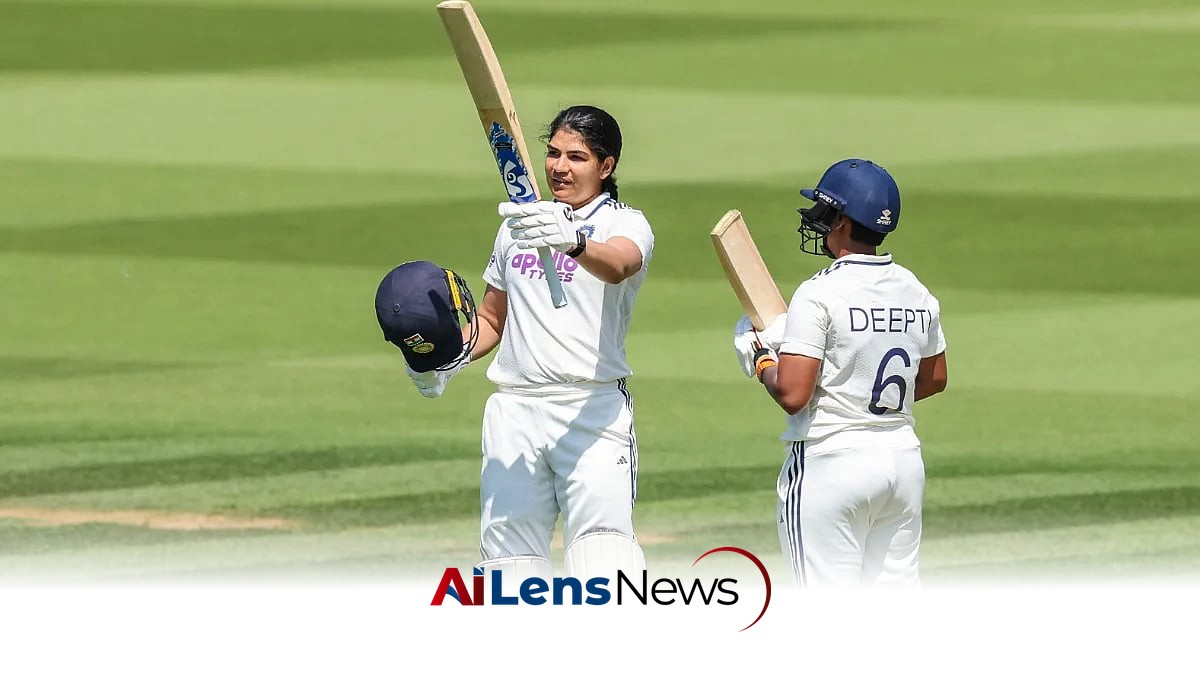


Yastika Bhatia reflects on her remarkable journey back to cricket, culminating in her maiden Test century at Lord's, a moment she describes as a dream.
Kohima, India Jul 14, 2026 ALN: London: India’s Yastika Bhatia expressed that her maiden Test century at Lord’s felt “like a dream” after a challenging year sidelined by injury. The emotions of her comeback journey surged back as she reached three figures during the historic one-off women’s Test against England.
Yastika's unbeaten 113 not only etched her name on the Lord’s honours board but also made her the first woman to score a Test century at the iconic venue, significantly bolstering India’s position in the match. This achievement is particularly noteworthy given the historical context of women’s cricket, which has seen significant growth in recent years, yet still faces challenges in terms of visibility and recognition compared to its male counterpart.
Women's cricket has a rich history, but it has often been overshadowed by men's cricket, which has traditionally received more media coverage, sponsorship, and fanfare. Despite these challenges, the last decade has seen a remarkable transformation in the landscape of women's cricket, with increased investment and interest from both fans and sponsors. The introduction of professional leagues, such as the Women's Premier League in India and the Women's Big Bash League in Australia, has significantly raised the profile of the sport and provided female cricketers with platforms to showcase their talent.
Reflecting on her rehabilitation, which kept her away from the game during crucial phases, including the home ODI World Cup build-up and the Women’s Premier League, the left-hander admitted that there were times when such an achievement felt unattainable. Injuries in sports can be particularly devastating, not just physically but also mentally, as athletes often grapple with feelings of isolation and doubt during their recovery periods. The mental toll of injuries can be profound, as athletes often find their identities intertwined with their performance. For Bhatia, the journey back to fitness was not merely about physical recovery but also about rebuilding her confidence and reconnecting with the sport she loves.
“It was very tough. That one year, I mean, before a major tournament, a home World Cup, everyone dreams of playing in that. And before that, I got injured. And after that, I missed the WPL as well. It was quite tough, that phase. But I had a lot of people backing me. There was backing from the team, and my family’s support was immense at that time. So I’m very grateful for that, that they helped me come out of that situation. If someone had asked me six months ago if my name would be on the honours board, I wouldn’t have believed it myself! I would’ve said, “What are you talking about?” It feels like a dream,” Yastika shared in a BCCI video.
The century held significance beyond mere numbers, with Bhatia acknowledging that the landmark innings symbolized both personal redemption and a proud moment for the country. In the context of Indian women's cricket, where players often have to overcome societal and institutional barriers, Bhatia's achievement serves as an inspiration to many young girls aspiring to take up the sport. The narrative of women in sports, particularly in cricket, is one of resilience and determination. Bhatia's success at Lord’s is a testament to the hard work and dedication of countless female athletes who have paved the way for future generations.
Recalling the moment she completed her hundred, she revealed that she initially planned a more elaborate celebration but opted for something simpler as emotions took over. This reaction is emblematic of the pressure athletes often feel to perform and the overwhelming nature of achieving a personal milestone in front of an audience. The experience of scoring a century, especially in a prestigious venue like Lord’s, is something many cricketers dream of, and for Bhatia, the moment was filled with a mix of joy, relief, and gratitude.
“I had planned a celebration, but then I thought, let it be... Let’s keep it a bit normal. But I kissed the flag, that was a very proud moment for me. I had planned a salute too, but I forgot at that moment. I want to do a lot for India, win a lot for the country and win the World Cup too. So it was a very special moment for me, that I could score a maiden Test hundred and that it happened at Lord’s. And we’ve gotten into such a good position in the Test match. I got a bit emotional too when I took off my helmet and did that. I was remembering my family’s faces, and the one year that I went through, all of that was flashing in front of my eyes. All in all, it was a great moment,” she added.
The significance of Bhatia's performance extends beyond her personal journey; it also reflects the evolving landscape of women's cricket, which has garnered increased attention and support in recent years. The one-off Test match against England was a part of a broader initiative to elevate women's cricket on the global stage, offering female athletes more opportunities to showcase their skills in front of larger audiences. With organizations and governing bodies increasingly recognizing the importance of promoting women's sports, events like this Test match are crucial for the development and visibility of female athletes.
Historically, Lord’s has been a venue synonymous with cricketing excellence, and for a woman to achieve a century there marks a significant milestone in the narrative of women’s cricket. This achievement not only places Bhatia in the annals of cricket history but also highlights the growing recognition and appreciation of women's contributions to the sport. The fact that her name will now be inscribed on the Lord’s honours board alongside some of the greatest cricketers of all time is a powerful statement about the progress of women in cricket.
As the cricketing community continues to rally for equality and recognition, Bhatia's performance serves as a beacon of hope and inspiration. It underscores the importance of support systems—both familial and institutional—in helping athletes navigate the complexities of professional sports. The backing she received from her teammates and family was crucial, illustrating the often-overlooked emotional and psychological dimensions of athletic recovery and success. The camaraderie and encouragement from fellow players can make a significant difference, especially during challenging times, as they share similar experiences and understand the pressures of the sport.
Looking ahead, Bhatia's aspirations to win the World Cup for India reflect a broader ambition shared by many athletes in the sport. The desire to not only excel personally but to contribute to the success of the national team is a common thread among competitive players. This ambition is particularly poignant in light of the growing competitiveness of women's cricket, with more nations investing in their women's teams and the quality of play continuing to rise. As countries develop their women's cricket infrastructure, the talent pool is expanding, leading to more competitive matches and a richer cricketing landscape.
In conclusion, Yastika Bhatia's maiden Test century at Lord’s is not just a personal triumph but a significant moment in the evolution of women's cricket. It symbolizes resilience, the power of support systems, and the potential for future generations of female cricketers. As the sport continues to grow, Bhatia's achievement will inspire many to chase their dreams, reinforcing the belief that with determination and support, remarkable feats can be accomplished, even in the face of adversity. The journey of female cricketers like Bhatia is a reminder of the progress made and the work still needed to ensure that women's cricket receives the recognition and respect it deserves.
To learn more about the latest developments in Cricket, stay updated with our exclusive reports and analyses on AiLensNews.

