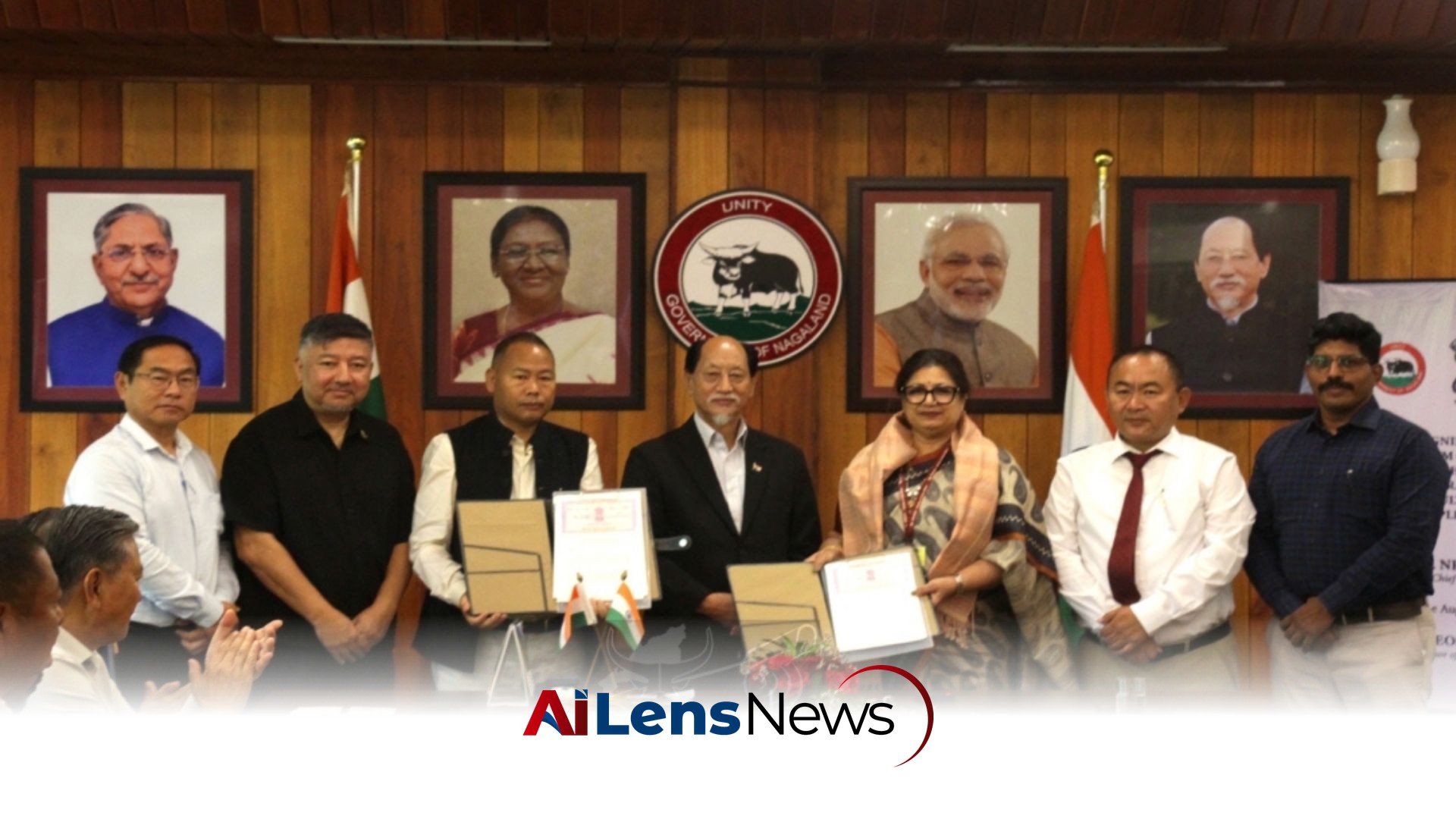


The Nagaland government and the Sports Authority of India have signed a Memorandum of Understanding to move the SAI Training Centre to Dimapur, enhancing sports facilities for local athletes.
Kohima, India Jul 24, 2026 ALN: Kohima: The Nagaland government and the Sports Authority of India (SAI) on Friday signed a Memorandum of Understanding (MoU) for the relocation of the SAI Training Centre to the Multi-Disciplinary Sports Complex (MDSC) in Dimapur. This agreement represents a significant step forward in the development of sports infrastructure in the state, aimed at fostering a new generation of athletes.
The MoU was signed during a formal event held at the Chief Minister’s Residential Complex in Kohima, attended by various dignitaries, stakeholders, and representatives from both the state government and SAI. This event marks a pivotal moment in Nagaland's sporting history, as the relocation of the training centre is expected to enhance the training and development opportunities available to local athletes.
Chief Minister Dr. Neiphiu Rio, who played a crucial role in facilitating this agreement, described the signing as the beginning of a new chapter in Nagaland’s sporting journey. He emphasized that the relocation signifies a significant milestone achieved through years of dedicated efforts aimed at strengthening the state’s sports ecosystem. The Chief Minister highlighted that the operationalization of the new training centre would provide athletes with access to quality coaching, modern residential facilities, and scientific support systems, thereby benefiting sports development not only in Nagaland but also in the wider Northeast region.
The Multi-Disciplinary Sports Complex in Dimapur is poised to become a hub for sporting excellence. With state-of-the-art facilities, it is designed to cater to various sports disciplines, providing athletes with the necessary resources to hone their skills and compete at higher levels. This move is particularly important for a state like Nagaland, which has a rich sporting culture but has historically faced challenges in terms of infrastructure and support for athletes.
Dr. Rio also expressed satisfaction over the ongoing SAI infrastructure projects at the MDSC, noting that these initiatives would further enhance the state’s high-performance sports ecosystem. He reiterated the government’s commitment to investing in sports infrastructure, sports science, grassroots competitions, athlete welfare, and capacity building. The recent inauguration of 16 sports infrastructure projects, with several more in the pipeline, underscores this commitment.
Majushree Dayanand, Deputy Director General of the Sports Authority of India, described the signing of the MoU as a landmark event in the partnership between SAI and the Nagaland government. She expressed gratitude to the state for providing a new venue for the training centre and facilitating the establishment of a Centre of Excellence. This Centre is expected to play a crucial role in nurturing local talent and providing athletes with the necessary tools to succeed.
Dayanand stressed the importance of nurturing local talent, highlighting that Nagaland possesses immense sporting potential that requires sustained support, motivation, and encouragement. She urged the community to view sports as a viable career option for young people, emphasizing that sports contribute to building responsible and productive citizens. This perspective aligns with the broader national vision of promoting sports as an integral part of youth development.
Moreover, the relocation of the SAI Training Centre is expected to have a ripple effect on the local economy and community. Increased sporting activities can lead to greater engagement in physical fitness and health, which are critical for the overall well-being of the population. Additionally, the establishment of a high-performance training centre can attract sporting events and competitions to the region, further boosting local tourism and business opportunities.
Earlier in the event, S. Keoshu Yimkhiung, Advisor for Youth Resources and Sports, remarked that the partnership reflects the government’s commitment to nurturing sporting talent and promoting a strong sporting culture in the state. Yimkhiung noted that the relocation would offer athletes improved opportunities to train and compete at higher levels, which is essential for their development. The presence of a dedicated training facility is expected to inspire more young people to take up sports seriously.
Abu Metha, Vice President of the Athletics Federation of India and Secretary General of the Nagaland Olympic Association, credited Chief Minister Rio for his vision and sustained efforts in promoting sports in the state despite various challenges. Metha emphasized that sports have the power to unite the country and integrate young people into the national mainstream. He also urged the Sports Authority of India to introduce customized sports programs suited to the unique needs of the Northeast, which could strengthen grassroots sports development in the region.
The MoU and the relocation of the SAI Training Centre are part of a broader strategy to enhance the sporting landscape in Nagaland and the Northeast. The region has produced numerous talented athletes who have excelled in various sports, but the lack of adequate training facilities has often hindered their potential. By establishing a modern training centre, the government aims to address these challenges and create an environment where athletes can thrive.
The implications of this agreement extend beyond just sports. It is a testament to the government’s recognition of the importance of youth engagement through sports, which can lead to positive social outcomes. By investing in sports, the government is not only aiming to produce champions but also to instill values such as teamwork, discipline, and resilience among young people. These attributes are essential for personal development and can significantly contribute to the socio-economic development of the state.
As the SAI Training Centre prepares to relocate to Dimapur, the focus will be on ensuring that the facilities are equipped to meet the needs of athletes across various disciplines. This includes not only physical training spaces but also access to sports science, nutrition, and mental health support, which are increasingly recognized as critical components of athlete development.
In conclusion, the signing of the MoU for the relocation of the SAI Training Centre to Dimapur marks a significant milestone in the evolution of sports in Nagaland. It reflects a commitment to fostering sporting talent, enhancing infrastructure, and promoting a culture of sports within the community. As the state embarks on this new journey, the eyes of the nation will be on Nagaland, watching how these developments unfold and contribute to the broader narrative of sports in India.
To learn more about the latest developments in Golf, stay updated with our exclusive reports and analyses on AiLensNews.

