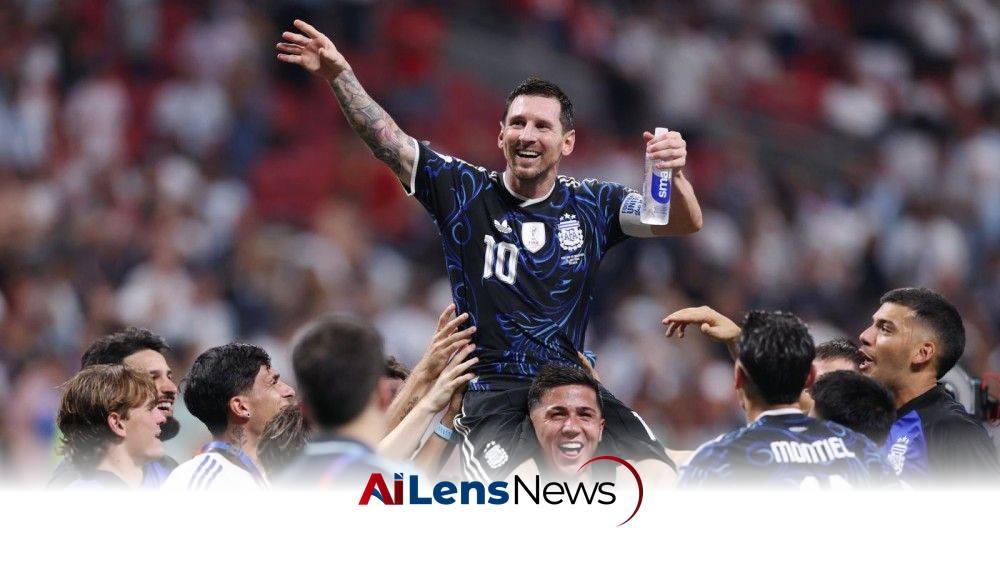


Lionel Messi responds to critics alleging FIFA bias towards Argentina, emphasizing the team's merit in reaching consecutive World Cup finals.
Kohima, India Jul 16, 2026 ALN: New Delhi, July 16 - Lionel Messi has hit back at critics alleging FIFA favoritism toward Argentina, asserting that reaching a second consecutive World Cup final proves his side is among the best in the world and that their success is "not by chance." This statement comes in the wake of Argentina's remarkable performance in the tournament, where they have showcased their skills and determination to defend their title.
Argentina's journey to defend their title has been filled with controversies, as referees made several debatable calls that seemed to favor them. Critics have pointed to these moments as evidence of bias from FIFA, suggesting that Argentina's path to the final was aided by officiating decisions that were questionable at best. However, Messi completely dismissed these claims, arguing that the team's success is a product of hard work, talent, and a winning mentality.
In a match that saw Argentina come from behind to secure victory, Enzo Fernandez and Lautaro Martinez scored late goals, with Messi providing two crucial assists. This dramatic turnaround in Atlanta, following Anthony Gordon's 55th-minute goal for the opposing team, highlighted Argentina's resilience and ability to perform under pressure. Messi's leadership on the field has been integral to the team's success, and his contributions continue to be pivotal in high-stakes matches.
Messi remarked, "It hurts whoever it hurts… We've been the best for the last four years, whether people like it or not, no matter what they say. Once again, we're among the two best in the world, and that shows that everything we've done isn't by chance and nobody gave us anything. Reaching two consecutive World Cup finals is something few achieve, and this group did it." This statement not only defends his team against accusations of favoritism but also emphasizes their consistent performance and the hard work that has led them to this stage.
Throughout the tournament, Argentina has faced scrutiny not only for their gameplay but also for the perceived preferential treatment from referees. Such accusations are not new in international football, where the politics of the sport often come into play, and teams can find themselves at the center of controversy. Messi's comments reflect a broader frustration among players who feel that their achievements are sometimes overshadowed by external narratives that question their legitimacy.
Messi further elaborated on the psychological aspects of high-stakes matches, saying, "If we had lost to England, people would have come out and said some nonsense, and we didn't give them the chance. We knew that we were better than them in terms of football, but a lot is at stake in a match of this magnitude, where historic events happen in these games." This acknowledgment of the pressure surrounding such encounters speaks to the mental fortitude required to compete at the highest level, especially in a tournament as prestigious as the World Cup.
Moreover, Messi dedicated the win to the legendary Diego Maradona, who had famously headlined the clash between Argentina and the Three Lions in the World Cup quarter-final 40 years ago. Maradona's legacy looms large over Argentine football, and his influence continues to inspire current players. Messi stated, "Without a doubt, Diego is enjoying this immensely from up there because today was a very special day for him; to be able to give him this joy and for him to experience it however he wants from up there. Let him enjoy it because it’s a gift for him too." This tribute highlights the emotional connection between past and present players and the significance of national pride in football.
The implications of Messi's statements extend beyond just the current tournament. They touch on the ongoing debates about fairness in sports, the role of officiating, and the narratives that surround successful teams. As Argentina continues its campaign to defend its title, the focus will likely remain on their performance, but the discussions about favoritism and bias are unlikely to dissipate. Such dialogues can influence public perception and the media's portrayal of the team, which can have lasting effects on the players and the sport itself.
In the broader context, FIFA's role in managing international football competitions has been scrutinized for years, with allegations of favoritism, corruption, and mismanagement surfacing regularly. The organization has faced challenges in maintaining the integrity of the game, and the recent claims against Argentina only add fuel to the fire. As Messi and his teammates strive to prove their critics wrong, they must also navigate the complex landscape of international football politics.
As the tournament progresses, Messi's leadership and the team's performance will be closely watched. The narrative surrounding Argentina will likely evolve as they move deeper into the competition, and how they respond to both on-field challenges and off-field criticisms will be crucial. The passion of Argentine fans, the legacy of Maradona, and the drive of players like Messi combine to create a compelling story in the world of football.
Ultimately, Messi's defense of Argentina against allegations of favoritism serves not only as a rallying cry for his teammates but also as a reminder of the hard work and dedication that goes into achieving greatness in sports. As they aim for another World Cup victory, the team will continue to face scrutiny, but their focus will remain on the pitch, where they hope to let their performance speak for itself.
To understand the context of Messi's comments, it is essential to consider the history of Argentina's footballing prowess. The nation has a rich footballing heritage, having won the FIFA World Cup multiple times, with legendary players like Diego Maradona and Lionel Messi himself being central figures in their legacy. Football is not just a sport in Argentina; it is a national passion that unites millions and serves as a source of pride. Thus, the scrutiny faced by the national team, especially during major tournaments, is heightened by the expectations of their devoted fans.
Moreover, the issue of officiating in football is a contentious topic that has sparked debates for decades. The integrity of refereeing can significantly impact the outcomes of matches, and claims of favoritism, whether substantiated or not, can lead to a loss of trust in the sport's governing bodies. In recent years, FIFA has made efforts to improve transparency and fairness in officiating, but the perception of bias remains a challenge that must be addressed to maintain the credibility of international competitions.
Messi's remarks also highlight the mental and emotional toll that players endure during high-stakes matches. The pressure to perform, coupled with the weight of national expectations and the scrutiny from fans and media, can be overwhelming. Players must maintain their focus and composure, often under intense conditions. Messi's acknowledgment of the psychological aspects of the game reflects a deeper understanding of what it takes to succeed at the highest level, and it underscores the importance of mental resilience in sports.
Furthermore, the legacy of Diego Maradona continues to resonate with both players and fans. Maradona's impact on Argentine football is immeasurable, and his performances in the World Cup are etched in the memories of football lovers around the globe. Messi's tribute to Maradona serves as a reminder of the continuity of talent and passion in Argentine football, linking past legends with the current generation of players who strive to honor that legacy.
As the tournament unfolds, the focus will not only be on Argentina's performance but also on how they navigate the narratives surrounding their journey. Messi's leadership will be crucial in guiding his teammates through both triumphs and challenges. The discussions about favoritism and bias will likely persist, but the team's determination to prove their worth on the pitch will remain paramount. The passion, pride, and resilience of the Argentine team will continue to inspire fans and contribute to the rich tapestry of football history.
In conclusion, Messi's defense of Argentina amidst claims of favoritism is a multifaceted issue that encompasses the dynamics of sport, national pride, and the challenges of maintaining integrity in competition. As Argentina pursues another World Cup victory, the focus will be on their performance and the narrative they create, both on and off the field. The ongoing debates surrounding officiating and favoritism will undoubtedly influence public perception, but the team's dedication to excellence will continue to shine through as they strive for greatness in the world of football.
To learn more about the latest developments in Football (Soccer), stay updated with our exclusive reports and analyses on AiLensNews.

