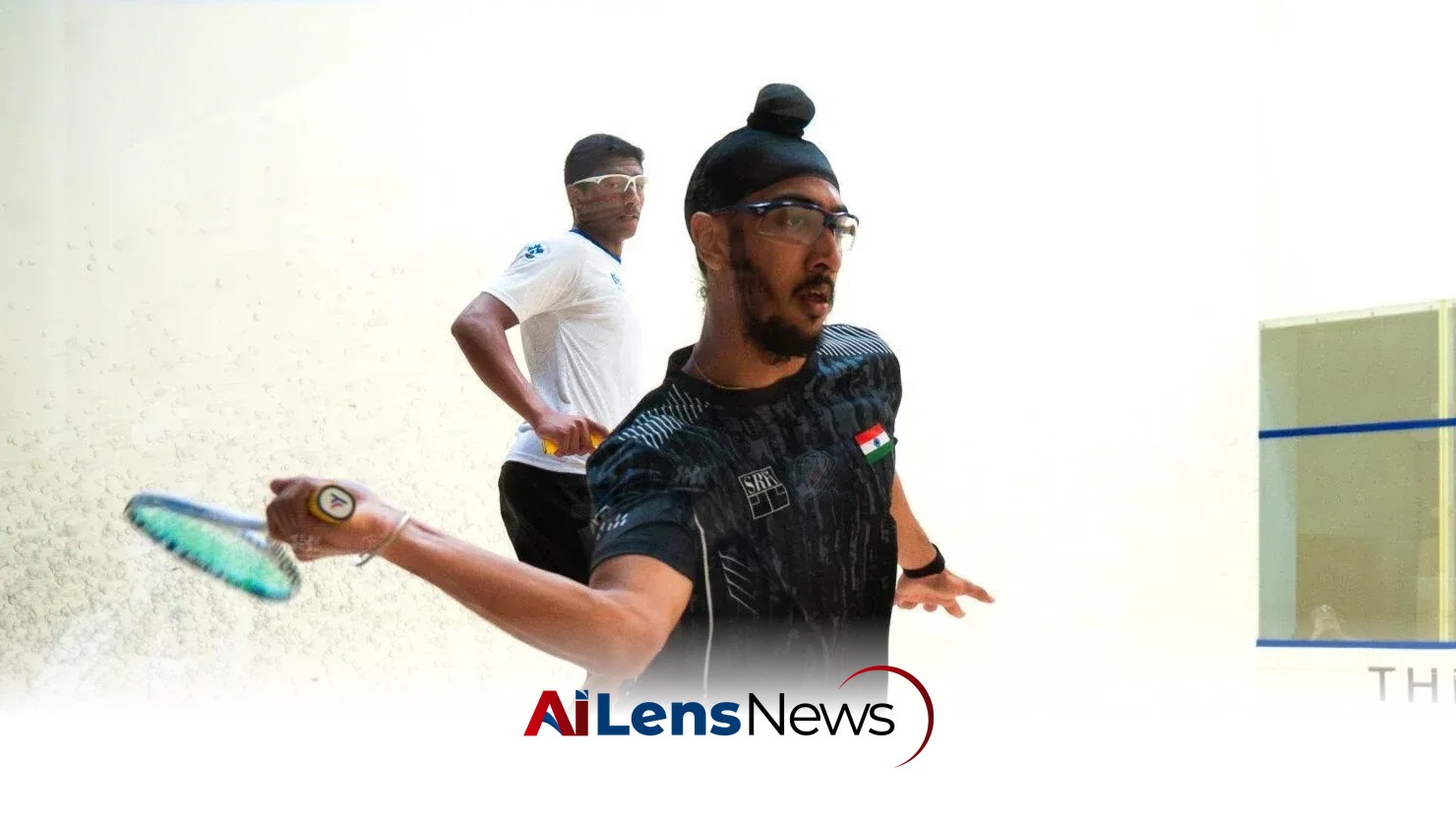


India's men's and women's squash teams have secured their spots in the quarterfinals of the World Junior Squash Team Championships, showcasing impressive performances.
Kohima, India Jul 30, 2026 ALN: ONTARIO, JUL 29: India’s men and women have successfully booked their places in the quarterfinals of the World Junior Squash Team Championships, showcasing contrasting styles and performances in their respective matches. The tournament, held annually, is a platform for young squash talents from around the globe to compete at a high level, and this year’s edition is no exception, featuring teams from various countries vying for the prestigious title.
The World Junior Squash Team Championships are significant not only for the players but also for the sport itself, as they highlight the emerging talents in squash. This event brings together the best junior players, usually under the age of 19, and serves as a crucial stepping stone for many athletes aspiring to make a mark in professional squash. The tournament has been instrumental in shaping the careers of numerous top players who have gone on to achieve success on the senior circuit.
This year, the fifth-seeded Indian men’s team faced a spirited challenge from the 11th-seeded Kuwait team in the pre-quarterfinals. Despite the initial setback, where Yusha Nafees suffered a straight-games defeat to Abdullah Ali, the Indian squad demonstrated resilience and tactical prowess. Nafees, who is known for his agility and shot-making ability, struggled to find his rhythm against Ali, who capitalized on the early momentum to secure a win for Kuwait. This match was particularly challenging as it set the tone for the rest of the tie, putting pressure on the Indian team to respond.
However, the Indian team quickly regrouped. Aryaveer Dewan stepped onto the court with determination and delivered a commanding performance, defeating Khaled Walead Al Fouzain in straight games with scores of 11-5, 11-6, and 11-5. Dewan's ability to control the pace of the game and his strategic shot selection were crucial in leveling the tie, showcasing the depth of talent within the Indian squad. His performance not only equalized the match but also revitalized the spirit of the team, demonstrating their mental fortitude.
Gurveer Singh then took to the court to seal the victory for India, facing Abdul Rahman Al Sanea. Singh dominated the match, winning decisively with scores of 11-3, 11-3, and 11-4. His performance not only secured the match for India but also demonstrated the team’s capability to perform under pressure. The Indian men's team will now face England in the quarterfinals, a formidable opponent and one of the tournament favorites. Head coach Harinder Pal Singh Sandhu expressed confidence in his team’s ability to compete against England, noting that recent encounters between the two teams during individual championships have shown India can compete at that level. This upcoming match is particularly significant as it will test the mettle of the Indian players against one of the strongest junior squash nations.
On the other hand, the Indian women’s team exhibited a dominant performance against South Africa, finishing their group stage with a clean sweep. Rudra Singh set the tone for the match, defeating Makayla Naidoo with a score of 11-4, 11-5, and 11-3. Singh’s aggressive play and tactical awareness allowed her to control the match from the outset, giving India an early lead. Her ability to dictate the pace and flow of the match was pivotal in establishing the momentum that the team needed.
Following Singh's victory, Anahat Singh took to the court and delivered a clinical display against Brianna Robinson, overpowering her opponent with a score of 11-1, 11-1, and 11-3. Anahat’s performance was marked by her exceptional speed and precision, making it difficult for Robinson to mount any significant challenge. This match showcased Anahat's potential as a rising star in the sport, and her commanding win further solidified the Indian women's team's position in the tournament.
Saanvi Kalanki then wrapped up the match with an equally convincing victory over Vivienne Van Der Schyff, winning 11-4, 11-3, and 11-3. Kalanki’s ability to maintain composure and execute her game plan effectively ensured that the Indian women’s team advanced to the knockout stage with momentum firmly on their side. The clean sweep against South Africa not only boosted the team's confidence but also highlighted their collective strength and synergy on the court.
The Indian women’s team will next face the United States in the quarterfinals, a matchup that promises to be competitive. The U.S. team has a strong history in junior squash and will present a significant challenge. However, the Indian team’s recent performances suggest they are in excellent form and ready to compete for a medal at this prestigious event. The matchup is expected to be closely contested, given the U.S. team's experience and the Indian squad's current momentum.
The World Junior Squash Team Championships not only serve as a platform for showcasing young talent but also play a crucial role in the development of squash as a sport in various countries. For India, the success of both the men’s and women’s teams reflects the growing investment in squash at the grassroots level, as well as the increasing popularity of the sport in the nation. With a strong emphasis on training and development, Indian squash has seen a surge in young players making their mark on the international stage. This growth is indicative of the broader trends in sports development in India, where more resources are being allocated to nurturing talent.
As the tournament progresses, the implications of these victories extend beyond just advancing to the next round. They signify the potential for Indian squash to establish itself as a powerhouse in the sport, particularly in the junior category. The success of these teams can inspire a new generation of players and contribute to the overall growth of squash in India. Moreover, such achievements can encourage further investment in sports infrastructure and coaching programs, which are critical for sustaining and enhancing performance at the international level.
Furthermore, the performances of individual players can have lasting impacts on their careers, providing them with invaluable experience in high-pressure situations. Competing against some of the best junior players from around the world can enhance their skills, boost their confidence, and prepare them for future challenges in their squash careers. The exposure gained from participating in such high-stakes matches is essential for their development as athletes and can significantly influence their future trajectories in the sport.
As the quarterfinals approach, both Indian teams will be looking to build on their successes and continue their pursuit of medals at this prestigious junior world event. The excitement surrounding the matches is palpable, and fans back home are eager to support their teams as they aim for glory on the international stage. The growing enthusiasm for squash in India is evident, with increasing viewership and support from fans, which can further motivate the players to excel. The narrative surrounding Indian squash is evolving, and with each match, the players are not just competing for titles, but also for the pride of representing their nation on a global platform.
To learn more about the latest developments in Cricket, stay updated with our exclusive reports and analyses on AiLensNews.

