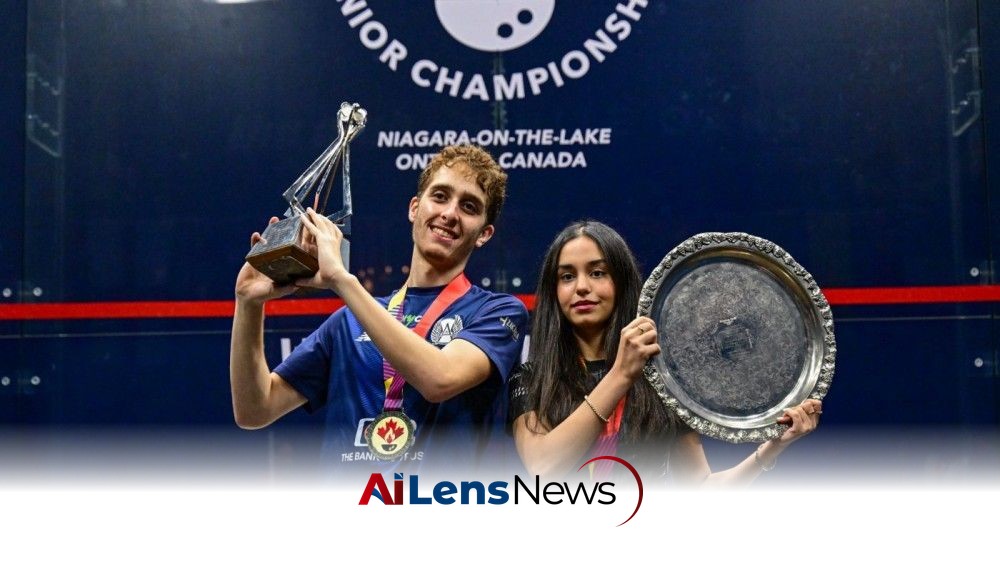


Anahat Singh, India's first World Junior squash champion, reflects on her historic win, emphasizing its significance as her last year in the junior circuit.
Kohima, India Jul 26, 2026 ALN: After becoming India’s first World Junior squash champion, Anahat Singh expressed that it feels like she is still dreaming. This title holds immense significance for her, as it marks her final year in the junior circuit. Anahat's journey to this historic achievement is not just a personal milestone, but also a significant moment for Indian squash, a sport that has been steadily gaining popularity and recognition on the global stage.
Anahat, who had previously reached the quarter-finals and semi-finals in earlier events, showcased an impressive performance throughout the tournament. She became the first Indian to reach the World Junior final since Joshna Chinappa in 2005, a gap of nearly two decades that highlights the challenges and competition faced by Indian players in the sport. The significance of this accomplishment cannot be understated, as it reflects both Anahat's talent and the growing infrastructure and support for squash in India.
"I still feel like I'm dreaming," Anahat stated following her victory. "I've been losing in the semis and quarters over the last four years. I've always said, if anyone's asked, 'This tournament’s a curse,' and I've never been able to play well in the event," she added. This candid reflection underscores the mental and emotional pressures that young athletes often face, particularly in high-stakes competitions. The expectation to perform, especially in a championship setting, can be overwhelming, and Anahat’s ability to overcome these hurdles speaks volumes about her resilience and determination.
"This is my last year (as a junior) and my only chance to win it. It means the world. So, I knew if I’m stressed, I play terribly, so I just came out on court and hit my lines well… I wanted to enjoy every moment of getting to play in a world championship final," she continued. This statement reveals her strategic approach to competition—focusing on enjoyment rather than pressure—which is a valuable mindset that many athletes strive to achieve. By prioritizing enjoyment, Anahat was able to unlock her full potential and deliver a performance that would etch her name in the annals of squash history.
Ranked World No. 20, Anahat defeated Egypt’s second seed Ruqayya Salem with scores of 11-3, 11-7, 11-9 in the women’s final. The victory against a higher-seeded opponent is particularly noteworthy, as it illustrates Anahat's skill level and her ability to perform under pressure. Egypt has been a powerhouse in squash, producing numerous world-class players, and defeating a top seed from such a strong squash nation further solidifies Anahat's status as an emerging star in the sport.
Cyrus Poncha, secretary-general of the Squash Rackets Federation of India, hailed Anahat's victory as a dream come true for Indian squash. "It’s a historic moment for Indian squash. Anahat has the potential to reach great heights," Poncha remarked. His acknowledgment of Anahat's potential reflects a broader sentiment within the squash community in India, which has been nurturing young talent through various programs and initiatives aimed at improving the sport's profile and accessibility.
“(The late) Mr. N Ramachandran, SRFI patron and visionary of the Indian Squash Academy, always said it was his dream that India produce a world champion in individual events,” he added. This statement not only honors the legacy of Ramachandran but also highlights the long-term vision that has been in place to elevate Indian squash on the world stage. The establishment of training academies and investment in grassroots programs are crucial for developing future champions, and Anahat's success serves as an inspiration for young athletes across the country.
“We achieved it in doubles, but to replicate that success in singles is truly a dream come true. This achievement is a result of Anahat's hard work, and we've had the entire nation supporting her throughout her journey over the last few years," Poncha concluded. The reference to success in doubles points to the historical context of Indian squash, where doubles events have seen more success compared to singles. Anahat's victory marks a significant shift and sets a new precedent for future generations of squash players in India.
The implications of Anahat Singh's victory extend beyond personal achievement; they resonate throughout the Indian sports community. Her triumph can inspire a new wave of interest in squash among young athletes, encouraging more participation in the sport. As squash continues to grow in popularity, the infrastructure and support systems will likely evolve to accommodate the increasing number of players, which could lead to more success on the international stage.
Moreover, Anahat's success can also have a broader impact on sports in India, highlighting the importance of mental health and the psychological aspects of competition. Her emphasis on enjoying the game rather than succumbing to stress is a vital lesson for aspiring athletes in all sports. It showcases the importance of maintaining a balanced perspective and prioritizing mental well-being, which is often overlooked in the pursuit of excellence.
In conclusion, Anahat Singh's victory at the World Junior squash championship is a landmark achievement not only for her but also for Indian squash as a whole. It symbolizes the potential for future success and serves as a reminder of the hard work, dedication, and support that are essential for reaching the pinnacle of any sport. As Anahat embarks on her journey beyond the junior circuit, the squash community and sports enthusiasts alike will be watching closely, eager to see how she continues to develop and represent India on the global stage.
To fully appreciate the significance of Anahat's achievement, it is essential to understand the historical context of squash in India. Historically, squash has been a sport with a relatively niche following in the country, primarily played in urban areas with access to specialized facilities. The sport has seen various phases of growth, and while it has produced some notable players, the overall infrastructure and support have often lagged behind other sports like cricket and badminton.
In recent years, however, there has been a concerted effort to promote squash at the grassroots level. The establishment of the Indian Squash Academy and the introduction of various coaching programs have aimed to cultivate young talent and provide them with the resources needed to excel. Anahat's success is a testament to the effectiveness of these initiatives, demonstrating that with the right support, Indian players can compete on the world stage.
The growing popularity of squash can also be attributed to the increasing visibility of the sport through various international competitions. Events like the PSA World Tour and the Commonwealth Games have showcased squash to a wider audience, helping to inspire a new generation of players. Anahat's victory is likely to further fuel this interest, encouraging young athletes to take up the sport and pursue their dreams.
As Anahat prepares to transition from junior to senior competitions, the expectations will undoubtedly increase. The path ahead will not be without its challenges, as she will face tougher competition and the pressures that come with being a titleholder. However, her current success provides a solid foundation for her future endeavors. With the backing of the Squash Rackets Federation of India and the growing support from fans and fellow athletes, Anahat has the potential to carve out a significant place for herself in the sport.
In summary, Anahat Singh's victory at the World Junior squash championship is not just a personal triumph but a pivotal moment for Indian squash. It highlights the progress that has been made in the sport and sets the stage for future successes. As the sport continues to evolve, Anahat's journey will serve as a source of inspiration for many, and her story will be closely followed as she aims to make her mark on the international squash scene.
To learn more about the latest developments in Cricket, stay updated with our exclusive reports and analyses on AiLensNews.

