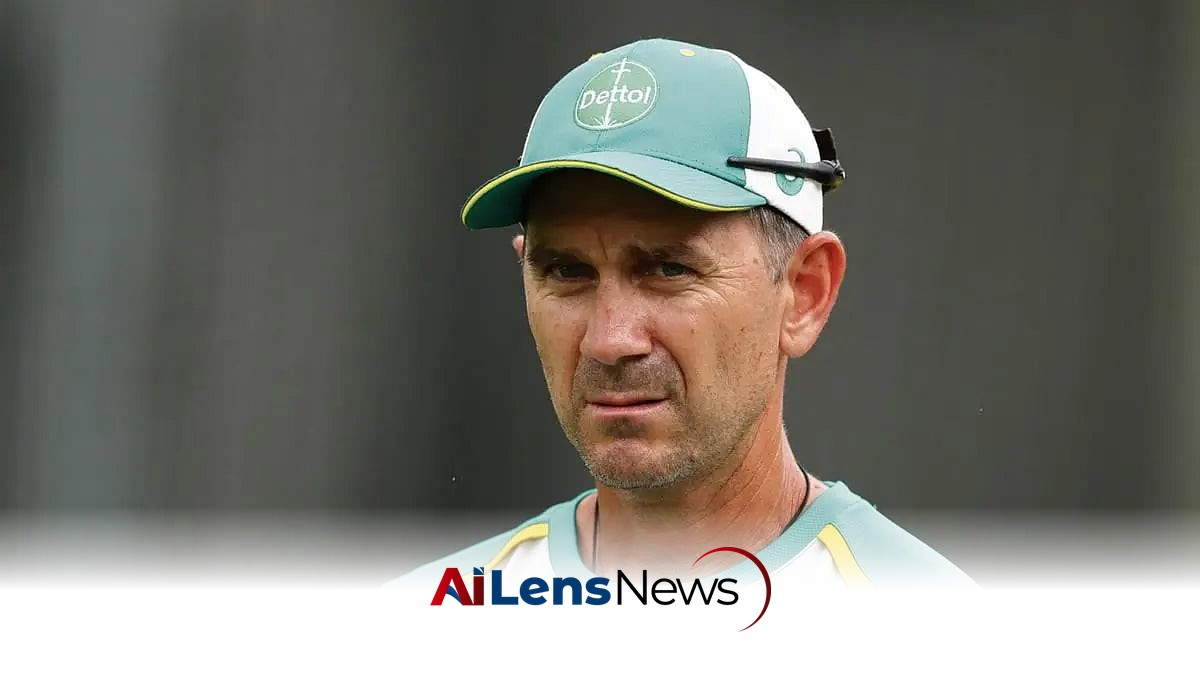


Former Australia head coach Justin Langer has denied any approach from the ECB regarding the England Test coach position, calling the speculation mere 'paper talk.'
New Delhi, India Jul 30, 2026 ALN: London: Former Australia head coach Justin Langer has revealed that he has not been approached by the England and Wales Cricket Board (ECB) for the England Test coach’s job, adding that he hasn’t heard anything from anyone and labelled the reports going around as ‘paper talk.’ This statement comes amidst a backdrop of speculation regarding the ECB's search for a new head coach following the resignation of Brendon McCullum earlier this month.
Langer, who is currently serving as head coach for the Manchester Super Giants in The Hundred, a short-format cricket tournament in England, was widely tipped as a frontrunner to replace McCullum. The speculation surrounding Langer's potential appointment was fueled in part by his prior working relationship with ECB chief executive Richard Gould during their time together at Somerset. This connection led many to believe that he could be a strong candidate for the role.
“No, I haven’t, no. No, I haven’t heard from anyone. You read all this (speculation)... It’s all paper talk, it’s all rumours,” Langer stated on the Stick to Cricket podcast. His comments reflect a broader trend in sports where speculation often outpaces the actual events, leading to misunderstandings and misinformation among fans and analysts alike.
The ECB’s search for a new head coach comes at a critical time for England cricket, particularly as they prepare for an upcoming home Test series against Pakistan, which is set to begin on August 19. This series will be significant not only for the team's performance but also for setting the tone for the future direction of cricket under new leadership. In light of this, Marcus Trescothick is currently being considered for an interim role, which suggests that the ECB is keen to have someone in place quickly to stabilize the team.
Other names in consideration for the long-term role include Stephen Fleming, Richard Dawson, Jonathan Trott, and Tom Moody, all of whom bring a wealth of experience and expertise to the table. Each of these candidates has their own unique strengths and approaches to coaching, which could significantly impact the direction of the England Test team. The decision on who will ultimately take the helm will be crucial, as it will shape the team’s strategy and culture moving forward.
Former England head coach Andy Flower previously declined to participate in the race for the role due to his existing commitments with franchise teams, specifically with Royal Challengers Bengaluru in the Indian Premier League and London Spirit in The Hundred. This highlights the increasing complexity of the coaching landscape, where many experienced coaches are balancing multiple roles across different formats and leagues. Langer further stressed that whoever takes over the red-ball side will need a clear philosophy and a strong working relationship with the setup, particularly with McCullum serving as the white-ball coach. This dual leadership structure could pose unique challenges and opportunities for the new head coach.
“I’ve got no idea. They’re going to have to work really well with Baz, and they’ve got to be really clear in their vision. Great leaders, you’ve got to be really clear in your vision, what you stand for, and then you go forward from there,” Langer remarked, emphasizing the importance of clarity and collaboration in leadership roles. This sentiment underscores the need for a cohesive strategy within the England cricket setup, especially as they navigate the pressures of international competition.
The role of the England Test coach is particularly significant given the historical context of cricket. Traditionally, the England Test team has been seen as one of the powerhouses of the sport, with a rich history and a passionate fan base. However, in recent years, the team's performance has been inconsistent, leading to calls for a fresh approach and renewed focus on the fundamentals of the game. The new coach will be tasked with revitalizing the team's performance and restoring confidence among players and supporters alike.
Moreover, the dynamics of international cricket coaching are shifting, with increasing emphasis on adaptability and innovation. Coaches are now expected to not only impart technical skills but also to foster a positive team culture and address the mental aspects of the game. This evolution has made the role of a head coach more complex, requiring a blend of traditional coaching methods and modern psychological insights.
As the ECB continues its search for a new Test coach, the cricketing community will be watching closely to see how this decision unfolds and what impact it will have on the future of cricket. The appointment of a new head coach is not just about filling a position; it is about shaping the identity and direction of a national team at a pivotal moment in its history. With the upcoming series against Pakistan on the horizon, the urgency for a decision is palpable, and the stakes have never been higher for the ECB and the England Test team.
The implications of this coaching appointment extend beyond immediate performance metrics. The England Test team has historically been a cornerstone of cricket, contributing to the sport's popularity and cultural significance in the country. As such, the choice of head coach will not only influence team dynamics and performance but also affect fan engagement and support. A successful coach can reignite passion in supporters, while a poorly received appointment could lead to disillusionment among the fanbase.
Furthermore, the role of the head coach in the current cricketing environment is multifaceted. Beyond tactical acumen, a coach must also be adept at managing player relationships, understanding the mental health aspects of professional sport, and navigating the complexities of modern media. The ability to communicate effectively with both players and the press is essential, particularly in an era where social media can amplify narratives rapidly, sometimes leading to pressure on players and coaching staff alike.
In this context, the ECB's decision-making process is crucial. Engaging with stakeholders, including former players, current team members, and cricketing analysts, may provide valuable insights into the qualities and experiences that are most desirable in the next head coach. The board's transparency in this process can also help mitigate speculation and foster a sense of unity among the cricket community as they await the appointment.
Ultimately, the new head coach will have the responsibility of not only implementing a competitive strategy but also fostering a culture of resilience and innovation within the team. As cricket continues to evolve with the advent of new formats and changing player dynamics, the head coach must be forward-thinking and adaptable, ready to embrace new ideas while respecting the traditions that have shaped the sport.
As the search continues, the cricketing world remains attentive to the developments within the ECB. The outcome of this search will undoubtedly have lasting implications for England cricket, influencing its trajectory in international competitions and its standing within the global cricketing community. The stakes are high, and the eyes of the cricketing world are firmly fixed on the ECB as it navigates this critical juncture in cricket history.
To learn more about the latest developments in Cricket, stay updated with our exclusive reports and analyses on AiLensNews.

