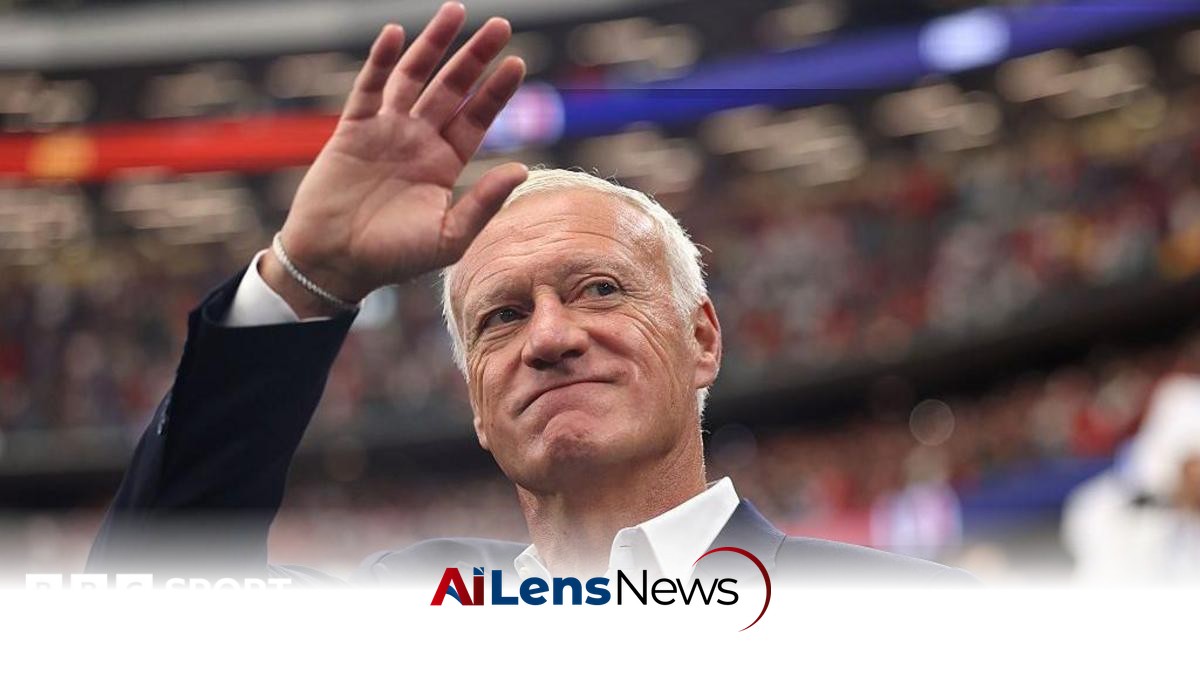


Didier Deschamps' tenure as France manager ends with a disappointing third-place play-off after a semi-final loss to Spain, marking a bittersweet farewell.
New Delhi, India Jul 15, 2026 ALN: Didier Deschamps' long, storied career with France will come to an end not how he would have wanted it - in Saturday's World Cup third-place play-off.
The dreams of the 57-year-old, who won the World Cup as both a player (in 1998) and a manager (in 2018), winning it a third time are over after their 2-0 defeat by Spain in Tuesday's first semi-final. This loss marked a significant moment in French , as it not only ended their hopes of lifting the trophy again but also concluded Deschamps' remarkable tenure as the national team manager.
Having danced their way through the tournament with a series of impressive attacking displays, France managed just 10 shots all match in Dallas, their lowest total in the World Cup, with an expected goals of just 0.3 as they belied their pre-match tag of overwhelming favourites. This performance starkly contrasted with the expectations set before the tournament, where France was considered one of the front-runners due to their strong squad and previous success.
Former France midfielder Patrick Viera told ITV: "They haven't shown up. I was expecting more. There was a big expectation for France to win the World Cup." His sentiments echoed the disappointment felt by fans and analysts alike, as many had anticipated a deeper run in the tournament given the talent available to Deschamps.
"France will all be disappointed by the result and the performance. All our top players went missing. Collectively we were really bad," Viera added, highlighting the stark contrast between the team’s potential and their actual performance on the pitch.
It will be zero consolation but Deschamps, in charge since 2012, set a record in Dallas for most World Cup games managed - 26. This achievement is a testament to his longevity and success at the helm of the French national team, as he previously shared the mark of 25 with ex-West Germany boss Helmut Schon. Deschamps’ ability to navigate the complexities of international and maintain a competitive edge for over a decade is a rare feat in modern .
Deschamps confirmed in January 2025 that he would step down after this summer's tournament and will mark his farewell game against the losers of England v Argentina in Miami on Saturday (22:00 BST). His decision to step down was met with mixed emotions; while many understood the need for a change, they also recognized the deep bond he had formed with the team and the nation.
"It's not time to talk about the future," he said in his post-match news conference. "It is not important on a personal level whether I leave a competition in a semi-final or final. I am extremely happy. I am very proud of everything we've done to reach this stage and to win a World Cup - to take the French team to the highest level. I have been lucky as a player. I have enjoyed happy moments, today is not such a moment. We must accept it without forgetting everything we experienced." His words reflect the complexity of emotions that accompany the end of such a significant chapter in his life.
Deschamps is one of only three people to win the World Cup as a player and manager - alongside Brazil's Mario Zagallo and West Germany's Franz Beckenbauer. This unique achievement places him in an elite category of ing legends, a distinction that highlights both his playing and managerial prowess.
His longevity as manager is also rare in the current era - having led the national team for 14 years. In that time, he has transformed the French side into a formidable force in international , winning 20 of his 26 World Cup games as France boss, only losing three times - including this defeat by Spain in Texas. His track record speaks volumes about his capabilities, as he has been at the forefront of French during a period of significant success.
As a player or manager, he was involved in over half of the games France have ever won at World Cups - and the only two times they have lifted the trophy. His influence on the team is undeniable, as he has played a pivotal role in shaping the identity and success of French over the last two decades.
Only three teams before now have reached the quarter-finals at least in four successive tournaments. This statistic underscores the consistency and quality of the French national team under Deschamps’ leadership. They lost to Argentina on penalties in the 2022 final, coming desperately close to being only the third team to retain the World Cup. This near-miss further solidifies the notion that Deschamps was on the brink of achieving something extraordinary.
More might have been expected from this side with joint tournament top scorer Kylian Mbappe, plus Ballon d'Or winner Ousmane Dembele and rising star Michael Olise of Bayern Munich, in front of an established defence and midfield. The combination of experienced players and emerging talents created a sense of optimism, leading to high expectations for the tournament.
"There was extra motivation for all the players at this World Cup to give Didier the ending he wanted, and deserved," said former France striker and BBC pundit Olivier Giroud. "He deserved to exit by the big door. He did not quite manage that but he is still a great, for what he has already done in his 14 years. His record does the talking for him." Giroud's comments reflect the respect and admiration that Deschamps has garnered from his players, who have benefited from his guidance and leadership.
Giroud, who won the 2018 World Cup under Deschamps, added: "I think he is like a second father for some players, like a second dad. For me it was not quite like that, but he gave me so many times his confidence, and I tried to repay him on the pitch. This makes us very close and because we won that World Cup, we are linked forever. I always call him coach." The familial bond that players feel with Deschamps speaks to his ability to connect with his squad on a personal level, fostering a sense of unity and purpose.
"When you are in the national team, you don't have much time to work on tactics and each manager has their philosophy. For Didier, his was more like 'you are big players, I leave you some freedom on the pitch'. He gave some instructions too of course, to keep the balance, so you always knew where each player would be. The biggest thing he taught us was his desire, and his drive and ambition to be the absolute best and to win every single game. His competitive mindset was so clear." This approach to management has allowed Deschamps to cultivate a team that plays with confidence and flair, while also maintaining a strong tactical foundation.
Former France full-back Gael Clichy, who played in the first year of Deschamps' reign, praised his former boss on BBC Radio 5 Live. Clichy's insights provide a unique perspective on Deschamps' impact, as he witnessed the early stages of the transformation that took place during his tenure.
Deschamps, who previously managed Monaco, Juventus, and Marseille, replaced Laurent Blanc in 2012 after a poor run in tournaments as France had been eliminated in the group stage at the 2008 European Championships and the 2010 World Cup, with the squad refusing to train at the latter tournament due to a dispute with manager Raymond Domenech. The challenges that Deschamps faced upon taking the role were significant, as he inherited a team in disarray, struggling to find its identity and direction.
At Euro 2012, Laurent Blanc achieved a slight improvement by reaching the quarter-finals only for Les Bleus to be beaten by eventual winners Spain. However, the transformation under Deschamps has been considerable, maximizing France's regular supply of talent and creating a largely unified squad on his watch. His ability to harness the potential of the players at his disposal has been a hallmark of his success.
Deschamps has been unable to get over the line in the Euros but France made the final on home soil in 2016 and the semi-finals in 2024. These performances indicate that while he may not have secured European glory, he has consistently guided the team to the latter stages of major tournaments, reinforcing his reputation as a top-tier manager.
"His legacy was that he took a team that was below par, and he managed to bring that team back up to the top," said ex-Arsenal and Manchester City player Clichy, who manages third-tier Caen. "This legacy of his really means we don't have to talk about what he should or could have done. What he has done for French as a player and a coach is fantastic. It is phenomenal." Clichy’s remarks highlight the significant positive impact Deschamps has had on French , ensuring that the national team is now viewed as a consistent contender on the world stage.
The favourite to replace Deschamps as France manager is former team-mate Zinedine Zidane. Zidane's credentials are impressive, having won three Champions League trophies as manager of Real Madrid, his only managerial job so far. His connection to Deschamps, having played alongside him in the 1998 World Cup-winning team, adds an emotional layer to the potential transition.
ESPN reported in March that a verbal agreement was already in place for Zidane to take over this summer. This news has generated excitement and speculation among fans, as Zidane is a beloved figure in French and is expected to bring his own unique style to the national team. Clichy added: "The guy who will come in behind Deschamps will find it hard. It won't be easy." This statement reflects the immense pressure and expectations that come with succeeding a manager of Deschamps' caliber, as he leaves behind a legacy that will be challenging for anyone to match.
To learn more about the latest developments in Football (Soccer), stay updated with our exclusive reports and analyses on AiLensNews.

