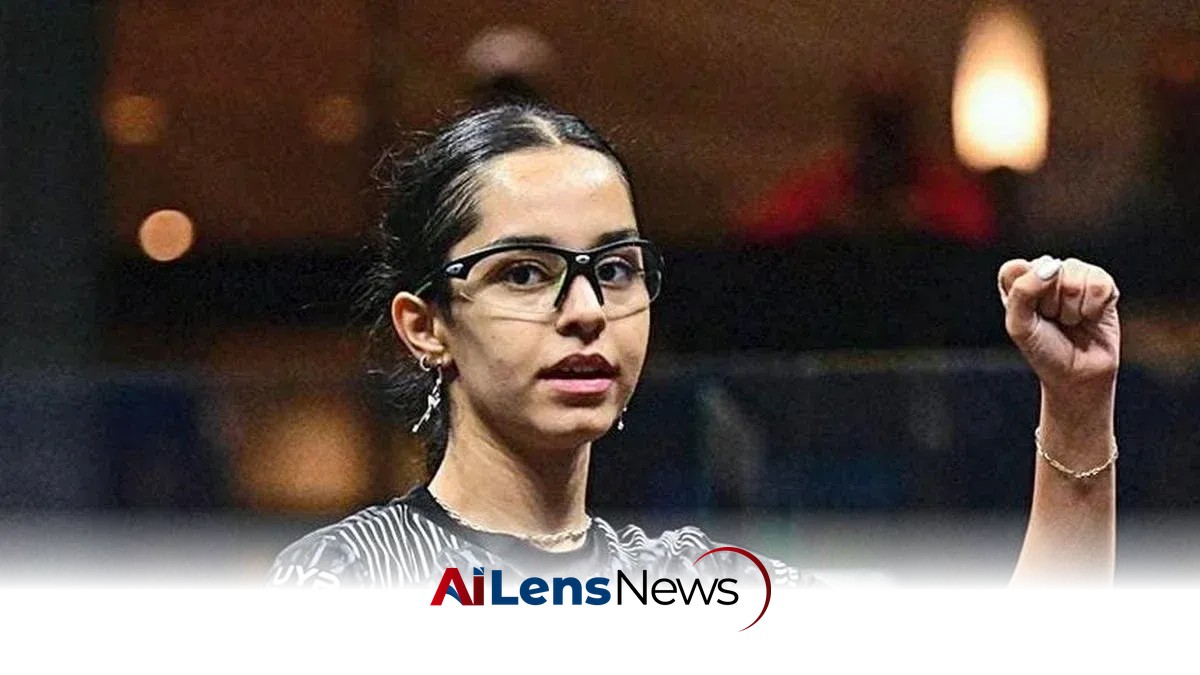


Anahat Singh made history by winning the women's title at the World Junior Squash Championships, becoming the first Indian to achieve this feat.
New Delhi, India Jul 27, 2026 ALN: NIGARA-ON-THE-LAKE (CANADA), JUL 25: Anahat Singh made history on Saturday, becoming the first Indian to be crowned World Junior squash champion when she won the women’s title in the World Squash Junior Individual Championships at Nigara-on-the-Lake in Ontario, Canada. This remarkable achievement not only marks a significant milestone in her career but also highlights the growing prominence of squash in India, a country that has traditionally been overshadowed in the sport by powerhouses like Egypt.
World No 20 and top seed Anahat, who previously won a bronze medal by reaching the semifinals in the competition last year, defeated Egyptian second seed Ruqayya Salem 11-3, 11-7, 11-9 in the women’s final to claim the biggest title of her career so far. Anahat's victory is particularly noteworthy as it underscores her development as a player and her ability to compete at the highest levels of junior squash. The match was closely contested, with Anahat demonstrating both skill and composure under pressure, traits that are essential for success in high-stakes competitions.
In the context of the World Junior Squash Championships, Anahat’s win is historic. She became the first non-Egyptian player to win the World Junior Squash Championship title since Amanda Sobhy in 2010. The dominance of Egyptian players in the sport has been well-documented, with a long streak of victories that began in 2011. Anahat's triumph effectively breaks this 15-year title-winning streak, signaling a potential shift in the competitive landscape of junior squash. This victory not only brings pride to her nation but also serves as a wake-up call to other countries that the gap in competition is narrowing.
On the path to the final, Anahat Singh showcased her exceptional skills and determination. On Friday night, she became the first Indian in 21 years to reach the final of the World Squash Junior Championships, defeating Egypt’s Barb Sameh in four games. This victory was a testament to her hard work and preparation, as she had previously faced Sameh at the British Junior Open, where the match was closely contested. Anahat expressed her satisfaction with her performance, acknowledging the pressure she felt to improve upon her previous matches. "I didn’t play my best yesterday, and I knew I had to come out today and show what I can do on court. I’ve played in four World Juniors and lost in the quarters and semis, so reaching the final has made my parents and coaches really happy, but the tournament’s not over yet," she remarked after her semifinal win.
Anahat's journey in the sport of squash is reflective of the broader trends in Indian sports, where young athletes are increasingly breaking barriers and achieving international success. The rise of squash in India can be attributed to various factors, including improved training facilities, increased access to coaching, and the establishment of competitive junior circuits. The success of players like Anahat Singh serves as an inspiration to many aspiring athletes in the country, particularly young girls who see her as a role model in a sport that is still developing in India. Furthermore, her achievement may encourage more schools to incorporate squash into their sports programs, fostering a new generation of players.
In the men’s competition, Egypt’s top seed Mohamad Zakaria continued his pursuit of a third World Junior title. He defeated compatriot Selfeldin Refaay in straight games, reaching his fourth consecutive final. Zakaria's consistent performance underscores the strength of Egyptian squash, as the nation continues to produce top-tier talent that dominates the sport. This dominance is not merely a coincidence; it is a result of a well-structured system of training and support for young athletes in Egypt, which has become a model for other countries looking to develop their own squash programs.
Zakaria will face fellow Egyptian and second seed Adam Hawal in the final. Hawal advanced to the final when Marwan Assal retired injured during the third game of their semifinal match. Hawal had already built a 2-0 lead before Assal had to withdraw, showcasing his own skills and potential as a rising star in the sport. The matchup between Zakaria and Hawal promises to be an exciting contest, as both players are keen to add another title to their resumes. Their rivalry is indicative of the high level of competition within the Egyptian squash circuit, which continues to produce exceptional talent year after year.
The implications of Anahat Singh's victory extend beyond personal achievement; it represents a significant moment for Indian squash. Her success can lead to increased visibility for the sport within India, potentially attracting more young players to take up squash. Grassroots programs and initiatives aimed at promoting squash in schools and communities may gain momentum as a result of her accomplishments. Furthermore, her win could encourage sponsors and stakeholders to invest more in the sport, providing better resources and opportunities for future generations of players. This could lead to a more structured approach to coaching and competition, ultimately benefiting the sport as a whole.
The World Junior Squash Championships serve as a platform for young athletes to showcase their talents on an international stage, and Anahat's victory is a reminder of the potential that exists in Indian sports. As the world of squash evolves, the emergence of players like Anahat Singh may lead to a more competitive environment, challenging traditional powerhouses and fostering a spirit of sportsmanship and excellence across the globe. The success of Anahat and her contemporaries could also inspire national federations to enhance their support systems for squash, ensuring that promising players receive the training and resources necessary to succeed.
In conclusion, Anahat Singh's historic win at the World Junior Squash Championships is a landmark achievement not only for her but also for Indian squash as a whole. It symbolizes hope, determination, and the relentless pursuit of excellence, serving as an inspiration for young athletes everywhere. As she continues to develop her skills and compete at higher levels, Anahat's journey will undoubtedly be watched closely by fans and aspiring squash players alike, marking her as a key figure in the future of the sport in India and beyond. The ripple effects of her victory may be felt for years to come, influencing the next generation of players and reshaping the landscape of squash in India.
To learn more about the latest developments in Golf, stay updated with our exclusive reports and analyses on AiLensNews.

