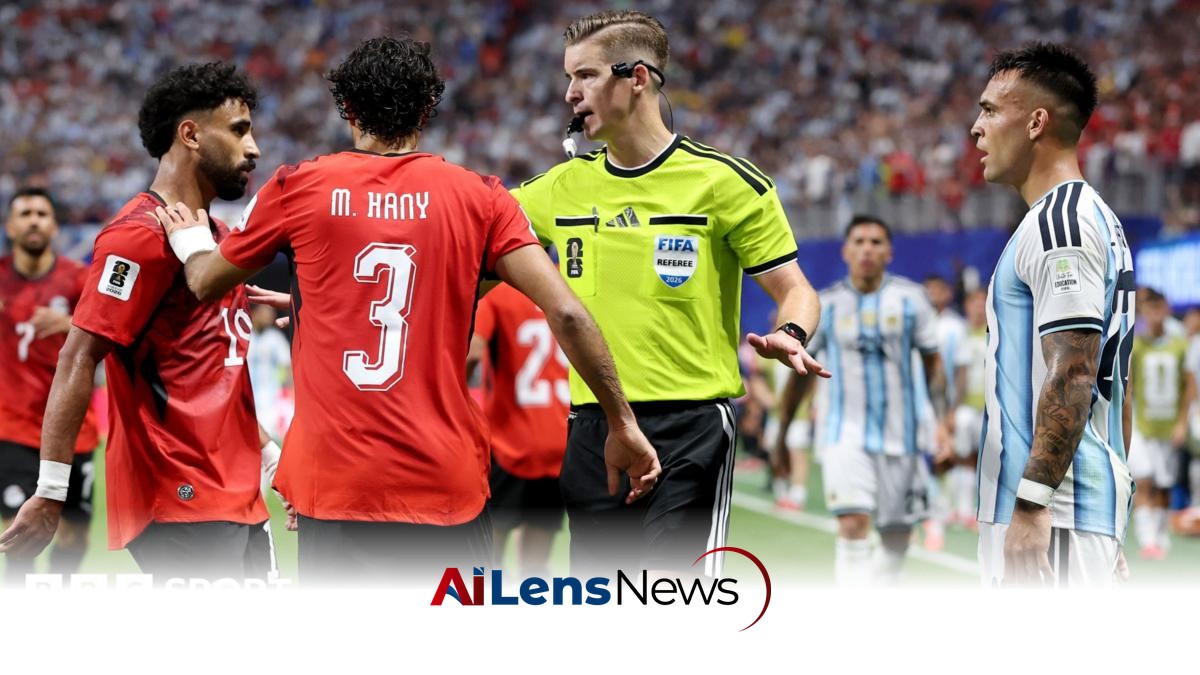


Argentina's association raises concerns of a cyber attack after emails criticizing refereeing in their World Cup match against Egypt were sent from its accounts.
New Delhi, India Jul 10, 2026 ALN: Argentina's association, known as the AFA, has raised concerns that it may have been the target of a cyber attack following a controversial match against Egypt in the World Cup. Reports indicate that emails sent from the AFA's official accounts criticized the refereeing decisions during the national team's 3-2 victory over Egypt, suggesting that the outcome of the match was influenced by corrupt officiating.
The match in question took place during the knockout stages of the World Cup, where Argentina, the reigning champions, faced a formidable Egyptian side. The game was marked by a dramatic turn of events, as Argentina found themselves trailing 2-0, with goals from Yasser Ibrahim and Mostafa Zico putting Egypt in a commanding position. However, in a stunning display of resilience, Argentina mounted a comeback, with Cristian Romero scoring first, followed by Lionel Messi equalizing, and Enzo Fernandez completing the turnaround in injury time. This victory allowed Argentina to advance to the quarter-finals, where they were set to face Switzerland.
In the aftermath of the match, the Egyptian Association lodged a formal complaint with FIFA, calling for the French referee, Francois Letexier, and his officiating team to be banned from the tournament. They alleged that the refereeing was biased in favor of Argentina, a claim that has sparked significant controversy and debate among fans and analysts alike. The dynamics of officiating in high-stakes matches, especially in the World Cup, often come under intense scrutiny, and this incident serves as a stark reminder of the pressures and expectations placed on referees.
Reports from Argentine news outlet La Calle revealed that the emails sent from the AFA's account contained statements asserting that "Argentina did not win" and that the match result was a product of "corrupt refereeing decisions." These messages also included praise for Egypt's performance, which raised suspicions regarding the authenticity of the communications. The AFA has since indicated that it believes a group of hackers, purportedly of Egyptian origin, may be responsible for sending these emails, thus complicating the narrative surrounding the match and its aftermath.
In response to the situation, the AFA issued an official statement, clarifying that they had detected the unauthorized sending of emails from one of their institutional accounts. The association urged the public to disregard any unusual messages received from their account, particularly those containing links, attachments, or requests for personal information. This incident underscores the growing concern over cybersecurity in s organizations, especially during high-profile events such as the World Cup, where the stakes are incredibly high, and the potential for misinformation can have far-reaching implications.
The AFA's statement highlighted their commitment to investigating the matter further and taking necessary security measures to prevent such incidents from occurring in the future. This situation is part of a broader trend where s organizations are increasingly becoming targets for cyber attacks, which can undermine their credibility and disrupt communication channels during critical moments.
As the match and subsequent emails gained traction in the media, reactions from both teams' coaches and players intensified. Egyptian coach Hossam Hassan expressed his dissatisfaction with the officiating, claiming that his team had been "treated unfairly" and had "suffered injustice" during the match. He suggested that external pressures may have influenced the outcome, stating, "Perhaps they wanted to keep the world champion in the competition. Perhaps they wanted Messi to stay in the running." Such statements reflect the emotional investment and national pride that accompany participation in the World Cup, where every decision can be viewed through the lens of bias or favoritism.
The implications of this incident extend beyond the immediate context of the match. It raises questions about the integrity of officiating in international tournaments and the potential for technology and social media to shape narratives around ing events. As teams and fans become increasingly aware of the power of digital communication, the risk of misinformation and cyber threats looms large. This incident serves as a cautionary tale for s associations worldwide, emphasizing the need for robust cybersecurity measures and transparent communication strategies.
Cybersecurity has become a critical concern for organizations across various sectors, especially in the realm of s, where the intersection of technology and competition can lead to vulnerabilities. Major ing events like the World Cup draw global attention, making them prime targets for cybercriminals seeking to exploit weaknesses. The AFA's experience serves as a reminder that even established associations must remain vigilant against potential threats that could undermine their operations and reputation.
In recent years, there have been several high-profile cyber attacks on s organizations, ranging from data breaches to ransomware incidents. These attacks not only disrupt operations but can also lead to significant financial losses and reputational damage. As such, the AFA's proactive approach to addressing this incident is crucial. By investigating the breach and enhancing their cybersecurity protocols, they can safeguard against future threats and maintain the integrity of their communications.
The controversy surrounding the AFA's emails and the subsequent allegations of biased refereeing highlight the complexities of modern s. As teams navigate the pressures of international competition, they must also contend with the realities of cybersecurity and the potential for external manipulation. The world of s is not only a battleground for athletic prowess but also a stage where narratives are crafted, challenged, and reshaped in real-time.
The role of referees in high-stakes matches cannot be overstated. They are tasked with making split-second decisions that can significantly impact the outcome of a game. Given the intense scrutiny they face, it is essential for officiating bodies to ensure transparency and accountability in their processes. This incident may prompt FIFA and other governing bodies to reevaluate their protocols regarding officiating and dispute resolution, particularly in light of the increasing prevalence of technology in s.
As the AFA continues to address the fallout from this incident, it will be crucial for them to communicate effectively with their stakeholders, including fans, players, and the media. Clear and transparent communication can help mitigate misinformation and restore trust in the association's integrity. Furthermore, this situation may serve as a catalyst for broader discussions within the s community about the importance of cybersecurity and the need for collaborative efforts to combat cyber threats.
In conclusion, the AFA's response to this cyber incident will likely set a precedent for how similar situations are handled in the future, both in terms of communication and cybersecurity protocols. As the landscape of s continues to evolve, organizations must adapt to the challenges posed by technology and the digital age. The implications of this incident extend far beyond the match itself, serving as a reminder of the interconnectedness of s, technology, and security in today's world.
To learn more about the latest developments in Global Tournaments & Olympics, stay updated with our exclusive reports and analyses on AiLensNews.

