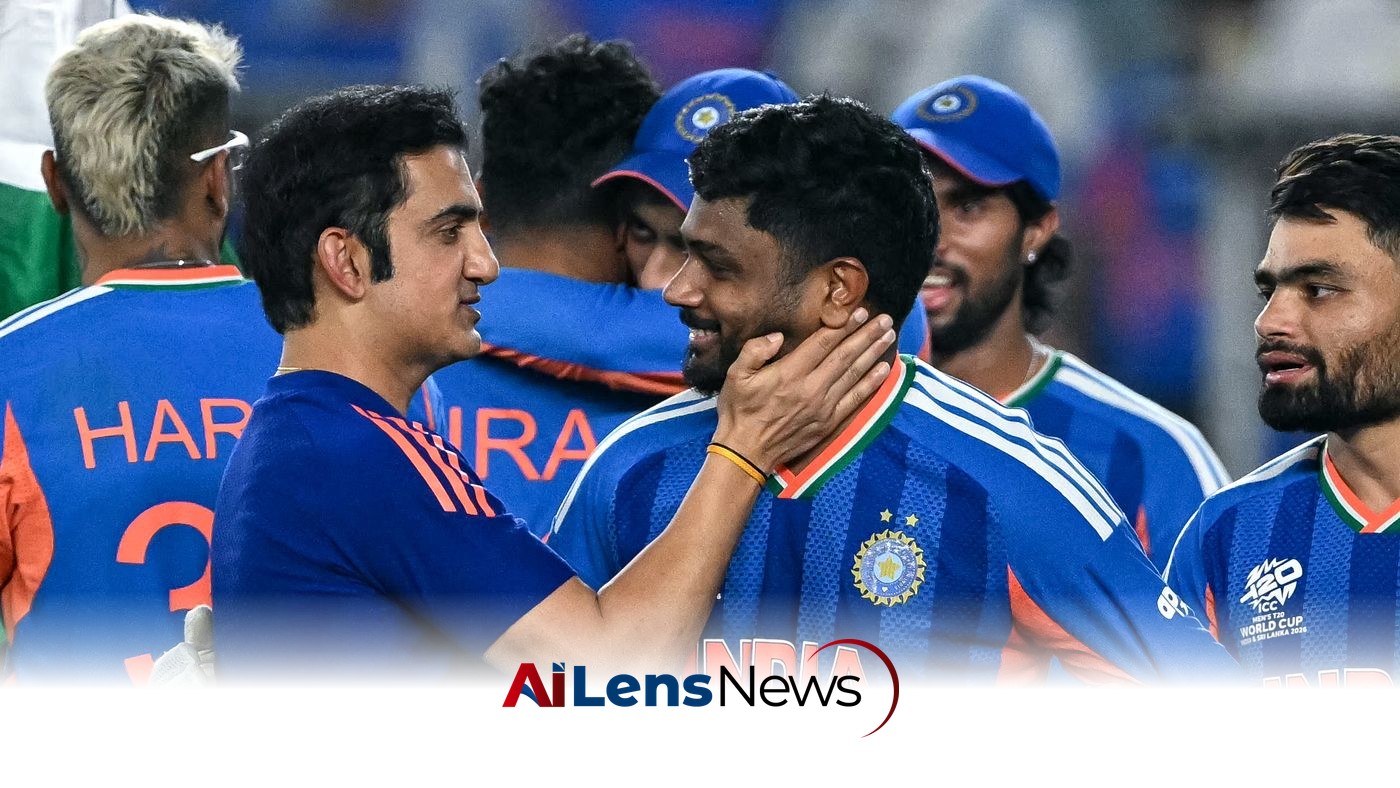


India's head coach discusses the team's recent setbacks and the need for a reset in the T20I side, providing clarity to player Sanju Samson on his omission.
New Delhi, India Jul 8, 2026 ALN: In recent statements, India's head coach Gautam Gambhir addressed the challenges faced by the T20I team, emphasizing the need for a reset following a period of dominance. The Indian T20I team, known for its aggressive playing style and strong performances in international tournaments, has recently faced criticism for its inability to convert potential into consistent victories. This situation reflects a broader context within Indian , where expectations are consistently high due to the team's past successes, including their triumphs in the ICC T20 World Cup and other prestigious tournaments.
Gambhir highlighted that these challenges are indicative of the transitional phase the T20I side is currently navigating. The head coach expressed that the recent performances, while disappointing, are part of a necessary process to build a stronger foundation for future competitions. This transition is not uncommon in sports, particularly in , where teams often go through cycles of rebuilding and re-strategizing. The Indian team has a rich history of success, but maintaining that success requires continuous adaptation and evolution in response to both internal dynamics and external competition.
One of the key discussions has been around the omission of player Sanju Samson from the squad. Gambhir stated that he has provided Samson with clarity regarding this decision, ensuring that the player understands the rationale behind it. This transparency is crucial for maintaining team morale and fostering a supportive environment. Samson, a talented wicketkeeper-batsman, has shown flashes of brilliance in his career, but consistency has often eluded him. His omission may reflect the team's desire to prioritize players who have demonstrated greater reliability in high-pressure situations, particularly in the T20 format where performances can be unpredictable and the stakes are often high.
The implications of such omissions can be significant, as they not only affect the player's career trajectory but also the overall dynamics of the team. Gambhir's approach to communication with players like Samson is essential in ensuring that they remain motivated and focused on their development. The head coach's willingness to engage in open dialogue can help mitigate feelings of disappointment and encourage players to work harder to regain their positions in the squad. This kind of supportive environment is vital, especially in a sport where mental resilience is as important as physical skill.
As the team looks to regroup, Gambhir's leadership will be pivotal in guiding the players through this period of adjustment. The focus will be on identifying the right combinations and strategies that align with the team's long-term goals. This involves not only selecting the best players but also fostering a team culture that emphasizes resilience, adaptability, and a collective commitment to improvement. The task is challenging, especially in a format as unpredictable as T20 , where individual performances can significantly influence the outcome of matches. The ability to create a cohesive unit that can perform under pressure is crucial for success.
Moreover, the T20I format has evolved rapidly, with teams around the world adopting innovative strategies and player roles. The introduction of various leagues and tournaments has also led to a diversification of playing styles, making it imperative for teams to stay ahead of the curve. To remain competitive, India must not only adapt to these changes but also anticipate future trends in the game. This may involve investing in younger talent, embracing new training methodologies, and leveraging data analytics to inform decision-making. Gambhir's role as head coach will require a balance between nurturing emerging players and relying on experienced campaigners who can deliver in critical situations.
In conclusion, while the recent setbacks may be challenging, they also present an opportunity for growth and development. With Gambhir at the helm, the T20I side aims to emerge stronger and more cohesive as they prepare for upcoming challenges. The journey ahead will not be easy, and the road to recovery will require patience, hard work, and a collective effort from all stakeholders involved. As the team navigates this transitional phase, the focus will be on building a resilient squad capable of competing at the highest level, not just in T20 but across all formats of the game.
Looking ahead, the Indian T20I team will face various international opponents, each bringing their unique challenges and strengths. The ability to adapt and respond to these challenges will be a testament to Gambhir's leadership and the players' commitment to the team's objectives. Fans and analysts alike will be watching closely to see how the team evolves and whether they can reclaim their status as a dominant force in T20 .
Furthermore, the competitive landscape of international T20 is evolving, with teams like England, Australia, and Pakistan making significant strides in their performances. These nations have invested in their ing infrastructure and player development programs, which has paid dividends in terms of results on the field. India, with its rich talent pool, must ensure that it is not left behind in this race for supremacy. The emphasis on youth development and scouting for fresh talent will be crucial in maintaining a competitive edge.
In this context, the role of domestic tournaments, such as the Indian Premier League (IPL), cannot be overstated. The IPL provides a platform for young players to showcase their skills alongside some of the best in the world. It also serves as a testing ground for new strategies and player combinations. Gambhir's coaching philosophy may draw inspiration from the dynamics of the IPL, where adaptability and innovation are key to success. By integrating insights gained from the league into the national team's approach, there is potential for a more robust performance on the international stage.
Moreover, the mental aspect of the game is gaining increasing recognition in modern . The pressures of international competition can weigh heavily on players, and addressing mental health and resilience is becoming a priority for teams worldwide. Gambhir's management style will likely incorporate elements that focus on the psychological well-being of players, ensuring they are equipped to handle the pressures that come with representing their country. This holistic approach could be the differentiating factor in how the team performs in high-stakes situations.
As the T20I team embarks on this journey of transformation, the support from ing authorities, fans, and former players will be instrumental. The ing community's collective enthusiasm and constructive criticism can provide the necessary impetus for the team to evolve. It is essential for everyone involved to rally behind the players and coaching staff, fostering an environment that is conducive to growth and success.
Ultimately, the future of the Indian T20I team lies in its ability to learn from past experiences, embrace change, and remain committed to excellence. The road ahead may be fraught with challenges, but with a clear vision and a united front, there is ample opportunity for the team to redefine its legacy in T20 and beyond.
To learn more about the latest developments in Cricket, stay updated with our exclusive reports and analyses on AiLensNews.

